Norethindrone acetate and ethinyl estradiol and addison’s disease

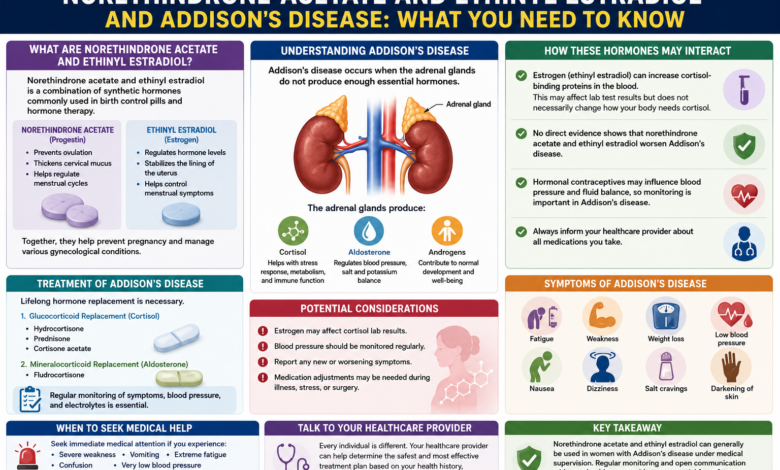
Hormonal medications play an important role in modern healthcare, helping millions of women manage reproductive health, hormonal imbalances, and birth control needs. Among the most commonly prescribed hormone combinations is norethindrone acetate and ethinyl estradiol, a medication that combines synthetic forms of progesterone and estrogen. While these medications are widely used, individuals with chronic endocrine disorders such as Addison’s disease often have questions about their safety, effectiveness, and possible interactions.
Addison’s disease affects the body’s ability to produce essential hormones, making hormone management a critical aspect of daily life. Since both Addison’s disease and hormonal contraceptives involve the endocrine system, understanding their relationship is important for patients and healthcare providers alike.
This article examines norethindrone acetate and ethinyl estradiol, explains Addison’s disease, explores potential considerations for patients using both treatments, and highlights key information that can support informed healthcare decisions.
What Is Norethindrone Acetate and Ethinyl Estradiol?
Norethindrone acetate and ethinyl estradiol is a combination hormone medication frequently prescribed for contraception and hormonal regulation.
The medication contains two active ingredients:
Norethindrone Acetate
Norethindrone acetate is a synthetic progestin that mimics the effects of the naturally occurring hormone progesterone.
It helps:
- Prevent ovulation
- Regulate menstrual cycles
- Reduce abnormal bleeding
- Support hormone balance
Ethinyl Estradiol
Ethinyl estradiol is a synthetic form of estrogen.
It is used to:
- Stabilize hormone levels
- Prevent pregnancy
- Manage menstrual symptoms
- Treat certain hormonal disorders
Together, these hormones work to regulate reproductive functions and maintain hormonal balance.
Understanding Addison’s Disease
Addison’s disease is a rare endocrine disorder that occurs when the adrenal glands fail to produce sufficient hormones.
The adrenal glands are located above the kidneys and produce several critical hormones, including:
- Cortisol
- Aldosterone
- Adrenal androgens
These hormones are essential for maintaining many body functions.
Functions of Cortisol
Cortisol helps regulate:
- Metabolism
- Immune response
- Blood sugar levels
- Stress response
- Blood pressure
Functions of Aldosterone
Aldosterone helps maintain:
- Sodium balance
- Potassium balance
- Fluid regulation
- Blood pressure control
When hormone production declines significantly, symptoms of Addison’s disease develop.
Common Symptoms of Addison’s Disease
Symptoms may appear gradually and vary from person to person.
Common signs include:
- Extreme fatigue
- Muscle weakness
- Weight loss
- Low blood pressure
- Dizziness
- Salt cravings
- Nausea
- Abdominal discomfort
- Darkened skin pigmentation
- Mood changes
Without treatment, Addison’s disease can lead to serious health complications.
Why Hormonal Medications Matter in Addison’s Disease
Individuals with Addison’s disease rely on carefully managed hormone replacement therapy.
Since norethindrone acetate and ethinyl estradiol also influence hormone activity within the body, patients often wonder whether these medications may affect their condition.
Important considerations include:
- Hormone interactions
- Laboratory test interpretation
- Blood pressure regulation
- Medication management
- Overall endocrine health
Healthcare providers evaluate these factors when developing treatment plans.
Hormone Replacement Therapy for Addison’s Disease
Most patients with Addison’s disease require lifelong medication to replace missing adrenal hormones.
Treatment typically includes:
Cortisol Replacement
Common medications include:
- Hydrocortisone
- Prednisone
- Cortisone acetate
These drugs replace the cortisol the adrenal glands can no longer produce adequately.
Aldosterone Replacement
Many patients also require mineralocorticoid replacement.
This treatment helps maintain:
- Blood pressure
- Electrolyte balance
- Hydration levels
Proper medication management is essential for maintaining normal body function.
Can Norethindrone Acetate and Ethinyl Estradiol Affect Cortisol Levels?
One area of interest involves how estrogen-containing medications influence cortisol measurements.
Ethinyl estradiol may increase the production of certain proteins that bind cortisol in the bloodstream.
As a result:
- Laboratory cortisol levels may appear elevated.
- Test interpretation can become more complex.
- Healthcare providers may need to consider medication use when evaluating results.
This effect does not necessarily indicate worsening Addison’s disease but may influence diagnostic testing.
Blood Pressure Considerations
Blood pressure regulation is an important concern for individuals with Addison’s disease.
Low blood pressure is a common symptom because reduced aldosterone production affects fluid and sodium balance.
Some hormonal medications may influence:
- Fluid retention
- Blood vessel function
- Blood pressure levels
Healthcare providers often monitor blood pressure regularly when managing endocrine conditions.
Medication Monitoring and Follow-Up
Regular follow-up care is important for anyone living with Addison’s disease.
Monitoring may include:
Hormone Assessments
Healthcare providers evaluate hormone replacement effectiveness through:
- Clinical symptoms
- Blood tests
- Physical examinations
Blood Pressure Monitoring
Routine blood pressure checks help ensure proper treatment adjustments.
Electrolyte Testing
Electrolytes such as sodium and potassium are monitored because adrenal hormone deficiencies can affect their balance.
Women’s Health Considerations
Women with Addison’s disease frequently have the same reproductive healthcare needs as women without the condition.
These may include:
- Birth control
- Menstrual regulation
- Hormonal management
- Family planning
Combination hormonal medications are often considered after evaluating overall health status and medical history.
Healthcare decisions should always be personalized.
Potential Side Effects of Norethindrone Acetate and Ethinyl Estradiol
Like any medication, combination hormone therapies may cause side effects.
Common side effects may include:
- Headaches
- Nausea
- Breast tenderness
- Mood changes
- Bloating
- Spotting between periods
Many side effects improve as the body adapts to treatment.
Persistent symptoms should be discussed with a healthcare professional.
Addisonian Crisis and Emergency Preparedness
One of the most serious complications of Addison’s disease is an adrenal crisis.
This medical emergency occurs when cortisol levels become dangerously low.
Symptoms may include:
- Severe weakness
- Confusion
- Dehydration
- Very low blood pressure
- Severe vomiting
- Loss of consciousness
Immediate medical treatment is required.
Patients are often advised to:
- Carry medical identification
- Keep emergency medication available
- Follow emergency treatment instructions
Preparedness can be life-saving.
Healthy Lifestyle Strategies
Medication management is only one part of living with Addison’s disease.
Healthy lifestyle habits can support overall well-being.
Helpful strategies include:
Maintain Regular Medical Care
Routine healthcare visits help identify concerns early.
Stay Hydrated
Proper hydration supports blood pressure regulation and overall health.
Manage Stress
Physical and emotional stress can increase hormone demands.
Follow Medication Schedules
Consistency is critical for effective hormone replacement therapy.
Learn About Your Condition
Patient education supports better self-management and informed decision-making.
Questions to Discuss With Your Healthcare Provider
Patients considering norethindrone acetate and ethinyl estradiol may wish to ask:
- Is this medication appropriate for my condition?
- Will it affect my hormone replacement therapy?
- How often should my hormone levels be monitored?
- Could it influence blood pressure management?
- Are there alternative treatment options?
Open communication helps ensure safe and effective care.
The Importance of Individualized Treatment
Every patient experiences Addison’s disease differently.
Factors that influence treatment decisions include:
- Age
- Overall health
- Medical history
- Current medications
- Reproductive health goals
Because of these differences, treatment plans should always be tailored to the individual.
Conclusion
Norethindrone acetate and ethinyl estradiol are widely used hormonal medications that provide important benefits for contraception and hormone regulation. For individuals living with Addison’s disease, these medications can often be used successfully under proper medical supervision.
Although estrogen-containing medications may influence hormone-related laboratory testing and require careful monitoring, they do not directly cause Addison’s disease. Regular follow-up appointments, hormone assessments, and personalized healthcare planning remain essential for achieving the best outcomes.
By working closely with healthcare professionals and maintaining a consistent treatment plan, individuals with Addison’s disease can effectively manage their condition while addressing their reproductive and hormonal health needs.