Developmental orthopedic disease: Causes, Symptoms, Treatment, and Prevention

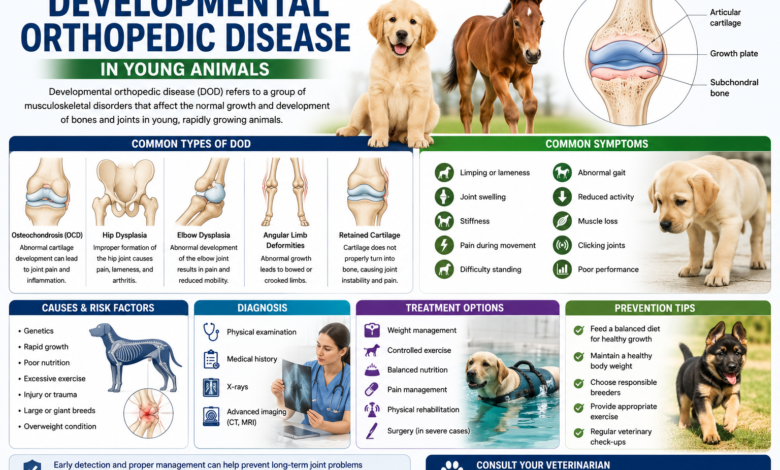
Developmental orthopedic disease (DOD) is a group of musculoskeletal disorders that affect the normal growth and development of bones, joints, cartilage, tendons, and ligaments in young, growing animals. The condition is most commonly discussed in veterinary medicine, particularly in rapidly growing horses and large-breed dogs, where improper skeletal development can lead to pain, lameness, and long-term mobility problems.
Developmental orthopedic disease is not a single condition but rather an umbrella term that includes several orthopedic disorders that develop during periods of rapid growth. Genetics, nutrition, growth rate, exercise, and environmental factors all contribute to the risk of developing these conditions.
Early recognition and proper management are essential for improving outcomes and reducing the likelihood of permanent joint damage. This comprehensive guide explains developmental orthopedic disease, its causes, symptoms, diagnosis, treatment options, and preventive strategies.
What Is Developmental Orthopedic Disease?
Developmental orthopedic disease refers to abnormalities that occur during the growth of the skeletal system in young animals. These disorders interfere with the normal formation of bones and joints, potentially causing pain, inflammation, reduced mobility, and structural abnormalities.
The condition is most frequently seen in:
- Large and giant breed puppies
- Young horses
- Rapidly growing animals
- Animals with genetic predisposition
Because bones grow rapidly during the first months of life, even small nutritional or developmental imbalances may affect healthy skeletal formation.
Types of Developmental Orthopedic Disease
Developmental orthopedic disease includes several conditions.
Osteochondrosis (OCD)
Osteochondrosis occurs when cartilage fails to develop properly into bone.
It commonly affects:
- Shoulder joints
- Elbows
- Knees
- Ankles (hocks)
Loose cartilage fragments may develop, causing pain and joint inflammation.
Hip Dysplasia
Hip dysplasia develops when the hip joint forms improperly.
Symptoms may include:
- Limping
- Difficulty standing
- Reduced activity
- Joint pain
Large-breed dogs are especially susceptible.
Elbow Dysplasia
This condition affects elbow joint development.
Affected animals often experience:
- Front-leg lameness
- Swollen joints
- Pain after exercise
- Limited movement
Angular Limb Deformities
Abnormal bone growth can cause limbs to curve inward or outward.
These deformities may interfere with normal walking and increase stress on joints.
Retained Cartilage
In some young animals, cartilage does not mature properly into healthy bone, leading to joint instability.
Causes of Developmental Orthopedic Disease
Several factors contribute to developmental orthopedic disease.
Genetics
Inherited traits play an important role in many orthopedic disorders.
Responsible breeding programs help reduce the risk.
Rapid Growth
Fast-growing animals place greater stress on developing bones and joints.
Rapid weight gain increases this risk even further.
Poor Nutrition
Excess calories or improper mineral balance—particularly calcium and phosphorus—may interfere with healthy skeletal development.
Excessive Exercise
High-impact activities performed before bones fully mature can contribute to joint damage.
Injury
Trauma during growth may affect developing bones and cartilage.
Risk Factors
Animals may have a higher risk if they:
- Belong to large or giant breeds
- Grow rapidly
- Consume unbalanced diets
- Have overweight body conditions
- Have parents with orthopedic disease
- Participate in excessive physical activity during growth
Symptoms of Developmental Orthopedic Disease
Clinical signs vary depending on the specific disorder.
Common symptoms include:
- Limping
- Joint swelling
- Stiffness
- Pain during movement
- Difficulty standing
- Reduced willingness to exercise
- Abnormal gait
- Muscle loss around affected limbs
- Clicking joints
- Reduced athletic performance
Symptoms may affect one or multiple limbs.
How Is Developmental Orthopedic Disease Diagnosed?
Veterinarians use several methods to diagnose developmental orthopedic disease.
Physical Examination
The veterinarian evaluates:
- Walking pattern
- Joint movement
- Pain response
- Limb alignment
Medical History
Information about:
- Breed
- Age
- Growth rate
- Diet
- Exercise routine
helps identify possible contributing factors.
X-rays
Radiographs help visualize:
- Bone development
- Joint abnormalities
- Growth plate changes
- Hip and elbow structure
Advanced Imaging
In some cases, CT or MRI scans provide more detailed evaluation of affected joints.
Treatment Options
Treatment depends on the severity and specific orthopedic disorder.
Weight Management
Maintaining a healthy body weight reduces stress on growing joints.
Controlled Exercise
Low-impact exercise helps strengthen muscles while protecting developing joints.
Activities often include:
- Short walks
- Swimming
- Gentle movement
High-impact activities should generally be limited until skeletal maturity.
Nutritional Management
Balanced nutrition supports healthy bone growth.
Veterinarians may recommend diets specifically formulated for large-breed puppies or growing horses.
Pain Management
When necessary, veterinarians may prescribe medications to reduce pain and inflammation.
Medication should always be used under veterinary supervision.
Physical Rehabilitation
Rehabilitation programs may include:
- Hydrotherapy
- Stretching exercises
- Strength training
- Balance exercises
These therapies improve mobility and muscle strength.
Surgery
Severe cases may require surgical correction to improve joint function or remove damaged cartilage.
Early intervention often provides better long-term outcomes.
Preventing Developmental Orthopedic Disease
Although not every case can be prevented, several strategies reduce risk.
Feed a Balanced Diet
Proper nutrition supports normal skeletal development.
Avoid overfeeding rapidly growing animals.
Maintain Healthy Growth
Steady growth is healthier than rapid weight gain.
Choose Responsible Breeders
Breeding animals should be screened for inherited orthopedic conditions whenever possible.
Exercise Appropriately
Growing animals benefit from regular but moderate activity.
Avoid repetitive jumping or excessive running during early development.
Schedule Regular Veterinary Visits
Routine examinations help detect orthopedic problems before permanent damage occurs.
Possible Complications
Without treatment, developmental orthopedic disease may lead to:
- Chronic pain
- Permanent lameness
- Arthritis
- Reduced mobility
- Joint deformities
- Poor athletic performance
- Decreased quality of life
Early diagnosis greatly improves the outlook.
Frequently Asked Questions
Is developmental orthopedic disease inherited?
Many forms have a genetic component, although nutrition and environmental factors also influence risk.
Can developmental orthopedic disease be cured?
Some conditions improve with proper treatment, while others require long-term management to reduce symptoms and preserve joint function.
Which animals are most affected?
Large-breed dogs and young horses are among the animals most commonly affected.
Can proper nutrition help prevent developmental orthopedic disease?
Yes. Feeding a balanced diet that supports healthy growth is one of the most important preventive measures.
Conclusion
Developmental orthopedic disease includes several growth-related skeletal disorders that can affect the long-term health and mobility of young animals. While genetics play an important role, proper nutrition, controlled growth, appropriate exercise, and early veterinary care are equally important for reducing risk.
Recognizing symptoms early and following veterinary recommendations can significantly improve outcomes, helping affected animals remain active, comfortable, and healthy throughout their lives.