Can a military physician make a diagnosis of meniere’s disease?

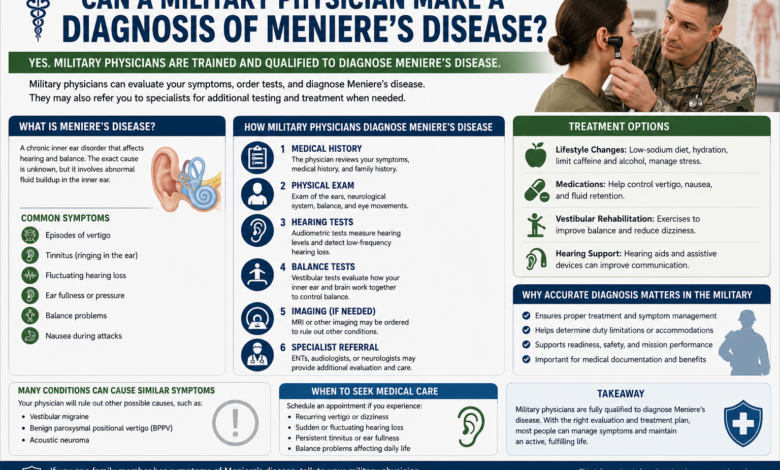
Meniere’s disease is a chronic disorder of the inner ear that affects hearing and balance. The condition can cause episodes of vertigo, tinnitus, hearing loss, and a sensation of fullness in the ear. Because these symptoms can significantly impact daily life and job performance, especially in military settings, obtaining an accurate diagnosis is essential.
Many service members and veterans ask, “Can a military physician make a diagnosis of Meniere’s disease?” The answer is yes. Military physicians are licensed medical professionals who are trained to evaluate symptoms, order diagnostic tests, and diagnose a wide variety of medical conditions, including Meniere’s disease. However, the diagnosis may sometimes involve referrals to specialists such as otolaryngologists (ENT doctors) or audiologists for additional testing and confirmation.
This article explains how military physicians diagnose Meniere’s disease, what tests may be required, treatment options, and how the condition can affect military service.
Understanding Meniere’s Disease
Meniere’s disease is a disorder that affects the inner ear, which is responsible for both hearing and balance. The exact cause remains unclear, but researchers believe it may involve abnormal fluid accumulation within the inner ear.
The condition typically affects one ear but can occasionally involve both ears.
Common Symptoms
Individuals with Meniere’s disease may experience:
- Sudden episodes of vertigo
- Ringing or buzzing in the ear (tinnitus)
- Fluctuating hearing loss
- Ear pressure or fullness
- Balance difficulties
- Nausea and vomiting during vertigo attacks
Symptoms often come and go, making diagnosis challenging in some cases.
What Is a Military Physician?
A military physician is a licensed doctor who provides medical care within military healthcare systems. These physicians serve active-duty personnel, reservists, retirees, veterans, and eligible family members.
Military physicians are qualified to:
- Conduct physical examinations
- Diagnose medical conditions
- Prescribe medications
- Order laboratory and imaging studies
- Refer patients to specialists when necessary
Their training is comparable to civilian physicians, and they follow established medical guidelines when evaluating health conditions.
Can a Military Physician Diagnose Meniere’s Disease?
Yes, a military physician can diagnose Meniere’s disease. In many cases, the physician serves as the first healthcare provider to evaluate symptoms and begin the diagnostic process.
The diagnosis is usually based on:
- Medical history
- Symptom patterns
- Hearing evaluations
- Balance assessments
- Exclusion of other conditions
Depending on the complexity of the case, a military physician may make the diagnosis directly or coordinate care with specialists.
How the Diagnostic Process Begins
The first step typically involves a detailed discussion of symptoms.
The physician may ask questions such as:
- When did the symptoms start?
- How often do vertigo episodes occur?
- How long do attacks last?
- Has hearing changed over time?
- Is tinnitus present?
- Do symptoms affect work performance?
Providing accurate information helps the physician identify patterns consistent with Meniere’s disease.
Physical Examination
A physical examination is often performed to assess overall health and rule out other causes of dizziness or hearing problems.
The examination may include:
- Ear inspection
- Neurological evaluation
- Balance assessment
- Eye movement testing
- Blood pressure checks
These evaluations help identify possible alternative explanations for symptoms.
Hearing Tests
Hearing assessments are one of the most important components of diagnosing Meniere’s disease.
Audiometric Testing
Audiometry measures hearing sensitivity at different sound frequencies.
Patients with Meniere’s disease often show:
- Low-frequency hearing loss
- Fluctuating hearing changes
- Progressive hearing impairment
Results from these tests help support the diagnosis.
Balance and Vestibular Testing
Since Meniere’s disease affects the balance system, vestibular testing is frequently recommended.
Common tests include:
Electronystagmography (ENG)
This test evaluates eye movements associated with balance function.
Videonystagmography (VNG)
VNG uses video technology to analyze involuntary eye movements.
Rotary Chair Testing
This assessment evaluates how the balance system responds to movement.
These tests provide valuable information about inner ear function.
Imaging Studies
Military physicians may order imaging studies when necessary.
MRI Scans
Magnetic resonance imaging helps rule out conditions such as:
- Acoustic neuromas
- Brain tumors
- Multiple sclerosis
- Structural abnormalities
Imaging is often used when symptoms are unusual or when the diagnosis is uncertain.
Referral to Specialists
While military physicians can diagnose Meniere’s disease, referrals are common.
Specialists may include:
- Ear, Nose, and Throat (ENT) physicians
- Audiologists
- Neurologists
- Vestibular rehabilitation therapists
These healthcare professionals provide advanced evaluations and treatment recommendations.
Why Accurate Diagnosis Matters in the Military
Meniere’s disease can significantly affect military duties.
Symptoms such as vertigo and hearing loss may interfere with:
- Operational readiness
- Physical training
- Aircraft operations
- Weapons handling
- Deployment requirements
For this reason, military healthcare providers take symptoms seriously and perform thorough evaluations.
Treatment Options for Meniere’s Disease
Although there is no permanent cure, several treatments can help manage symptoms.
Dietary Changes
Many patients are advised to:
- Reduce sodium intake
- Stay hydrated
- Limit caffeine
- Avoid excessive alcohol
These changes may help reduce fluid buildup in the inner ear.
Medications
Physicians may prescribe medications to help control:
- Vertigo
- Nausea
- Motion sickness
Medication plans vary based on individual symptoms.
Vestibular Rehabilitation Therapy
Balance therapy can help patients adapt to changes in vestibular function and improve stability.
Hearing Support
Some individuals benefit from:
- Hearing aids
- Assistive listening devices
- Communication strategies
These tools can improve daily functioning.
Living With Meniere’s Disease
Many people successfully manage Meniere’s disease through a combination of medical care and lifestyle adjustments.
Helpful strategies include:
- Following treatment recommendations
- Attending regular medical appointments
- Monitoring symptom patterns
- Managing stress
- Getting adequate rest
Consistency often plays a key role in symptom management.
Military Disability Considerations
In some cases, Meniere’s disease may affect a service member’s ability to perform military duties.
Medical evaluations may consider:
- Frequency of vertigo attacks
- Degree of hearing loss
- Occupational limitations
- Safety concerns
These factors can influence duty assignments and disability determinations.
When to Seek Medical Attention
Individuals should seek medical evaluation if they experience:
- Recurring vertigo
- Persistent tinnitus
- Sudden hearing loss
- Balance problems
- Ear pressure or fullness
Early diagnosis may improve symptom management and prevent complications.
Conclusion
A military physician can diagnose Meniere’s disease and is often the first healthcare provider involved in evaluating symptoms. Through medical history reviews, physical examinations, hearing tests, balance assessments, and specialist referrals when necessary, military healthcare professionals can accurately identify the condition and develop appropriate treatment plans.
Because Meniere’s disease can affect hearing, balance, and military readiness, obtaining prompt medical attention is important. With proper diagnosis and ongoing management, many individuals can effectively control symptoms and maintain a productive, active lifestyle despite the challenges associated with this inner ear disorder.