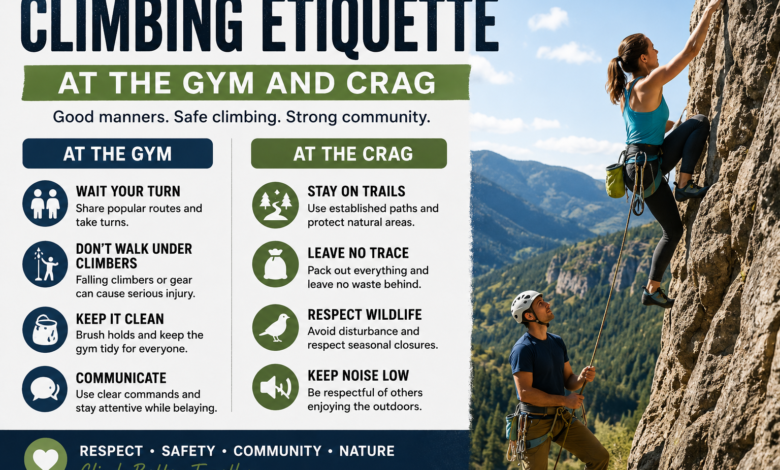
Climbing has grown from a niche outdoor activity into one of the world’s fastest-growing sports. Indoor climbing gyms are opening in cities worldwide, while outdoor climbing destinations continue to attract adventurers looking for new challenges. Whether you’re a beginner learning your first route or an experienced climber tackling difficult ascents, one thing remains essential—proper climbing etiquette.
Good climbing etiquette is about much more than being polite. It promotes safety, prevents accidents, helps climbers share routes fairly, and protects the natural environments where climbing takes place. Understanding how to behave in both indoor gyms and outdoor crags creates a better experience for everyone involved.
Unlike many sports, climbing depends heavily on teamwork and trust. Climbers rely on belayers, partners, route setters, gym staff, and fellow climbers. A simple mistake or careless behavior can affect not only your own climb but also the safety and enjoyment of others.
This guide explains everything you need to know about climbing etiquette at the gym and crag, including practical tips, common mistakes to avoid, and why respecting climbing culture is just as important as improving your climbing skills.
Why Climbing Etiquette Matters
Every climbing environment is a shared space. Indoor climbing gyms are often busy with people warming up, practicing routes, belaying partners, or taking classes. Outdoor crags may be shared by climbers, hikers, photographers, campers, and local wildlife.
Following proper etiquette benefits everyone by:
- Improving safety
- Reducing conflicts
- Preventing unnecessary delays
- Protecting climbing routes
- Preserving natural environments
- Creating a welcoming community for beginners
Many experienced climbers are happy to help newcomers, but they also appreciate those who respect basic climbing customs.
Indoor Climbing Gym Etiquette
Wait Your Turn
Popular climbing routes often attract several climbers. Before stepping onto a route, make sure another climber isn’t already waiting.
If multiple people want to attempt the same climb, take turns instead of repeatedly trying the route without giving others an opportunity.
Simple communication such as, “Are you waiting for this climb?” can prevent confusion.
Never Walk Under Someone Climbing
One of the most important safety rules is never walking directly beneath another climber.
A climber could fall unexpectedly, or equipment such as chalk bags or brushes could drop from above.
Always look up before crossing beneath a climbing wall.
Keep Walkways Clear
Climbing gyms often become crowded during peak hours.
Avoid leaving shoes, backpacks, ropes, water bottles, or chalk bags scattered across walkways.
Keeping your equipment organized reduces tripping hazards and allows everyone to move safely through the gym.
Respect Other Climbers’ Space
Many climbers spend time stretching, warming up, or mentally preparing before attempting a difficult route.
Give people enough personal space and avoid interrupting them while they are concentrating.
If you need advice or want to ask about a route, wait until they finish climbing.
Belay Etiquette
Belaying carries enormous responsibility because another person’s safety depends on your attention.
A responsible belayer should:
- Stay focused throughout the climb.
- Never use a phone while belaying.
- Perform partner safety checks before every climb.
- Watch the climber continuously.
- Keep proper rope management.
Communication is equally important.
Standard climbing commands include:
- On belay?
- Belay on.
- Climbing.
- Climb on.
- Take.
- Slack.
- Lower.
Using clear commands reduces misunderstandings and improves safety.
Bouldering Etiquette
Although bouldering doesn’t require ropes, etiquette still matters.
Avoid Climbing Too Close to Others
Don’t begin climbing a problem that overlaps with someone else’s route.
Give climbers enough room to fall safely.
Keep Crash Pads Clear
Never sit or stand on crash pads when another climber is preparing to climb.
Crash pads exist to cushion falls and should remain available.
Brush Holds
Excess chalk builds up quickly on climbing holds.
Using a climbing brush after difficult attempts helps maintain grip and keeps problems enjoyable for everyone.
Route Sharing
Projecting a route multiple times is common, especially on difficult climbs.
However, avoid monopolizing popular routes.
Take a rest after each attempt and allow others to climb before trying again.
Sharing routes creates a more friendly climbing environment.
Outdoor Crag Etiquette
Outdoor climbing requires even greater responsibility because climbers are guests in natural environments.
Many climbing areas remain open only because climbers work hard to protect them.
Stay on Established Trails
Creating shortcuts damages vegetation and causes erosion.
Always use marked approach trails whenever possible.
Leave No Trace
One of the most important outdoor ethics is leaving the climbing area exactly as you found it—or cleaner.
Always pack out:
- Food wrappers
- Tape
- Plastic bottles
- Rope scraps
- Cigarette butts
- Chalk containers
Never leave trash behind.
Respect Wildlife
Many climbing routes close temporarily during bird nesting seasons.
If local authorities close a route, respect the restriction and choose another climb.
Protecting wildlife helps preserve climbing access for future generations.
Keep Noise Low
Outdoor climbing areas are shared by hikers, campers, photographers, and local communities.
Avoid loud music or excessive shouting.
Enjoy nature while allowing others to enjoy it as well.
Rope Management at the Crag
Loose ropes can become tangled, dirty, or create tripping hazards.
Keep ropes neatly stacked on a rope tarp whenever possible.
Avoid walking on another climber’s rope, as dirt and small rocks can damage rope fibers over time.
If you accidentally step on someone’s rope, apologize and move away carefully.