Degenerative disc disease symptoms: Causes, Diagnosis, Treatment, and Prevention

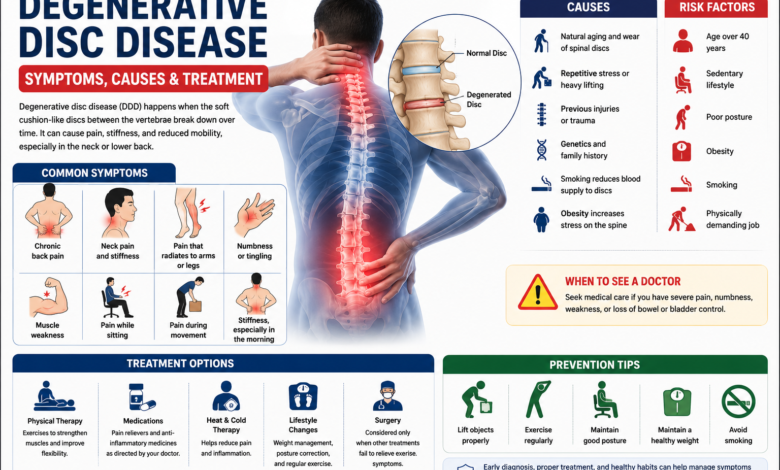
Back and neck pain are among the most common health complaints worldwide, affecting millions of people each year. One condition frequently associated with persistent spinal discomfort is degenerative disc disease (DDD). Despite its name, degenerative disc disease is not actually a disease but rather an age-related condition in which the spinal discs gradually lose their flexibility, hydration, and cushioning ability over time.
Many people develop some degree of disc degeneration as they age, but not everyone experiences symptoms. For others, however, degenerative disc disease symptoms can range from mild discomfort to chronic pain that affects work, exercise, and everyday activities.
Understanding the warning signs, causes, risk factors, treatment options, and lifestyle strategies can help individuals manage symptoms effectively and improve their quality of life. This comprehensive guide explains everything you need to know about degenerative disc disease symptoms and when to seek medical attention.
What Is Degenerative Disc Disease?
The spine contains soft, flexible discs that act as cushions between the vertebrae. These discs absorb shock and allow the spine to bend and move smoothly.
As people age, spinal discs naturally begin to wear down. They may lose water content, become thinner, or develop small tears. This gradual deterioration is known as degenerative disc disease.
Although disc degeneration is a normal part of aging, it may lead to pain and reduced mobility in some individuals.
Common Degenerative Disc Disease Symptoms
Symptoms vary depending on the location and severity of the affected disc.
Chronic Back Pain
Persistent lower back pain is one of the most common symptoms.
Pain may:
- Come and go
- Worsen after prolonged sitting
- Improve when walking
- Increase after bending or lifting
The discomfort often develops gradually rather than appearing suddenly.
Neck Pain
When degeneration affects the cervical spine, people may experience:
- Neck stiffness
- Pain while turning the head
- Reduced range of motion
- Muscle tightness
Neck symptoms may also spread to the shoulders or upper back.
Pain That Radiates
Damaged discs may irritate nearby nerves.
This can cause pain that radiates into:
- Buttocks
- Hips
- Legs
- Shoulders
- Arms
The location depends on which part of the spine is affected.
Numbness or Tingling
Pressure on spinal nerves may produce:
- Tingling sensations
- Pins-and-needles feelings
- Mild numbness
These symptoms commonly affect the arms or legs.
Muscle Weakness
Some individuals notice weakness in:
- Hands
- Arms
- Feet
- Legs
Weakness may interfere with walking, gripping objects, or climbing stairs.
Pain While Sitting
Sitting places additional pressure on spinal discs.
Many people find that symptoms worsen after sitting for extended periods.
Standing or changing positions often provides temporary relief.
Pain During Movement
Activities that may increase discomfort include:
- Twisting
- Lifting heavy objects
- Bending forward
- Sudden movements
Some people experience sharp pain followed by muscle spasms.
Stiffness
Morning stiffness is common.
Many individuals notice their back loosens gradually after gentle movement throughout the day.
Causes of Degenerative Disc Disease
Several factors contribute to disc degeneration.
Natural Aging
Over time, spinal discs lose water content and elasticity, making them less effective at absorbing shock.
Repetitive Stress
Repeated lifting, bending, twisting, or physically demanding work may accelerate wear on the spine.
Previous Injuries
Past back or neck injuries may increase the risk of earlier disc degeneration.
Genetics
Family history may influence an individual’s likelihood of developing degenerative disc disease.
Smoking
Smoking reduces blood flow to spinal tissues, potentially accelerating disc damage.
Obesity
Excess body weight places additional stress on the spine and supporting structures.
Risk Factors
People are more likely to develop degenerative disc disease if they:
- Are over age 40
- Perform heavy manual labor
- Smoke
- Have poor posture
- Live a sedentary lifestyle
- Have a family history of spinal conditions
- Experience repeated spinal injuries
How Is Degenerative Disc Disease Diagnosed?
Healthcare providers typically begin with:
Medical History
Questions may include:
- Location of pain
- Duration of symptoms
- Previous injuries
- Daily activities
Physical Examination
The provider evaluates:
- Muscle strength
- Flexibility
- Reflexes
- Walking ability
- Range of motion
Imaging Tests
Depending on symptoms, imaging may include:
- X-rays
- MRI scans
- CT scans
These tests help identify disc degeneration and rule out other spinal conditions.
Treatment Options
Treatment depends on symptom severity.
Physical Therapy
A physical therapist may recommend exercises to:
- Strengthen core muscles
- Improve posture
- Increase flexibility
- Reduce pain
Medications
Healthcare providers may recommend medications to reduce pain or inflammation when appropriate.
Always use medications according to professional medical advice.
Activity Modification
Avoiding activities that worsen symptoms while remaining physically active often helps manage pain.
Heat and Cold Therapy
Applying heat may relax muscles.
Cold packs can reduce inflammation following activity.
Lifestyle Changes
Healthy daily habits often improve long-term outcomes.
These include:
- Maintaining a healthy weight
- Regular exercise
- Proper lifting techniques
- Good posture
- Quitting smoking
Can Surgery Be Necessary?
Most people improve with non-surgical treatment.
However, surgery may be considered if:
- Severe nerve compression develops
- Pain becomes disabling
- Conservative treatments fail
- Progressive muscle weakness occurs
A spine specialist determines whether surgery is appropriate.
Preventing Degenerative Disc Disease Symptoms
Although aging cannot be prevented, healthy habits may reduce symptom severity.
Helpful strategies include:
- Exercise regularly
- Strengthen core muscles
- Maintain proper posture
- Lift objects correctly
- Avoid prolonged sitting
- Keep a healthy body weight
- Stay physically active
- Stop smoking
These habits support overall spinal health.
Possible Complications
Without proper management, degenerative disc disease may lead to:
- Chronic pain
- Reduced mobility
- Herniated discs
- Nerve compression
- Difficulty performing daily activities
Early treatment often reduces the risk of complications.
Frequently Asked Questions
Is degenerative disc disease permanent?
The structural changes cannot usually be reversed, but symptoms can often be managed successfully through treatment and lifestyle changes.
Can exercise help?
Yes. Appropriate exercises strengthen muscles supporting the spine and often reduce pain.
Does everyone with disc degeneration have symptoms?
No. Many people have spinal disc degeneration without experiencing pain or other symptoms.
When should I see a doctor?
Seek medical evaluation if back or neck pain persists, becomes severe, or is accompanied by numbness, weakness, or difficulty controlling bladder or bowel function.
Conclusion
Degenerative disc disease symptoms can vary from occasional stiffness to persistent back or neck pain that affects daily life. While disc degeneration is a natural part of aging, early diagnosis and appropriate treatment can significantly improve comfort, mobility, and quality of life.
By maintaining a healthy weight, staying physically active, practicing good posture, and working closely with a healthcare provider, many people successfully manage degenerative disc disease symptoms and continue enjoying an active lifestyle for years to come.