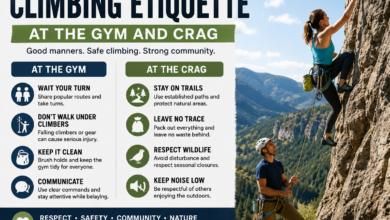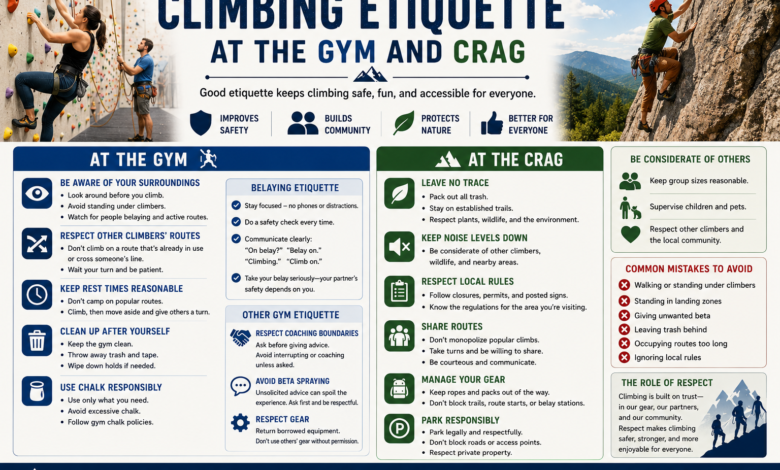
Rock climbing has grown rapidly in popularity over the past decade. From indoor climbing gyms to outdoor crags, more people are discovering the physical and mental benefits of this exciting sport. While strength, technique, and problem-solving skills are important, understanding proper climbing etiquette is equally essential.
Good climbing etiquette helps create a safe, welcoming, and enjoyable environment for everyone. Whether you’re a beginner tackling your first route at a climbing gym or an experienced climber exploring outdoor crags, respecting fellow climbers, the environment, and established climbing practices contributes to a positive experience for all.
This guide covers the most important aspects of climbing etiquette at both indoor gyms and outdoor climbing areas.
Why Climbing Etiquette Matters
Climbing often involves shared spaces, equipment, and resources. Poor behavior can create safety hazards, cause conflicts, and damage climbing areas.
Proper etiquette helps:
- Improve safety
- Prevent accidents
- Build a supportive community
- Protect outdoor climbing areas
- Enhance everyone’s climbing experience
Being considerate is just as important as having strong climbing skills.
Climbing Gym Etiquette
Indoor climbing gyms are often busy environments where many climbers share walls, routes, and equipment.
Understanding gym etiquette helps maintain a safe and enjoyable atmosphere.
Be Aware of Your Surroundings
Before starting a climb, look around and assess the area.
Pay attention to:
- Climbers already on the wall
- People belaying nearby
- Fall zones
- Walking paths
Avoid standing directly beneath climbers, as falling objects or unexpected falls can create serious hazards.
Respect Other Climbers’ Routes
One of the most common gym etiquette mistakes is “crossing routes.”
Avoid climbing on routes that intersect with someone else’s line while they are climbing.
Doing so can:
- Distract climbers
- Increase collision risks
- Create unsafe situations
Wait until the route is clear before starting.
Keep Rest Times Reasonable
During busy hours, avoid occupying popular routes for extended periods.
After completing a climb:
- Move away from the wall
- Allow others a turn
- Rest in designated areas
Sharing space fairly benefits everyone.
Clean Up After Yourself
Leave the gym cleaner than you found it.
Dispose of:
- Water bottles
- Tape scraps
- Food wrappers
- Chalk packaging
Maintaining a clean facility shows respect for staff and fellow climbers.
Use Chalk Responsibly
Excessive chalk can make holds slippery and create unnecessary mess.
Use chalk thoughtfully and:
- Avoid over-chalking
- Clean up spills
- Follow gym-specific chalk policies
Many facilities prefer liquid chalk or low-dust alternatives.
Belaying Etiquette
Belaying is one of the most important responsibilities in climbing.
Stay Focused
When belaying:
- Avoid phone use
- Limit distractions
- Keep your attention on the climber
A distracted belayer can create dangerous situations.
Perform Safety Checks
Before every climb:
- Verify harness buckles
- Check knots
- Confirm belay device setup
- Communicate clearly
Routine safety checks reduce the risk of preventable accidents.
Communicate Clearly
Use standard climbing commands such as:
- “On belay?”
- “Belay on.”
- “Climbing.”
- “Climb on.”
Clear communication ensures both climber and belayer understand each other.
Respect Coaching Boundaries
Offering advice is common in climbing communities, but not everyone wants unsolicited coaching.
Before giving tips:
- Ask permission
- Be respectful
- Avoid interrupting concentration
Many climbers prefer discovering solutions independently.
Avoid “Beta Spraying”
“Beta” refers to information about how to complete a route.
Beta spraying occurs when someone provides climbing advice without being asked.
This can:
- Spoil problem-solving experiences
- Frustrate climbers
- Reduce enjoyment
Always ask before sharing route solutions.
Equipment Etiquette
Shared equipment deserves careful treatment.
Return Borrowed Gear
If the gym provides equipment:
- Return harnesses
- Return belay devices
- Return rental shoes
Place items in designated locations.
Respect Personal Equipment
Never use another climber’s gear without permission.
This includes:
- Shoes
- Ropes
- Harnesses
- Belay devices
Personal climbing equipment should always be treated with respect.
Outdoor Climbing Etiquette at the Crag
Outdoor climbing introduces additional responsibilities.
Unlike gyms, crags are natural environments that require stewardship and respect.
Follow Leave No Trace Principles
Leave No Trace practices help preserve climbing areas for future generations.
Key principles include:
- Pack out all trash
- Stay on established trails
- Avoid damaging vegetation
- Respect wildlife
- Minimize environmental impact
Responsible behavior protects outdoor climbing access.
Keep Noise Levels Reasonable
Many crags are located in natural areas where excessive noise can disturb:
- Wildlife
- Other climbers
- Nearby residents
Enjoy the outdoors while remaining considerate.
Respect Local Regulations
Different climbing areas may have specific rules.
These may involve:
- Seasonal closures
- Parking restrictions
- Access permits
- Wildlife protection measures
Always research local guidelines before visiting.
Sharing Routes at the Crag
Popular climbing areas can become crowded.
Take Turns
Avoid monopolizing routes.
If others are waiting:
- Complete your climb efficiently
- Offer opportunities for others
- Communicate openly
A cooperative attitude creates a positive environment.
Manage Your Gear
Keep ropes, backpacks, and equipment organized.
Avoid blocking:
- Trails
- Route starts
- Belay stations
Good organization improves safety and accessibility.
Respect Wildlife and Nature
Outdoor climbing areas often contain fragile ecosystems.
Avoid:
- Damaging plants
- Disturbing nesting birds
- Creating new trails
- Leaving food waste
Small actions can have significant environmental impacts.
Parking Etiquette
Parking issues are a common cause of access disputes.
Always:
- Park legally
- Respect private property
- Follow posted signs
- Avoid blocking roads
Poor parking behavior can threaten future access to climbing areas.
Group Etiquette
Large climbing groups require additional consideration.
Keep Group Sizes Manageable
Large groups can:
- Increase noise
- Cause congestion
- Slow route access
If climbing with many people, divide into smaller groups when possible.
Supervise Children and Pets
Children and dogs can be part of climbing adventures but should be managed responsibly.
Ensure they:
- Stay away from fall zones
- Do not disturb other climbers
- Respect the natural environment
Safety should remain the top priority.
Supporting the Climbing Community
The climbing community thrives on respect and encouragement.
Positive behaviors include:
- Encouraging new climbers
- Sharing knowledge when requested
- Supporting safety practices
- Promoting environmental stewardship
Welcoming attitudes help the sport continue to grow.
Common Etiquette Mistakes to Avoid
New climbers sometimes make mistakes simply because they are unfamiliar with climbing culture.
Common issues include:
- Walking under climbers
- Standing in landing zones
- Giving unwanted advice
- Leaving trash behind
- Occupying routes too long
- Ignoring local rules
Learning from these mistakes helps climbers become valued community members.
The Role of Respect in Climbing
At its core, climbing is about trust.
Climbers trust:
- Their equipment
- Their partners
- Their community
Respectful behavior strengthens this trust and contributes to safer, more enjoyable climbing experiences.
Whether indoors or outdoors, treating others with kindness and consideration is one of the most important climbing skills a person can develop.
Conclusion
Climbing etiquette at the gym and crag goes beyond simple rules. It reflects a commitment to safety, respect, and community. By staying aware of your surroundings, communicating effectively, respecting fellow climbers, caring for equipment, and protecting outdoor environments, you contribute to a positive climbing culture that benefits everyone.
Whether you’re a beginner learning the basics or an experienced climber tackling advanced routes, practicing good etiquette ensures that climbing remains welcoming, safe, and enjoyable for generations to come.