How Long Does Oxycodone Take to Work
How Long Does Oxycodone Take to Work? Understanding Onset, Duration, and Effects

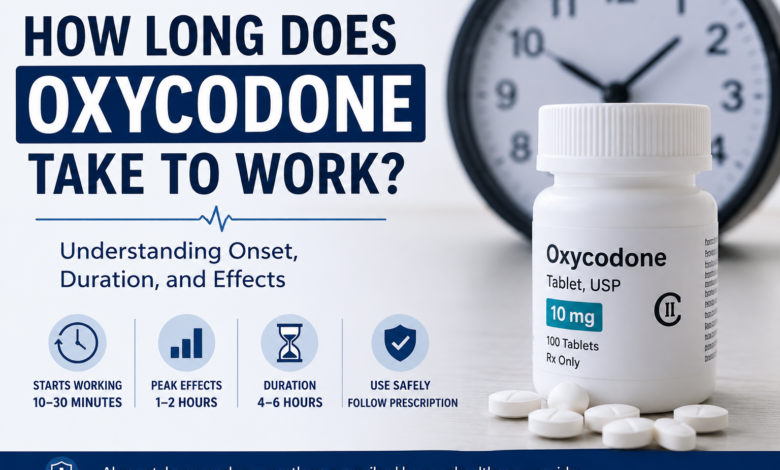
How Long Does Oxycodone Take to Work? Understanding Onset, Duration, and Effects
Oxycodone is a prescription opioid medication commonly used to manage moderate to severe pain. Doctors may prescribe it after surgery, injury, or for certain chronic pain conditions when other treatments are not providing enough relief. Because oxycodone is a powerful medication, many people wonder how quickly it starts working and how long its effects last.
Understanding the timeline of oxycodone can help patients use it safely and know what to expect. The speed at which the medication begins working depends on several factors, including the type of oxycodone prescribed, the dosage, the individual’s metabolism, and whether the medication is taken with food.
This article explains how long oxycodone takes to work, how long its pain-relieving effects typically last, and important safety considerations for those using this medication.
What Is Oxycodone?
Oxycodone belongs to a class of medications known as opioids. These drugs work by attaching to opioid receptors in the brain and nervous system, changing how pain signals are perceived by the body.
Healthcare providers may prescribe oxycodone for various reasons, including:
- Recovery after surgery
- Serious injuries
- Cancer-related pain
- Chronic pain conditions
Oxycodone is available in both immediate-release and extended-release forms. The type prescribed plays a significant role in determining how quickly the medication starts working.
How Long Does Oxycodone Take to Start Working?
For most people, immediate-release oxycodone begins to take effect within 10 to 30 minutes after it is taken. Many patients start noticing pain relief during this period, although the full effects may not be felt immediately.
Peak effects generally occur between one and two hours after taking the medication. During this time, the concentration of oxycodone in the bloodstream reaches its highest level, providing maximum pain relief.
Extended-release formulations work differently. These medications are designed to release oxycodone slowly over an extended period. As a result, they may take longer to produce noticeable effects but provide longer-lasting pain control.
Typical Timeline for Immediate-Release Oxycodone
- Starts working: 10–30 minutes
- Noticeable pain relief: Within 30–60 minutes
- Peak effect: 1–2 hours
- Duration of effects: Approximately 4–6 hours
Typical Timeline for Extended-Release Oxycodone
- Begins working: Around 1 hour
- Full therapeutic effect: Several hours
- Duration of pain relief: Up to 12 hours or longer depending on the formulation
Patients should always follow their healthcare provider’s instructions regarding dosage and timing.
Factors That Affect How Quickly Oxycodone Works
Several factors can influence how fast oxycodone begins relieving pain.
1. Type of Formulation
Immediate-release products are designed for faster pain relief, while extended-release formulations provide longer-lasting effects. This difference significantly impacts onset time.
2. Dosage
The prescribed dose may affect how noticeable the medication’s effects are. Higher doses may produce stronger effects, although increasing dosage without medical supervision can be dangerous.
3. Food Intake
Taking oxycodone with food may slightly alter absorption. In some cases, food can delay how quickly the medication enters the bloodstream, although the impact is usually not dramatic.
4. Individual Metabolism
Each person’s body processes medications differently. Age, genetics, liver function, and overall health can influence how quickly oxycodone takes effect.
5. Previous Opioid Use
Individuals who have previously used opioid medications may respond differently than those taking them for the first time. Tolerance can affect how the medication feels and how effectively it relieves pain.
How Long Do the Effects of Oxycodone Last?
The duration of oxycodone’s effects depends on the specific product being used.
Immediate-release oxycodone typically provides pain relief for four to six hours. This makes it useful for short-term pain management or situations where pain levels fluctuate throughout the day.
Extended-release versions are formulated to provide longer-lasting relief. These medications are often prescribed for ongoing pain management and may remain effective for approximately twelve hours between doses.
Although pain relief may wear off after several hours, small amounts of the medication can remain in the body much longer.
How Long Does Oxycodone Stay in the Body?
Even after the noticeable effects disappear, oxycodone continues to circulate in the body until it is fully metabolized and eliminated.
The average elimination half-life of immediate-release oxycodone is about three to five hours. This means it takes several half-life cycles before the drug is completely removed from the system.
In many cases:
- Blood: Detectable for up to 24 hours
- Urine: Detectable for several days
- Saliva: Detectable for one to two days
- Hair: Detectable for up to several months
Detection times can vary based on individual factors and testing methods.
What Does Oxycodone Feel Like?
When taken as prescribed, oxycodone primarily reduces pain. Some individuals may also experience:
- Relaxation
- Drowsiness
- Reduced discomfort
- A sense of calm
However, side effects can occur. Common side effects include:
- Sleepiness
- Dizziness
- Nausea
- Constipation
- Dry mouth
- Headache
Not everyone experiences these effects, and some may be more sensitive to the medication than others.
Safety Considerations
Because oxycodone is a potent opioid, it should only be used under medical supervision. Misuse can increase the risk of serious complications.
Important safety tips include:
Avoid Alcohol
Combining alcohol with oxycodone can increase the risk of dangerous side effects, including slowed breathing and excessive sedation.
Follow Prescribed Instructions
Never take more than the prescribed dose or take doses more frequently than directed.
Do Not Share Medication
Prescription opioids should only be used by the individual for whom they were prescribed.
Be Cautious When Driving
Individuals taking oxycodone should avoid driving or using heavy equipment until they know how the medication influences their alertness and coordination.
Store Securely
Keep oxycodone in a secure location away from children and unauthorized individuals.
Can Oxycodone Stop Working Over Time?
Some individuals who use opioids for extended periods may develop tolerance. Tolerance means the body becomes accustomed to the medication, reducing its effectiveness at the same dosage.
This does not necessarily happen to everyone, but it can occur with long-term use. Patients who feel their medication is becoming less effective should consult their healthcare provider rather than adjusting the dose themselves.
Healthcare professionals may recommend alternative treatments, dosage adjustments, or other pain-management strategies when necessary.
When Should You Contact a Healthcare Professional?
Patients should seek medical advice if they experience:
- Severe dizziness
- Difficulty breathing
- Extreme drowsiness
- Allergic reactions
- Confusion
- Unusual side effects
Prompt medical attention is important if serious symptoms develop.
Conclusion
Oxycodone generally begins working within 10 to 30 minutes when using immediate-release formulations, with peak pain relief occurring after one to two hours. Extended-release versions take longer to start working but provide more prolonged pain control.
The exact timing varies from person to person and depends on factors such as dosage, metabolism, food intake, and the specific formulation prescribed. While oxycodone can be highly effective for managing moderate to severe pain, it should always be used according to medical guidance due to its potential risks and side effects.
Understanding how oxycodone works, how long it takes to provide relief, and how long its effects last can help patients make informed decisions and use their medication safely.