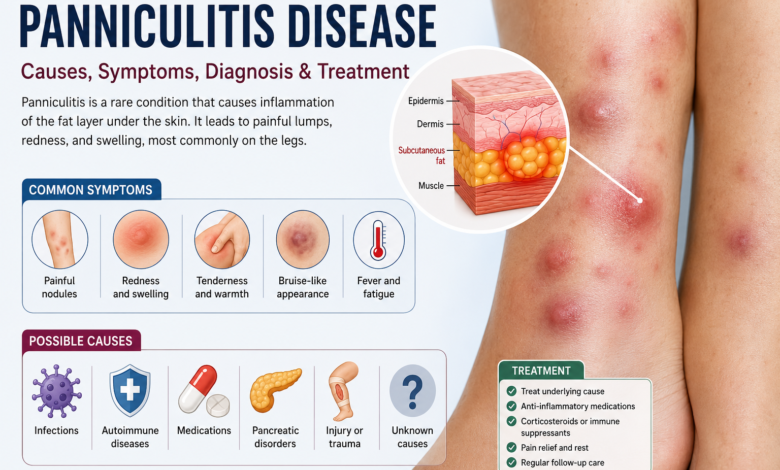
Panniculitis disease is a rare condition that causes inflammation in the layer of fat located beneath the skin, known as the subcutaneous fat. This fatty layer cushions the body, helps regulate temperature, stores energy, and protects muscles and internal organs. When it becomes inflamed, painful lumps or nodules may develop under the skin, often accompanied by redness, swelling, and tenderness.
Panniculitis is not a single disease but a group of disorders that affect the body’s fatty tissue. The condition can occur on its own or develop as a result of another health problem, such as an autoimmune disease, infection, injury, or pancreatic disorder. In some people, doctors are unable to identify a specific cause.
Because its symptoms can resemble other skin conditions, panniculitis is sometimes difficult to diagnose. An accurate diagnosis usually requires a physical examination, laboratory tests, and, in many cases, a skin biopsy.
This article explains what panniculitis disease is, why it develops, the different types, common symptoms, and how healthcare professionals diagnose the condition.
What Is Panniculitis Disease?
Panniculitis refers to inflammation of the subcutaneous fat layer, the tissue found directly beneath the skin. This inflammation causes fat cells to become damaged, leading to painful nodules or firm lumps that may be felt beneath the skin’s surface.
The condition can affect one small area or multiple parts of the body. The legs are most commonly involved, particularly the front of the lower legs, but panniculitis may also appear on the thighs, arms, abdomen, buttocks, or face depending on the underlying cause.
Some forms of panniculitis affect only the skin, while others may be linked to diseases involving the immune system or internal organs.
What Causes Panniculitis Disease?
Panniculitis develops when inflammation damages the fatty tissue beneath the skin. Many different medical conditions can trigger this inflammation.
Common causes include:
Autoimmune Disorders
Certain autoimmune diseases can attack healthy fat tissue, leading to inflammation.
Examples include:
- Lupus
- Dermatomyositis
- Sjögren’s syndrome
- Rheumatoid arthritis
Infections
Some bacterial, viral, fungal, or parasitic infections may trigger panniculitis.
Injury or Trauma
Direct injury, repeated pressure, surgery, burns, or blunt trauma can damage fatty tissue and result in inflammation.
Cold Exposure
Long exposure to very cold temperatures may lead to cold panniculitis, particularly in infants and young children.
Pancreatic Disease
Conditions such as pancreatitis or pancreatic cancer may release digestive enzymes into the bloodstream, damaging fat tissue and causing inflammation.
Certain Medications
Although uncommon, some medications have been associated with panniculitis in sensitive individuals.
Unknown Causes
In some cases, doctors cannot identify an exact cause. This is known as idiopathic panniculitis.
Risk Factors
Anyone can develop panniculitis, but certain factors increase the likelihood.
Risk factors include:
- Autoimmune diseases
- Chronic infections
- Pancreatic disorders
- Connective tissue diseases
- Recent physical injury
- Exposure to cold temperatures
- Certain prescription medications
- Family history of inflammatory conditions
Having a risk factor does not necessarily mean someone will develop the disease.
Symptoms of Panniculitis Disease
Symptoms vary depending on the type of panniculitis and the underlying cause.
The most common symptom is the appearance of painful lumps beneath the skin.
Other symptoms may include:
- Tender skin
- Swelling
- Red, purple, or brown skin discoloration
- Warmth over affected areas
- Bruise-like patches
- Firm nodules
- Fatigue
- Fever
- Joint pain
- General feeling of illness
The nodules may remain for several weeks before gradually healing.
Types of Panniculitis
Panniculitis includes several different conditions, each with unique characteristics.
Erythema Nodosum
The most common form of panniculitis.
It usually causes tender red nodules on the front of the lower legs and may develop after infections, certain medications, pregnancy, or autoimmune diseases.
Lupus Panniculitis
Occurs in people with lupus.
It often produces deep nodules that may heal with permanent depressions in the skin because of fat loss.
Pancreatic Panniculitis
A rare form linked to diseases affecting the pancreas.
Patients may develop painful nodules together with symptoms of pancreatic disease.
Cold Panniculitis
Caused by prolonged exposure to cold temperatures.
It commonly affects infants but may also occur in adults after extreme cold exposure.
Traumatic Panniculitis
Develops after injury to fatty tissue caused by accidents, surgery, or repeated pressure.
How Is Panniculitis Diagnosed?
Because many skin disorders produce similar symptoms, diagnosis requires a careful evaluation.
Medical History
Your healthcare provider will ask about:
- Recent illnesses
- Medications
- Injuries
- Autoimmune diseases
- Family history
- Duration of symptoms
Physical Examination
The affected skin is examined for:
- Number of nodules
- Size
- Tenderness
- Color changes
- Swelling
Blood Tests
Blood tests may help identify:
- Infection
- Inflammation
- Autoimmune disease
- Pancreatic abnormalities
Skin Biopsy
A skin biopsy is often the most important diagnostic test.
During the procedure, a small sample of skin and underlying fat is removed and examined under a microscope to determine the type of panniculitis.
Imaging Tests
Ultrasound, CT scans, or MRI scans may be recommended when doctors suspect deeper tissue involvement or an underlying medical condition.
Possible Complications
Although many cases improve with treatment, untreated panniculitis may lead to:
- Chronic pain
- Recurrent flare-ups
- Fat tissue loss
- Permanent skin depressions
- Scarring
- Skin discoloration
- Complications related to the underlying disease
Prompt diagnosis can reduce the risk of long-term problems.
When Should You See a Doctor?
Schedule a medical evaluation if you experience:
- Painful lumps beneath the skin
- Persistent swelling
- Fever with skin nodules
- Rapidly enlarging lumps
- Repeated episodes of skin inflammation
- Unexplained bruising or discoloration
Early medical assessment helps identify the cause and guide appropriate treatment.
Conclusion
Panniculitis disease is an uncommon inflammatory condition that affects the layer of fat beneath the skin. It can develop because of autoimmune disorders, infections, injuries, pancreatic disease, medications, or unknown causes. The condition often causes painful nodules, swelling, tenderness, and changes in skin color.
Since panniculitis may be associated with other medical conditions, obtaining an accurate diagnosis is essential. Physical examination, blood tests, imaging studies, and a skin biopsy are commonly used to identify the underlying cause and determine the most appropriate treatment approach.
Treatment for Panniculitis Disease
The treatment for panniculitis disease depends on the type of panniculitis, the severity of symptoms, and the underlying cause. Some cases improve with supportive care alone, while others require medications to control inflammation or treat an associated medical condition.
Rather than treating the skin lumps alone, healthcare providers focus on identifying and managing the condition responsible for the inflammation whenever possible.
Medications Used to Treat Panniculitis
Several types of medications may be recommended depending on the diagnosis.
Nonsteroidal Anti-Inflammatory Drugs (NSAIDs)
NSAIDs may help reduce pain, tenderness, and swelling in mild cases. They are often used to improve comfort while the inflammation resolves.
Corticosteroids
For moderate or severe inflammation, corticosteroids may be prescribed to reduce the immune response and control swelling. These medications are especially useful when panniculitis is linked to autoimmune diseases.
Immunosuppressive Therapy
Patients with panniculitis caused by conditions such as lupus or other connective tissue diseases may require medications that suppress an overactive immune system. These medicines are usually prescribed and monitored by a specialist.
Antibiotics
If the inflammation is triggered by a bacterial infection, antibiotics may be necessary to eliminate the infection and prevent further complications.
Treatment of the Underlying Condition
In cases associated with pancreatic disorders, autoimmune diseases, or other health problems, successful treatment of the underlying condition often leads to improvement in panniculitis symptoms.
Home Care Tips
Along with medical treatment, self-care can help relieve discomfort and support healing.
Helpful measures include:
- Rest when painful flare-ups occur.
- Elevate affected legs if swelling is present.
- Wear loose-fitting clothing to avoid irritating sensitive skin.
- Apply cool compresses if advised by your healthcare provider.
- Stay well hydrated.
- Eat a balanced diet rich in fruits, vegetables, lean protein, and whole grains.
- Follow your treatment plan exactly as prescribed.
Avoid self-medicating or using herbal products without discussing them with your healthcare provider.
Recovery and Long-Term Outlook
The outlook for panniculitis varies from person to person.
Many people recover completely once the underlying cause is treated, while others may experience recurring episodes over months or years.
Recovery depends on several factors, including:
- The specific type of panniculitis
- The severity of inflammation
- Early diagnosis
- Response to treatment
- Presence of autoimmune or chronic diseases
Regular follow-up visits allow healthcare providers to monitor healing and adjust treatment if symptoms return.
Can Panniculitis Be Prevented?
Because panniculitis has many possible causes, prevention is not always possible. However, adopting healthy habits may lower the risk of certain triggers.
You can support your overall health by:
- Treating infections promptly
- Managing autoimmune conditions under medical supervision
- Protecting your skin from repeated injuries
- Avoiding prolonged exposure to extreme cold
- Maintaining a healthy weight
- Attending regular medical checkups
- Following prescribed treatments for chronic illnesses
Although these measures cannot guarantee prevention, they may reduce the likelihood of flare-ups in some individuals.
Living With Panniculitis Disease
Living with panniculitis may require ongoing medical care, especially if it is associated with another chronic illness.
The following habits may help improve quality of life:
- Keep all follow-up appointments.
- Monitor your skin for new nodules or changes.
- Report worsening symptoms promptly.
- Stay physically active as tolerated.
- Manage stress through relaxation techniques or enjoyable hobbies.
- Seek support from family, friends, or patient support groups.
Learning about your condition and maintaining open communication with your healthcare team can make long-term management easier.
Possible Complications
Without appropriate treatment, panniculitis may lead to:
- Persistent pain
- Recurrent inflammation
- Permanent skin discoloration
- Fat tissue loss beneath the skin
- Scarring or skin depressions
- Cosmetic concerns
- Complications related to the underlying disease
Early diagnosis and proper treatment significantly reduce the risk of long-term complications.
Frequently Asked Questions
Is panniculitis disease contagious?
No. Panniculitis is not an infectious disease and cannot spread from one person to another.
Can panniculitis heal on its own?
Some mild forms improve without extensive treatment, but many cases require medical evaluation to identify and manage the underlying cause.
Is panniculitis cancer?
No. Panniculitis itself is not a type of cancer. However, in rare situations it may occur alongside other medical conditions that require further investigation.
Does panniculitis always come back?
Not always. Some people experience only one episode, while others may have recurring flare-ups depending on the underlying cause.
When should I seek emergency care?
Seek immediate medical attention if you develop severe pain, rapidly spreading skin changes, high fever, difficulty breathing, or other serious symptoms along with painful skin nodules.
Conclusion
Panniculitis disease is an uncommon inflammatory condition that affects the layer of fat beneath the skin and can result from infections, autoimmune disorders, injuries, pancreatic disease, medications, or unknown causes. Although it often causes painful nodules, swelling, and skin discoloration, many people recover well when the underlying cause is identified and treated.
Because panniculitis can sometimes be associated with more serious health conditions, early medical evaluation is important. With proper diagnosis, appropriate treatment, and regular follow-up care, many individuals are able to manage symptoms effectively and maintain a good quality of life.