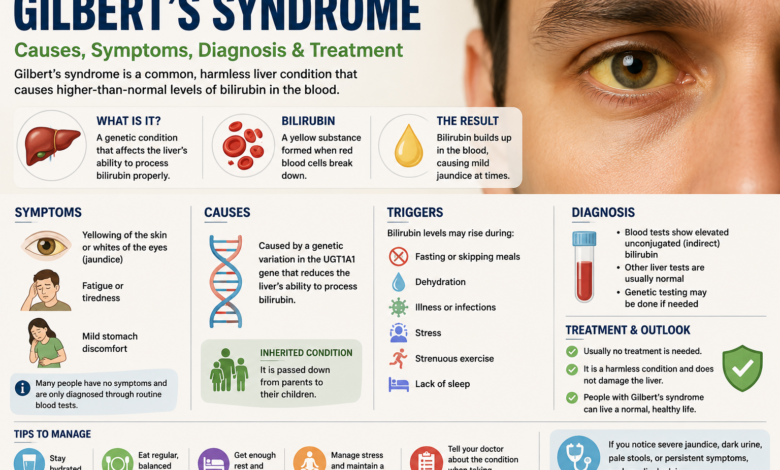
Gilbert’s syndrome is a common and usually harmless liver condition that causes higher-than-normal levels of bilirubin in the blood. Bilirubin is a yellow substance produced when red blood cells naturally break down. The liver normally processes bilirubin so it can be removed from the body, but people with Gilbert’s syndrome have a reduced ability to process it efficiently.
Because of this, bilirubin can temporarily build up in the bloodstream. Some people develop mild yellowing of the skin or the whites of the eyes, known as jaundice. Others have no noticeable symptoms and only discover they have Gilbert’s syndrome after a routine blood test.
Gilbert’s syndrome is generally considered a benign inherited condition. It does not usually damage the liver, shorten life expectancy, or require treatment. However, understanding the condition is important because elevated bilirubin can sometimes be mistaken for a sign of more serious liver disease.
This article explains what Gilbert’s syndrome is, its symptoms, causes, triggers, diagnosis, treatment, and when to seek medical advice.
What Is Gilbert’s Syndrome?
Gilbert’s syndrome is an inherited condition that affects the way the liver processes bilirubin.
A specific gene involved in bilirubin metabolism, commonly referred to as UGT1A1, normally provides instructions for producing an enzyme that helps the liver process bilirubin. In people with Gilbert’s syndrome, genetic changes reduce the activity of this enzyme.
As a result, bilirubin may remain in the bloodstream at mildly elevated levels.
The condition is usually discovered during adolescence or early adulthood, although it can be present from birth without causing noticeable symptoms.
Is Gilbert’s Syndrome Dangerous?
For most people, Gilbert’s syndrome is not dangerous.
It generally:
- Does not cause liver failure
- Does not usually damage the liver
- Does not require ongoing medical treatment
- Does not usually affect life expectancy
- Does not prevent people from living normally
The main noticeable feature is intermittent mild jaundice.
Even though Gilbert’s syndrome itself is harmless, yellow skin or eyes can have many other causes. Therefore, unexplained jaundice should be evaluated by a healthcare professional.
Symptoms of Gilbert’s Syndrome
Many people with Gilbert’s syndrome do not experience symptoms. When symptoms occur, they are usually mild.
1. Mild Jaundice
The most recognizable feature is occasional yellowing of the skin or the whites of the eyes.
This happens when bilirubin levels temporarily increase.
Jaundice may become more noticeable during periods such as:
- Fasting
- Dehydration
- Illness
- Stress
- Lack of sleep
- Strenuous exercise
The yellowing usually improves when the triggering factor resolves.
2. Fatigue
Some people with Gilbert’s syndrome report tiredness or low energy. However, fatigue is common in the general population and can have many other causes.
Persistent or severe fatigue should therefore not automatically be attributed to Gilbert’s syndrome.
3. Abdominal Discomfort
Occasionally, people with Gilbert’s syndrome report mild abdominal discomfort or digestive symptoms. These symptoms are not specific to the condition and may have another cause.
4. Reduced Appetite or Feeling Unwell
Some people notice feeling generally unwell during periods when bilirubin rises, particularly during illness or fasting.
However, significant symptoms should be investigated rather than assumed to be caused by Gilbert’s syndrome.
What Causes Gilbert’s Syndrome?
Gilbert’s syndrome is caused by an inherited genetic variation affecting bilirubin processing.
The condition is associated with reduced activity of the enzyme responsible for converting bilirubin into a form that can be more easily eliminated from the body.
Because the enzyme still works to some degree, bilirubin levels usually remain only mildly elevated.
Gilbert’s syndrome is generally inherited, meaning a person can receive the relevant genetic variants from their parents.
What Can Trigger High Bilirubin Levels?
Bilirubin levels in someone with Gilbert’s syndrome can fluctuate. Certain situations can make jaundice temporarily more noticeable.
Common triggers include:
Fasting
Not eating for long periods can increase bilirubin levels.
Crash diets and very restrictive diets may therefore make jaundice more noticeable.
Dehydration
Not drinking enough fluids can contribute to increased bilirubin levels.
Staying adequately hydrated is particularly important during hot weather, exercise, and illness.
Illness
Infections and other illnesses can temporarily increase bilirubin.
Stress
Physical or emotional stress may be associated with a temporary increase in bilirubin levels.
Strenuous Exercise
Very intense exercise can sometimes contribute to higher bilirubin levels in people with Gilbert’s syndrome.
Lack of Sleep
Poor sleep or significant disruption of normal sleep patterns may also coincide with increased symptoms in some individuals.
Gilbert’s Syndrome and Jaundice
Jaundice occurs when bilirubin accumulates in the body and causes the skin or eyes to appear yellow.
In Gilbert’s syndrome, jaundice is generally:
- Mild
- Intermittent
- More noticeable during certain triggers
- Not associated with significant liver damage
The whites of the eyes may appear slightly yellow even when the skin looks normal.
However, not all jaundice is caused by Gilbert’s syndrome. Liver disease, gallstones, certain blood disorders, infections, and other medical conditions can also cause bilirubin levels to rise.
For this reason, new or unexplained jaundice should be evaluated by a healthcare professional.
How Is Gilbert’s Syndrome Diagnosed?
Gilbert’s syndrome is often discovered through routine blood testing.
A healthcare professional may order tests to measure:
- Total bilirubin
- Direct and indirect bilirubin
- Liver enzymes
- Complete blood count
- Other tests when necessary
In Gilbert’s syndrome, bilirubin is typically elevated primarily because of an increase in unconjugated (indirect) bilirubin, while other liver tests are usually normal.
The doctor may also review your medical history and symptoms to make sure another condition is not responsible.
Genetic Testing
Genetic testing can identify variants associated with Gilbert’s syndrome, but it is not always necessary.
A healthcare professional can determine whether genetic testing would provide useful information based on the person’s symptoms and laboratory results.
Is Gilbert’s Syndrome a Liver Disease?
Gilbert’s syndrome affects the way the liver processes bilirubin, but it is not generally considered a damaging liver disease.
The liver itself typically functions normally.
People with Gilbert’s syndrome usually have normal liver enzyme levels and do not develop progressive liver damage because of the condition.
This is one reason the condition generally does not require treatment.
Treatment for Gilbert’s Syndrome
In most cases, Gilbert’s syndrome does not require treatment.
The condition is usually managed through reassurance and awareness of factors that may increase bilirubin levels.
Helpful habits include:
- Staying hydrated
- Eating regular meals
- Avoiding prolonged fasting
- Getting enough sleep
- Managing stress
- Avoiding unnecessary extreme dieting
- Maintaining a balanced lifestyle
If a person develops symptoms from another condition, that condition should be treated separately.
Medications and Gilbert’s Syndrome
People with Gilbert’s syndrome should tell healthcare professionals about their condition when medications are being prescribed.
The reduced activity of the UGT1A1 enzyme can affect how the body handles certain medications. Most medicines are not a problem, but some drugs may require particular consideration.
Do not stop or change prescribed medication without speaking with a healthcare professional.
Gilbert’s Syndrome and Diet
There is generally no special diet required for Gilbert’s syndrome.
A balanced diet containing a variety of foods can support overall health.
Helpful habits include eating regular meals and avoiding prolonged fasting or extreme calorie restriction.
A typical balanced diet can include:
- Fruits
- Vegetables
- Whole grains
- Lean proteins
- Beans and legumes
- Healthy fats
- Adequate fluids
If certain foods appear to worsen digestive symptoms, discuss this with a healthcare professional rather than unnecessarily eliminating large food groups.
Can Gilbert’s Syndrome Go Away?
Gilbert’s syndrome is an inherited condition, so the underlying genetic variation does not simply disappear.
However, bilirubin levels can fluctuate, and symptoms may become less noticeable over time.
Many people have long periods without visible jaundice and continue to live completely normal lives.
Can Gilbert’s Syndrome Affect Life Expectancy?
Gilbert’s syndrome generally does not reduce life expectancy.
It is considered a benign condition, and most people with it can participate in normal activities, exercise, work, travel, and maintain an ordinary lifestyle.
When Should You See a Doctor?
Although Gilbert’s syndrome is usually harmless, you should seek medical advice if you develop unexplained or significant jaundice.
Contact a healthcare professional if you experience:
- Severe or persistent yellowing of the skin or eyes
- Dark urine
- Pale or clay-colored stools
- Severe abdominal pain
- Persistent vomiting
- Unexplained weight loss
- Significant weakness
- Fever
- Confusion
- Swelling of the abdomen or legs
These symptoms can indicate another condition that requires medical assessment.
Gilbert’s Syndrome vs. Other Causes of High Bilirubin
Elevated bilirubin does not automatically mean someone has Gilbert’s syndrome.
Other possible causes include:
- Liver diseases
- Gallbladder problems
- Blockage of the bile ducts
- Hemolysis or increased breakdown of red blood cells
- Certain medications
- Infections
- Other inherited disorders affecting bilirubin metabolism
The pattern of blood test results and the person’s symptoms help healthcare professionals determine the likely cause.
Frequently Asked Questions
Is Gilbert’s syndrome serious?
Gilbert’s syndrome is generally a mild and harmless inherited condition. It usually does not cause liver damage or require treatment.
What is the main symptom of Gilbert’s syndrome?
The main recognizable feature is intermittent mild jaundice, particularly yellowing of the whites of the eyes.
Can Gilbert’s syndrome cause fatigue?
Some people report fatigue, but tiredness has many possible causes and is not specific to Gilbert’s syndrome.
Can people with Gilbert’s syndrome live normally?
Yes. Most people with Gilbert’s syndrome can live normal, healthy lives without significant restrictions.
Does Gilbert’s syndrome need treatment?
Usually not. Treatment is generally unnecessary because the condition does not typically cause liver damage or serious complications.
Can fasting make Gilbert’s syndrome worse?
Yes. Prolonged fasting or significant calorie restriction can increase bilirubin levels and make jaundice more noticeable.
Can dehydration increase bilirubin?
Dehydration can contribute to increased bilirubin levels in people with Gilbert’s syndrome. Staying adequately hydrated may help reduce fluctuations.
Is Gilbert’s syndrome inherited?
Yes. It is associated with inherited genetic variations affecting the enzyme involved in bilirubin processing.
Can Gilbert’s syndrome cause liver damage?
Gilbert’s syndrome itself generally does not cause progressive liver damage. However, other causes of abnormal liver tests or jaundice should be ruled out when appropriate.
Conclusion
Gilbert’s syndrome is a common inherited condition that affects the liver’s ability to process bilirubin. It typically causes mild, temporary increases in bilirubin and may result in occasional yellowing of the skin or eyes.
For most people, Gilbert’s syndrome is harmless and does not require treatment. Staying hydrated, eating regularly, avoiding prolonged fasting, getting adequate sleep, and maintaining a balanced lifestyle can help reduce situations that may make jaundice more noticeable.
Because jaundice can have many different causes, it is important not to assume that yellow skin or eyes are caused by Gilbert’s syndrome without appropriate medical evaluation. If symptoms are severe, persistent, or accompanied by other concerning changes, consult a healthcare professional.
With proper diagnosis and understanding of the condition, most people with Gilbert’s syndrome can continue their everyday lives without major limitations.