Deviated Septum Symptoms: Signs, Causes, Diagnosis, and Treatment

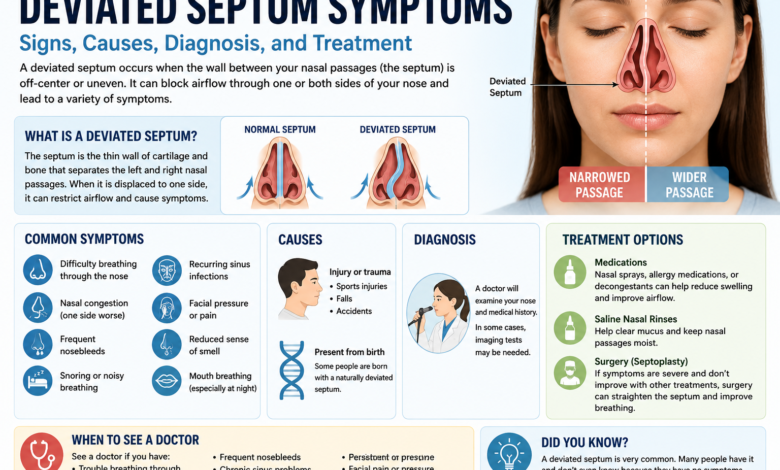
A deviated septum occurs when the thin wall separating the nasal passages is shifted to one side instead of sitting centrally. A slight deviation is common and may cause no problems. However, a more significant deviation can narrow one or both nasal passages and lead to breathing difficulties.
Deviated septum symptoms can include nasal congestion, difficulty breathing through the nose, frequent nosebleeds, snoring, facial pressure, and recurring sinus problems. Symptoms can be more noticeable during a cold or when allergies cause additional swelling inside the nose.
Some people live with a deviated septum without realizing it. Others may experience persistent symptoms that interfere with sleep, exercise, or everyday activities.
This article explains the common signs of a deviated septum, what causes it, how it is diagnosed, available treatments, and when you should see a healthcare professional.
What Is a Deviated Septum?
The nasal septum is a wall made of bone and cartilage that separates the left and right sides of the nose.
Ideally, the septum is relatively straight, allowing air to move through both nasal passages. With a deviated septum, the wall is displaced toward one side.
A mild deviation may have little or no effect. A more pronounced deviation can make one nasal passage considerably narrower.
A deviated septum can be present from birth or develop after an injury to the nose.
Common Deviated Septum Symptoms
Symptoms vary depending on how much the septum is displaced and whether other nasal conditions are present.
1. Difficulty Breathing Through the Nose
One of the most common symptoms is difficulty breathing through one or both nostrils.
You may notice that:
- One nostril feels more blocked than the other.
- Breathing becomes harder during exercise.
- Nasal breathing is more difficult when you have a cold.
- You frequently breathe through your mouth.
Some people notice that one side of their nose consistently feels more restricted.
2. Nasal Congestion
A deviated septum can contribute to a feeling of constant or recurring nasal blockage.
Congestion may become more noticeable when the tissues inside the nose become swollen because of:
- Allergies
- Colds
- Respiratory infections
- Irritants
A person may feel congested even when there is little mucus present.
3. Frequent Nosebleeds
A deviated septum can contribute to dryness and irritation inside the nose. In some people, this may increase the likelihood of nosebleeds.
Frequent or unexplained nosebleeds should be discussed with a healthcare professional because they can have several possible causes.
4. Snoring
Restricted airflow through the nose can contribute to mouth breathing during sleep. This may make snoring more likely.
However, snoring has many causes, including nasal congestion, sleep position, body weight, alcohol use, and sleep-related breathing disorders.
A deviated septum is therefore not the only possible explanation for snoring.
5. Noisy Breathing During Sleep
Some people with significant nasal obstruction may notice noisy breathing while sleeping.
Mouth breathing may also cause:
- Dry mouth
- Sore throat in the morning
- Bad breath
- Interrupted sleep
If breathing repeatedly stops and starts during sleep, medical evaluation is important because this can be a sign of sleep apnea.
6. Recurrent Sinus Problems
A severely deviated septum can interfere with normal airflow and drainage from the sinuses.
Some people may experience recurring symptoms such as:
- Facial pressure
- Nasal congestion
- Headache
- Thick nasal discharge
- Reduced sense of smell
However, sinus infections have many possible causes, and a deviated septum is not necessarily responsible for every sinus problem.
7. Facial Pressure or Discomfort
Some people experience pressure or discomfort around the nose, cheeks, forehead, or eyes.
Facial pressure can also occur with allergies, sinus infections, migraines, and other conditions, so it should not automatically be attributed to a deviated septum.
8. Headaches
A deviated septum may be associated with headaches or facial discomfort in some people, particularly when nasal obstruction or sinus problems are also present.
However, headaches are common and have numerous causes. Persistent or severe headaches should be evaluated rather than assumed to result from a nasal problem.
9. Reduced Sense of Smell
A blocked or narrowed nasal passage can sometimes interfere with the normal movement of air toward the smell receptors.
You may notice:
- Reduced ability to smell
- Difficulty detecting certain odors
- Food seeming less flavorful
A sudden or complete loss of smell can have other causes and should be medically evaluated.
10. Mouth Breathing
When nasal breathing is difficult, you may unconsciously breathe through your mouth, particularly at night.
Long-term mouth breathing can contribute to:
- Dry mouth
- Dry throat
- Bad breath
- Snoring
- Morning throat discomfort
What Causes a Deviated Septum?
There are two main ways a deviated septum can develop.
Present From Birth
Some people are born with a septum that is not perfectly straight. The deviation may become more noticeable as the nose and facial structures develop.
Injury to the Nose
A nasal injury can shift the septum away from its normal position.
Possible causes include:
- Sports injuries
- Falls
- Car accidents
- Physical impacts
- Contact sports
Even an injury that seemed minor at the time can sometimes affect the nasal septum.
Can Allergies Cause a Deviated Septum?
Allergies do not generally cause the septum itself to become deviated.
However, allergies can cause swelling inside the nose. If someone already has a deviated septum, this additional swelling can make nasal obstruction significantly worse.
This is why breathing problems may become particularly noticeable during allergy season.
Deviated Septum vs. Normal Nasal Cycle
It is normal for the nasal passages to change slightly throughout the day. This is known as the nasal cycle.
During the nasal cycle, the tissues inside one nostril may swell slightly while the other side becomes more open. The sides then alternate.
Therefore, having one nostril feel more congested at certain times does not necessarily mean you have a deviated septum.
A persistent difference in airflow, especially when combined with other symptoms, may warrant an evaluation.
How Is a Deviated Septum Diagnosed?
A healthcare professional can usually begin diagnosis with a physical examination.
The examination may include:
- Looking inside the nostrils
- Examining the nasal passages
- Asking about breathing problems
- Reviewing your medical history
- Asking about previous nasal injuries
In some cases, a doctor may use a small instrument or nasal endoscope to examine deeper areas of the nasal passages.
Imaging may be recommended when additional information is needed or when another condition is suspected.
Treatment for a Deviated Septum
Treatment depends on the severity of symptoms.
A deviated septum that causes no significant problems generally does not require treatment.
Medications
Medications cannot straighten a deviated septum, but they may help control symptoms caused by swelling or inflammation.
Depending on the underlying problem, a healthcare professional may recommend treatments such as:
- Saline nasal sprays
- Allergy medications
- Certain nasal corticosteroid sprays
- Other medications for nasal inflammation
Use nasal medications according to the product instructions or advice from a healthcare professional.
Saline Nasal Rinses
Saline rinses can help remove mucus and irritants from the nasal passages.
If you use a nasal irrigation device, use distilled, sterile, or appropriately treated water rather than untreated tap water.
Managing Allergies
If allergies contribute to nasal congestion, controlling them may make breathing easier even though allergy treatment will not straighten the septum.
Avoiding known triggers and using appropriate allergy treatments may help reduce nasal swelling.
Surgery for a Deviated Septum
When a deviated septum causes significant symptoms that do not improve with other measures, surgery may be considered.
The procedure used to straighten the septum is called septoplasty.
During septoplasty, the surgeon reshapes or removes selected portions of cartilage or bone so that the septum is positioned more centrally.
The goal is to improve airflow through the nose.
When Is Septoplasty Considered?
A healthcare professional may consider surgery when a deviated septum causes problems such as:
- Persistent nasal obstruction
- Difficulty breathing despite medical treatment
- Significant sleep-related breathing problems
- Recurrent nasal problems associated with the deviation
- Symptoms that substantially affect quality of life
Surgery is not necessary for everyone with a deviated septum.
Recovery After Septoplasty
Recovery varies from person to person.
After surgery, it is common to experience temporary:
- Nasal congestion
- Swelling
- Mild discomfort
- Drainage
- Reduced nasal breathing
Your surgeon will provide specific instructions about activity, medications, wound care, and follow-up appointments.
It is important to follow those instructions carefully during recovery.
When Should You See a Doctor?
Consider seeing a healthcare professional if you have persistent:
- Difficulty breathing through your nose
- Nasal blockage
- Frequent nosebleeds
- Recurrent sinus symptoms
- Snoring
- Mouth breathing
- Reduced sense of smell
- Facial pressure
You should also seek medical evaluation after a significant nasal injury, particularly if you have difficulty breathing, substantial swelling, severe pain, or a change in the shape of your nose.
Frequently Asked Questions
What is the most common symptom of a deviated septum?
Nasal obstruction or difficulty breathing through one side of the nose is one of the most common symptoms.
Can a deviated septum cause headaches?
It can be associated with facial pressure and headaches in some people, but headaches have many possible causes.
Can a deviated septum cause snoring?
Yes. Nasal obstruction can contribute to mouth breathing and may worsen snoring, although many other factors can also cause snoring.
Can a deviated septum get worse with age?
The underlying deviation may remain relatively stable, but changes in nasal tissues, aging, allergies, or other conditions can make symptoms more noticeable over time.
Can you fix a deviated septum without surgery?
Medications and other treatments can help manage congestion and inflammation, but they do not physically straighten a deviated septum. Septoplasty is the procedure used to correct the structural deviation.
Can a deviated septum cause sinus infections?
A significant deviation may interfere with normal nasal airflow or sinus drainage and can contribute to recurring sinus problems in some people. However, sinus infections have multiple possible causes.
Is a deviated septum dangerous?
Most deviated septums are not dangerous. Treatment may be considered when the condition causes persistent breathing difficulties or other significant symptoms.
Conclusion
Deviated septum symptoms can range from mild nasal blockage to persistent difficulty breathing, frequent nosebleeds, snoring, mouth breathing, reduced smell, and recurring sinus problems. Some people have a deviated septum without experiencing any symptoms at all.
A deviated septum can be present from birth or develop following an injury. Allergies and nasal inflammation may make symptoms more noticeable, even though they do not usually cause the septum itself to become crooked.
If symptoms are mild, treatments that reduce nasal swelling may provide relief. When structural blockage is severe and continues to interfere with daily life despite other treatments, septoplasty may be an option.
If you regularly struggle to breathe through your nose, have repeated nosebleeds, or experience persistent nasal or sinus symptoms, speak with a healthcare professional for an appropriate evaluation.