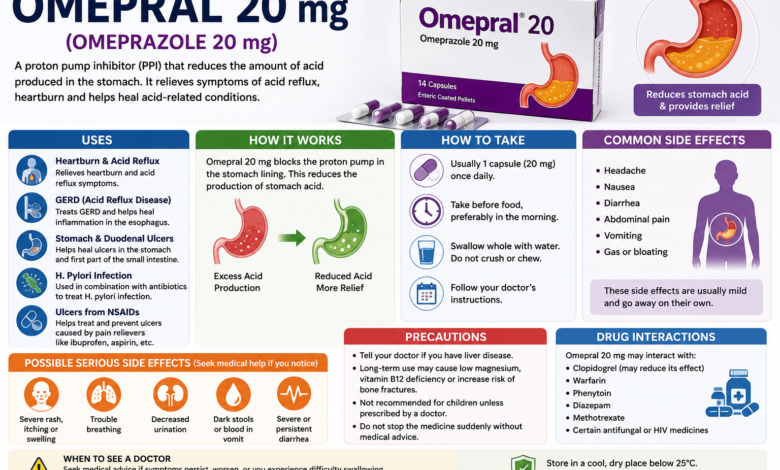
Omepral 20 mg is a medicine containing omeprazole, a proton pump inhibitor (PPI) that reduces the amount of acid produced by the stomach. It is commonly used for conditions such as heartburn, acid reflux, gastroesophageal reflux disease (GERD), and certain stomach or intestinal ulcers. Omeprazole may also be used with antibiotics to treat Helicobacter pylori (H. pylori) infection.
Because the exact instructions can vary depending on the condition being treated and the formulation, Omepral 20 mg should be taken according to the product instructions or a healthcare professional’s advice.
This article explains what Omepral 20 mg is, what it is used for, how it works, common side effects, precautions, drug interactions, and when medical advice is needed.
What Is Omepral 20 mg?
Omepral 20 mg contains omeprazole 20 mg. Omeprazole belongs to a group of medicines called proton pump inhibitors.
PPIs work by reducing the production of stomach acid. Lowering stomach acid can help relieve acid-related symptoms and allow irritated or damaged areas of the stomach or esophagus to heal.
Omepral 20 mg may be available in a delayed-release or gastro-resistant formulation. These formulations are designed to protect the medicine as it passes through the stomach.
What Is Omepral 20 mg Used For?
Omeprazole 20 mg may be prescribed or recommended for several acid-related conditions.
1. Heartburn and Acid Reflux
Heartburn occurs when stomach contents move back into the esophagus, causing a burning sensation.
Reducing stomach acid can help relieve symptoms associated with acid reflux.
2. Gastroesophageal Reflux Disease (GERD)
GERD is a condition in which acid reflux occurs repeatedly and can cause persistent symptoms or inflammation of the esophagus.
Omeprazole is used to treat symptomatic GERD and, in appropriate patients, erosive esophagitis associated with acid-mediated GERD.
3. Stomach and Duodenal Ulcers
Omeprazole can be used in the treatment of certain gastric and duodenal ulcers.
For active duodenal ulcers, one approved adult regimen is 20 mg once daily for four weeks, although some people may need longer treatment.
4. H. Pylori Infection
Helicobacter pylori is a bacterium that can contribute to stomach and duodenal ulcers.
When omeprazole is used to help eradicate H. pylori, it is generally combined with antibiotics rather than used alone. The exact combination and duration should be determined by a healthcare professional.
5. Ulcers Associated With Certain Medicines
Omeprazole may also be used to treat or prevent certain ulcers associated with nonsteroidal anti-inflammatory drugs (NSAIDs), depending on the individual’s circumstances.
How Does Omepral 20 mg Work?
Omepral 20 mg works by blocking an enzyme system in stomach cells that is responsible for producing stomach acid.
As acid production decreases:
- Heartburn symptoms may improve.
- Acid irritation can be reduced.
- Damaged areas can have an opportunity to heal.
- Acid-related ulcers may heal more effectively.
Unlike some antacids, omeprazole is not intended to provide immediate relief. Some over-the-counter 20 mg omeprazole products may take 1 to 4 days to achieve their full effect.
How to Take Omepral 20 mg
The correct dose and duration depend on why you are taking the medicine.
For some adult conditions, omeprazole 20 mg is taken once daily. However, other conditions may require a different dose, frequency, or combination with other medicines.
Delayed-release omeprazole capsules should generally be taken before eating and swallowed whole unless the specific product instructions provide another method. Do not crush or chew delayed-release formulations.
If you have been prescribed Omepral 20 mg, follow the instructions provided by your doctor or pharmacist rather than changing the dose yourself.
What If You Miss a Dose?
If you forget a dose, follow the instructions provided with your medicine or ask your pharmacist what to do.
Do not routinely take extra doses to make up for missed medication unless a healthcare professional specifically tells you to do so.
Common Side Effects of Omepral 20 mg
Like all medicines, omeprazole can cause side effects, although not everyone experiences them.
Commonly reported side effects include:
- Headache
- Abdominal pain
- Nausea
- Diarrhea
- Vomiting
- Flatulence or increased gas
These are among the common adverse reactions reported for omeprazole.
Mild side effects may improve as the body adjusts to treatment. If symptoms are severe, persistent, or concerning, speak with a healthcare professional.
Serious Side Effects and Warning Signs
Serious reactions are uncommon, but certain symptoms require prompt medical attention.
Seek medical help if you develop signs of a serious allergic reaction, such as:
- Difficulty breathing
- Swelling of the face, lips, tongue, or throat
- Severe rash
- Blistering or peeling skin
Severe or unusual symptoms should not be ignored.
Omeprazole has also been associated with certain less common but important risks, including acute interstitial nephritis, Clostridioides difficile-associated diarrhea, low magnesium levels, vitamin B12 deficiency with prolonged use, and certain drug interactions.
Long-Term Use of Omepral 20 mg
The length of treatment depends on the medical condition.
Some people need omeprazole for a short period, while others with specific conditions may require longer treatment. NHS guidance notes that treatment duration can range from a few days to several weeks, months, or longer depending on the reason for use.
Long-term PPI use should be reviewed periodically with a healthcare professional because prolonged use may be associated with certain risks.
For example, official prescribing information notes concerns including vitamin B12 deficiency, low magnesium levels, certain intestinal infections, bone fracture risk in particular circumstances, and an increased risk of fundic gland polyps with prolonged use.
This does not mean everyone taking omeprazole will develop these problems. The benefits and risks depend on the individual and the duration of treatment.
Omepral 20 mg and Drug Interactions
Omeprazole can interact with certain medicines.
One particularly important interaction involves clopidogrel, because omeprazole can affect how clopidogrel is activated in the body.
Other medicines may also interact with omeprazole, so tell your doctor or pharmacist about all medicines and supplements you take.
This includes:
- Prescription medicines
- Over-the-counter medicines
- Vitamins
- Herbal products
- Other medicines for stomach acid
Do not stop an important prescription medicine without professional advice.
Who Should Be Careful With Omepral 20 mg?
Before taking omeprazole, tell your healthcare professional if you:
- Have liver problems
- Have had an allergic reaction to omeprazole or another PPI
- Take several prescription medicines
- Have unexplained weight loss
- Have persistent vomiting
- Have difficulty swallowing
- Have a history of certain digestive conditions
- Need long-term acid-suppressing treatment
A medical evaluation is particularly important when symptoms are new, severe, or unexplained.
Omepral 20 mg and Pregnancy
If you are pregnant, planning pregnancy, or breastfeeding, discuss omeprazole use with your healthcare professional.
Do not start or stop a medicine during pregnancy without appropriate medical advice.
The right treatment depends on your symptoms, medical history, and other medicines you may be taking.
Can Omepral 20 mg Be Used for Immediate Heartburn Relief?
Omepral 20 mg is not generally intended to provide instant relief from occasional heartburn.
Some 20 mg over-the-counter omeprazole products specifically state that they may take 1 to 4 days for full effect.
For occasional symptoms, a pharmacist can help you determine which type of treatment is appropriate.
If you regularly experience heartburn, however, it is important to identify the underlying cause rather than repeatedly treating symptoms without evaluation.
When Should You See a Doctor?
Heartburn and stomach discomfort are common, but some symptoms can indicate a more serious condition.
Seek medical evaluation if you experience:
- Difficulty or pain when swallowing
- Vomiting blood
- Bloody stools
- Black or tar-like stools
- Unexplained weight loss
- Persistent vomiting
- Severe or persistent abdominal pain
- Chest pain
- Symptoms that continue despite treatment
FDA labeling for nonprescription omeprazole specifically warns against self-treatment when symptoms such as difficulty swallowing, vomiting blood, or bloody/black stools are present.
Chest pain should also be taken seriously because heart-related conditions can sometimes feel similar to severe heartburn.
Frequently Asked Questions
What is Omepral 20 mg used for?
Omepral 20 mg contains omeprazole and is used to reduce stomach acid. It may be used for heartburn, GERD, certain stomach and duodenal ulcers, and as part of treatment for H. pylori infection.
Is Omepral 20 mg the same as omeprazole 20 mg?
If the Omepral product contains omeprazole 20 mg, then its active ingredient is omeprazole 20 mg. Always check the packaging to confirm the active ingredient and strength.
How long does omeprazole 20 mg take to work?
It does not usually provide immediate relief. Some 20 mg products may take 1 to 4 days to reach their full effect.
Can I take Omepral 20 mg every day?
Some conditions are treated with 20 mg once daily, but the appropriate duration depends on the reason for treatment. Follow your doctor’s or product’s instructions.
What are the common side effects?
Common side effects include headache, abdominal pain, nausea, diarrhea, vomiting, and gas.
Can Omepral 20 mg treat an ulcer?
Yes. Omeprazole is used to treat certain stomach and duodenal ulcers. Treatment may differ depending on the type and cause of the ulcer.
Can omeprazole be used for H. pylori?
Yes. Omeprazole can be part of combination treatment for H. pylori, usually together with appropriate antibiotics.
Conclusion
Omepral 20 mg, when its active ingredient is omeprazole, is a proton pump inhibitor that reduces stomach acid. It is commonly used for acid reflux, heartburn, GERD, certain ulcers, and as part of treatment for H. pylori infection.
Although omeprazole is generally well tolerated, it can cause side effects and interact with other medicines. The appropriate dose and duration depend on the condition being treated, so it is important to follow professional or product-specific instructions.
If you have persistent heartburn, unexplained weight loss, difficulty swallowing, vomiting blood, black stools, severe abdominal pain, or other concerning symptoms, seek medical evaluation rather than relying on acid-reducing medication alone.