Chiari Malformation Symptoms: Signs, Causes, Diagnosis, and Treatment

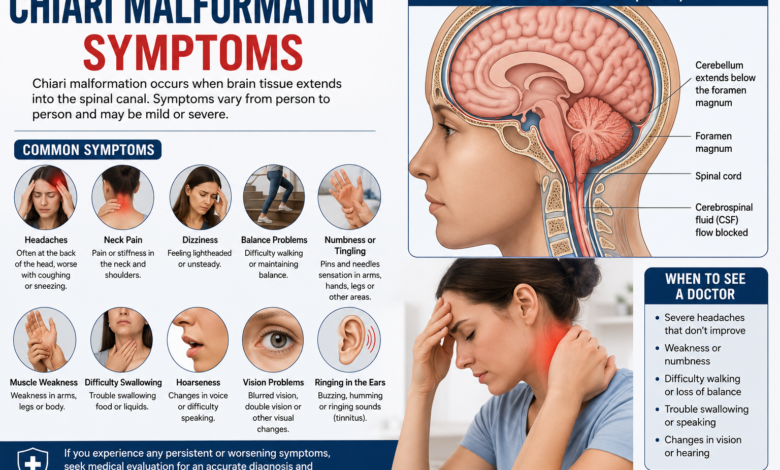
Chiari malformation symptoms can vary considerably from one person to another. Some people with a Chiari malformation have no noticeable symptoms at all, while others may experience headaches, neck pain, dizziness, balance problems, or changes in coordination. The symptoms often depend on the type of Chiari malformation, how much pressure is placed on nearby structures, and whether another condition, such as a syrinx, is present.
Chiari malformation is a structural condition involving the lower part of the brain and the opening at the base of the skull. In some people, part of the cerebellum extends downward through this opening into the upper spinal canal. This can interfere with the normal flow of cerebrospinal fluid (CSF) and may put pressure on the brainstem or spinal cord.
Because its symptoms can resemble those of other neurological conditions, Chiari malformation is sometimes difficult to recognize based on symptoms alone. An appropriate medical evaluation and brain or spinal imaging are often needed for diagnosis.
This article explains the common and less common symptoms of Chiari malformation, possible causes, risk factors, diagnosis, treatment, and when medical attention is necessary.
What Is Chiari Malformation?
Chiari malformation is a structural abnormality in which brain tissue extends through the opening at the base of the skull, known as the foramen magnum.
The cerebellum, located toward the back and lower portion of the brain, helps control balance, coordination, and movement. When part of the cerebellum extends into the spinal canal, it may interfere with normal cerebrospinal fluid circulation.
There are several types of Chiari malformation. Chiari I is the most common form and may not cause symptoms. It is sometimes discovered accidentally during an MRI performed for an unrelated reason.
Other types are less common and can involve more extensive abnormalities of the brain and spinal cord.
Common Chiari Malformation Symptoms
Symptoms can develop gradually and may range from mild to severe. Some people have only one or two symptoms, while others experience several neurological problems.
1. Headaches
Headaches are among the most recognized symptoms of Chiari I malformation.
A typical Chiari-related headache may:
- Begin at the back of the head
- Extend into the upper neck
- Become worse when coughing
- Increase with sneezing
- Worsen when straining
- Become more noticeable when bending or lifting
These headaches can be different from ordinary tension headaches or migraines. A sudden increase in pressure inside the head can make certain activities particularly uncomfortable.
Not every headache in someone with a Chiari malformation is caused by the condition, so an appropriate medical evaluation is important.
2. Neck Pain
Pain or pressure in the upper neck is another possible symptom.
Some people describe the sensation as:
- Aching
- Tightness
- Pressure
- Stiffness
- Pain extending from the neck toward the back of the head
Neck discomfort may occur along with Chiari-related headaches.
3. Dizziness
Chiari malformation may affect areas involved in balance and coordination. As a result, some people experience dizziness or a sensation that their surroundings are moving.
Dizziness can occur with:
- Walking
- Changing position
- Turning the head
- Physical activity
Persistent dizziness has many possible causes, so it should not automatically be attributed to Chiari malformation.
4. Balance and Coordination Problems
Some people experience difficulty maintaining balance or coordinating movements.
Possible signs include:
- Feeling unsteady while walking
- Frequently stumbling
- Difficulty with precise movements
- Poor coordination
- Trouble with activities requiring balance
These symptoms can occur when structures involved in coordination are affected.
5. Numbness or Tingling
Chiari malformation can sometimes be associated with abnormal sensations in the arms, hands, legs, or other areas.
People may experience:
- Pins and needles
- Tingling
- Numbness
- Reduced sensation
- Burning sensations
These symptoms may be more likely when the spinal cord is affected or when a syrinx develops.
6. Muscle Weakness
Some individuals develop weakness in their arms or legs.
Weakness may make activities such as:
- Opening containers
- Climbing stairs
- Walking long distances
- Lifting objects
- Maintaining grip
more difficult.
New or worsening weakness should be evaluated by a healthcare professional.
7. Difficulty Swallowing
Some people with Chiari malformation experience difficulty swallowing, medically known as dysphagia.
They may feel that:
- Food gets stuck
- Swallowing requires extra effort
- Liquids are difficult to swallow
- The throat feels unusual
Swallowing difficulties can also have many other causes and should be medically assessed.
8. Hoarseness or Voice Changes
Changes in the voice may occur in some people.
Possible symptoms include:
- Hoarseness
- Weak voice
- Changes in speech
- Difficulty controlling the voice
These symptoms may occur when structures involving the brainstem or related nerves are affected.
9. Vision Problems
Some individuals report visual disturbances, although these symptoms can have many possible causes.
Possible changes include:
- Blurred vision
- Double vision
- Difficulty focusing
- Unusual eye movements
- Sensitivity to light
New or sudden vision changes require prompt medical assessment.
10. Ringing in the Ears
Some people with Chiari malformation report tinnitus, which is the perception of ringing, buzzing, humming, or other sounds without an external source.
Tinnitus is common and can result from numerous ear and neurological conditions, so it does not necessarily indicate Chiari malformation.
Symptoms Associated With Syringomyelia
A condition called syringomyelia can sometimes occur alongside Chiari malformation. Syringomyelia involves the formation of a fluid-filled cavity, or syrinx, within the spinal cord.
When a syrinx develops, symptoms may include:
- Weakness
- Muscle wasting
- Numbness
- Loss of pain or temperature sensation
- Stiffness
- Chronic back or neck pain
- Problems with coordination
The symptoms depend on the location and size of the syrinx.
Chiari Malformation Symptoms in Children
Children may experience symptoms that are different from those seen in adults.
Possible signs include:
- Headaches
- Neck pain
- Balance difficulties
- Poor coordination
- Difficulty swallowing
- Speech problems
- Abnormal eye movements
- Weakness
- Scoliosis
- Breathing problems
Younger children may have difficulty explaining what they are feeling. Parents may instead notice changes in behavior, movement, feeding, or physical development.
Persistent or unusual neurological symptoms in a child should be evaluated by a pediatric healthcare professional.
What Causes Chiari Malformation?
Chiari malformation can be classified as either congenital or acquired.
Congenital Chiari Malformation
A congenital Chiari malformation develops during fetal development. It may be associated with differences in the size or shape of the skull and structures around the brain.
The exact cause is not always known.
Acquired Chiari Malformation
An acquired or secondary Chiari malformation can develop later in life due to conditions that alter pressure or the position of the brain and spinal cord.
Possible causes may include certain medical conditions, trauma, or procedures affecting cerebrospinal fluid.
Risk Factors
There is no single factor that guarantees a person will develop Chiari malformation. Some cases appear to be related to developmental or genetic factors.
A family history of Chiari malformation may increase the likelihood in some people, although researchers are still studying the role of genetics.
Other structural abnormalities involving the skull, spine, or spinal cord may also occur alongside Chiari malformation.
When Should You See a Doctor?
You should arrange a medical evaluation if you experience persistent or unexplained:
- Back-of-the-head headaches
- Neck pain
- Balance problems
- Numbness or tingling
- Muscle weakness
- Difficulty swallowing
- Coordination problems
- Unusual vision changes
- Recurrent dizziness
Seek urgent medical attention for sudden severe neurological symptoms, such as sudden weakness, loss of coordination, difficulty speaking, severe breathing problems, or sudden changes in consciousness.
How Is Chiari Malformation Diagnosed?
A healthcare professional may begin with a detailed medical history and neurological examination.
An MRI scan is commonly used to examine the brain and spinal cord and determine whether brain tissue extends into the spinal canal.
Imaging can also help doctors look for associated problems, including syringomyelia.
In some cases, additional tests may be recommended depending on the symptoms and findings.
Treatment for Chiari Malformation
Treatment depends on whether symptoms are present, how severe they are, and whether there is pressure on the brain or spinal cord.
Monitoring
People who have a Chiari malformation but no significant symptoms may only need regular monitoring.
A healthcare professional may recommend follow-up examinations or imaging when appropriate.
Medications
Pain-relieving medications may help manage headaches or neck discomfort in some people. Medication does not correct the underlying structural abnormality, however.
Surgery
For people with significant symptoms or complications, a procedure called posterior fossa decompression may be considered.
The goal is to create more space around the affected area and improve the flow of cerebrospinal fluid.
Surgery is not necessary for everyone with Chiari malformation. The decision depends on symptoms, imaging findings, associated conditions, and overall health.
Frequently Asked Questions
What is the most common symptom of Chiari malformation?
A headache at the back of the head, particularly one that becomes worse with coughing, sneezing, or straining, is a commonly reported symptom.
Can Chiari malformation cause dizziness?
Yes. Some people with Chiari malformation experience dizziness or balance problems. However, dizziness has many possible causes and does not necessarily mean that Chiari malformation is responsible.
Can Chiari malformation cause neck pain?
Yes. Neck pain or pressure around the upper neck and back of the head can occur in people with Chiari malformation.
Can Chiari malformation cause numbness?
It can. Numbness or tingling may occur when the spinal cord or nearby neurological structures are affected, particularly when syringomyelia is also present.
Does everyone with Chiari malformation have symptoms?
No. Some people have no symptoms and discover the condition accidentally during imaging performed for another reason.
Is Chiari malformation curable?
Treatment can significantly improve symptoms in appropriate patients, but the condition involves a structural difference in the brain and skull. Some people require only monitoring, while others may benefit from surgery.
Conclusion
Chiari malformation symptoms can range from mild headaches and neck discomfort to balance problems, numbness, weakness, swallowing difficulties, and other neurological changes. Some people have no symptoms at all, which is why Chiari malformation may sometimes be discovered unexpectedly during an MRI.
Because many of these symptoms can occur with other neurological or medical conditions, having symptoms alone does not establish a diagnosis. A healthcare professional can evaluate your symptoms and determine whether imaging or additional testing is appropriate.
People with persistent or worsening neurological symptoms should seek professional medical advice rather than attempting to diagnose the condition themselves. With appropriate monitoring and treatment, many people with Chiari malformation are able to manage their symptoms and maintain a good quality of life.