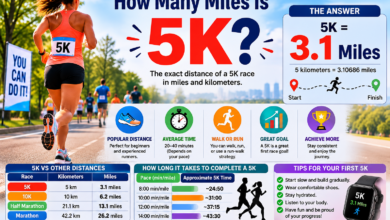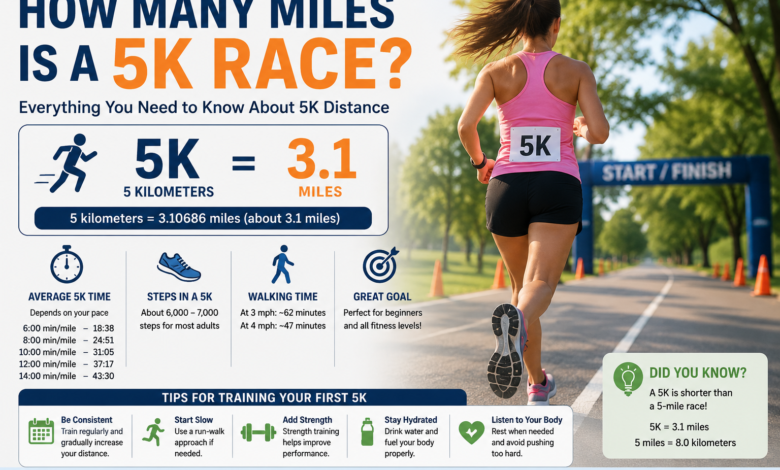
If you are new to running, you may wonder, how many miles is a 5K race? A 5K is one of the most popular running distances for beginners and experienced runners alike. The “5K” refers to a distance of 5 kilometers, which equals approximately 3.1 miles.
A 5K race is long enough to provide a meaningful running challenge but short enough that many beginners can prepare for it with a structured training plan. Depending on your fitness level, you may complete a 5K by walking, jogging, running, or using a combination of all three.
Understanding the distance can help you set realistic goals, choose an appropriate training schedule, and estimate how long the race may take.
How Many Miles Is a 5K?
A 5K race is 5 kilometers, which converts to approximately:
5 kilometers = 3.10686 miles
For everyday use, runners usually round this to:
5K = 3.1 miles
This means that when you sign up for a standard 5K race, you will generally be covering about 3.1 miles from the starting line to the finish line.
The letter “K” stands for kilometer. One kilometer equals approximately 0.621 miles.
Why Is It Called a 5K?
The name comes directly from the metric measurement of the race.
- 5 = five kilometers
- K = kilometers
Unlike a 5-mile race, which measures exactly 5 miles, a 5K measures 5 kilometers. Because a kilometer is shorter than a mile, a 5K is only about 3.1 miles.
How Long Does It Take to Run a 5K?
There is no single correct 5K finishing time. Your time depends on factors such as age, fitness, running experience, terrain, weather, and race strategy.
Some runners finish a 5K in less than 20 minutes, while beginners may take 35, 40, 45 minutes, or longer.
Here are approximate finishing times based on different average paces:
| Average Pace | Approximate 5K Time |
|---|---|
| 6:00 min/mile | 18:38 |
| 7:00 min/mile | 21:45 |
| 8:00 min/mile | 24:51 |
| 9:00 min/mile | 27:58 |
| 10:00 min/mile | 31:05 |
| 11:00 min/mile | 34:11 |
| 12:00 min/mile | 37:17 |
| 13:00 min/mile | 40:23 |
| 14:00 min/mile | 43:30 |
| 15:00 min/mile | 46:36 |
These are estimates rather than required race times. Your actual finishing time can vary depending on the course and conditions.
How Long Does It Take to Walk a 5K?
You do not have to run a 5K. Walking the distance is a perfectly reasonable way to complete the event.
A person walking at approximately 3 miles per hour could complete 3.1 miles in around 62 minutes.
At a faster walking pace of about 4 miles per hour, the same distance could take approximately 47 minutes.
Many 5K participants use a run-walk strategy, especially when preparing for their first race.
Is a 5K Good for Beginners?
Yes. A 5K is often considered an excellent first running goal.
The distance is challenging enough to require preparation but manageable for many people who are new to running.
A beginner may start with:
- Short walking sessions
- Walk-and-jog intervals
- Gradually longer runs
- Rest days between workouts
- Basic strength exercises
The goal is not necessarily to run the entire distance immediately. Building endurance gradually can make training more comfortable and reduce the risk of overuse injuries.
How Long Does It Take to Train for a 5K?
Training time varies depending on your starting fitness level.
Someone who already exercises regularly may need only several weeks of focused preparation. A person who is new to exercise may benefit from a longer training period.
A beginner training plan may gradually increase weekly activity over approximately 6 to 10 weeks, depending on individual circumstances.
A typical week could include:
- Two or three easy running or run-walk sessions
- One longer, easy session
- One or two strength-training sessions
- Rest or recovery days
The training schedule should be adjusted according to your fitness level and any existing limitations.
How to Train for a 5K
Start Slowly
If you are new to running, avoid trying to run 3.1 miles on your first workout.
Begin with manageable distances and gradually increase your time or distance.
For example, you might alternate between:
- 2 minutes of jogging
- 2 minutes of walking
As your endurance improves, gradually increase the jogging intervals.
Build Consistency
Consistent training is generally more useful than occasional very hard workouts.
Running or walking regularly allows your cardiovascular system, muscles, tendons, and joints to adapt to increased activity.
Include Rest Days
Rest is an important part of training.
Your body needs time to recover and adapt between challenging sessions. Taking rest days can also help reduce the risk of overuse injuries.
Add Strength Training
Strength exercises can complement running by helping develop the muscles used during movement.
Useful exercises may include:
- Squats
- Lunges
- Glute bridges
- Calf raises
- Step-ups
- Core exercises
Start with manageable resistance and focus on good technique.
Practice Your Race Pace
As your race approaches, you can occasionally practice running at a comfortable pace that you believe you can maintain for the 5K.
Avoid running every training session at maximum effort.
How Many Steps Are in a 5K?
The number of steps needed to complete a 5K varies because everyone’s stride length is different.
As a rough estimate, many adults may take approximately 6,000 to 7,000 steps to cover 5 kilometers.
Shorter strides generally result in more steps, while longer strides result in fewer steps.
Your height, walking or running speed, and individual stride length all affect the total.
5K vs. 5 Miles: What’s the Difference?
A 5K and a 5-mile race are not the same distance.
5K
- 5 kilometers
- Approximately 3.1 miles
5 Miles
- 5 miles
- Approximately 8 kilometers
A 5-mile race is therefore significantly longer than a 5K.
If you are registering for an event, check the distance carefully so you know what to expect.
What Should You Eat Before a 5K?
Nutrition requirements vary from person to person, and you generally do not need a complicated fueling strategy for a 5K.
Before the race, choose foods you already know you tolerate well.
Possible options include:
- Banana
- Toast
- Oatmeal
- Yogurt
- Fruit
- A small serving of cereal
Avoid experimenting with unfamiliar foods immediately before race day.
Staying adequately hydrated is also important, especially in hot weather.
What Should You Wear for a 5K?
Comfort should be a priority.
Consider wearing:
- Comfortable running shoes
- Breathable clothing
- Moisture-managing socks
- Weather-appropriate layers
Avoid wearing brand-new shoes or clothing for the first time on race day. Training in your race-day equipment beforehand can help identify potential problems such as rubbing or discomfort.
Can You Run a 5K Without Stopping?
Yes, many people eventually run the entire 5K without stopping. However, stopping or walking during the race does not mean you have failed.
A run-walk strategy can be an effective approach for beginners and experienced recreational runners.
You can use intervals such as:
Run → Walk → Run → Walk
The length of each interval can be adjusted based on your fitness and goals.
Tips for Your First 5K
If this is your first race, a few simple strategies can make the experience more enjoyable.
Don’t Start Too Fast
The excitement of race day can make it tempting to run faster than you planned. Starting too quickly can leave you exhausted later.
Try to maintain a comfortable pace during the first part of the race.
Warm Up
A short period of easy walking or gentle movement can help prepare your body for exercise.
Avoid aggressive stretching immediately before running.
Follow the Course
Pay attention to signs, volunteers, and course markings.
If the race provides water stations, you can decide beforehand whether you need to use them.
Focus on Finishing
If this is your first 5K, completing the distance can be a more meaningful goal than achieving a specific time.
Once you know what the distance feels like, you can set a time goal for future races.
Benefits of Completing a 5K
Training for and completing a 5K can provide several potential benefits.
Regular running and walking can support:
- Cardiovascular fitness
- Muscular endurance
- Physical activity levels
- Stress management
- Sleep quality
- Overall fitness
A race can also provide motivation to maintain a regular exercise routine.
Frequently Asked Questions
Is a 5K exactly 3 miles?
No. A 5K is approximately 3.1 miles. The exact conversion is about 3.10686 miles.
How far is a 5K in miles?
A 5K is 3.1 miles when rounded to one decimal place.
Can a beginner run a 5K?
Yes. Many beginners successfully train for a 5K. A gradual training plan that combines walking and running can be a practical starting point.
Can I walk a 5K?
Yes. Walking a 5K is a valid way to complete the distance. Many organized events welcome walkers and run-walk participants.
How long does a 5K take?
Finishing times vary considerably. Depending on your pace, a 5K might take less than 20 minutes or more than an hour.
How many miles is a 10K?
A 10K is approximately 6.2 miles, which is twice the distance of a 5K.
Is a 5K difficult?
Difficulty depends on your fitness level. A 5K may feel challenging for someone new to exercise but can be relatively comfortable for an experienced runner.
Conclusion
So, how many miles is a 5K race? A 5K is 5 kilometers, or approximately 3.1 miles. It is one of the most popular race distances because it provides a manageable challenge for beginners while still giving experienced runners an opportunity to improve their speed and performance.
Whether you plan to run the entire distance, walk, or use a run-walk strategy, gradual preparation can help you reach the finish line safely and confidently. Focus on consistent training, adequate recovery, comfortable footwear, and a pace you can maintain.
For a first 5K, remember that finishing the race is an achievement in itself. Once you have completed your first 3.1 miles, you can decide whether your next goal is improving your time, running another 5K, or moving on to a longer distance.
Meta Title
How Many Miles Is a 5K Race? 5K Distance Explained
Meta Description
A 5K race is 3.1 miles. Learn the exact distance, average times, training tips, walking pace, and how to prepare for your first 5K.