Changes in bowel movements can sometimes be the first sign that something is affecting your digestive health. One change that often causes concern is noticing mucus in stool. While seeing mucus can be alarming, it is important to know that small amounts are completely normal. The intestines naturally produce mucus to protect the digestive tract and help stool pass smoothly through the colon.
In most healthy people, this mucus is not noticeable because only a small amount is produced. However, when mucus becomes visible, increases in quantity, or appears alongside symptoms such as abdominal pain, diarrhea, constipation, or blood in the stool, it may indicate an underlying digestive condition.
There are many possible causes of stool and mucus, ranging from mild problems like constipation or food intolerance to more serious conditions such as inflammatory bowel disease (IBD) or colorectal cancer. Understanding the difference between normal and abnormal mucus can help you decide when self-care is appropriate and when medical evaluation is necessary.
This article explains what stool and mucus are, why mucus appears in bowel movements, the most common causes, symptoms, diagnosis, treatment options, and ways to maintain a healthy digestive system.
What Is Stool and Mucus?
Stool, also called feces or bowel movement, is the body’s waste material that is eliminated after digestion. It contains undigested food, bacteria, water, and other waste products.
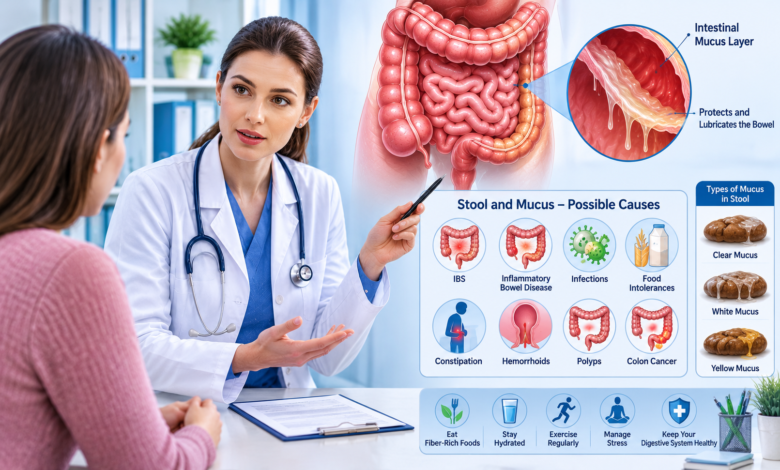
Mucus is a slippery, jelly-like substance produced by glands throughout the digestive tract. It lines the intestines and serves several important functions.
These include:
- Protecting the intestinal lining
- Lubricating the colon
- Helping stool move smoothly through the bowels
- Reducing irritation and friction
- Providing a protective barrier against bacteria and digestive acids
Normally, mucus mixes with stool and is not visible. When larger amounts are produced, it may appear as clear, white, or yellowish jelly-like material on or around the stool.
Is Mucus in Stool Normal?
Yes. A small amount of mucus is considered normal and is usually nothing to worry about.
Healthy mucus production helps keep the digestive tract functioning properly.
Occasional mucus is generally harmless if:
- It appears only once in a while.
- The amount is very small.
- There are no other symptoms.
- Your bowel habits remain unchanged.
However, persistent or excessive mucus should not be ignored, especially if it occurs together with pain, bleeding, or changes in bowel movements.
What Does Mucus in Stool Look Like?
The appearance of mucus can vary depending on the underlying cause.
It may appear as:
- Clear jelly-like material
- White or cloudy mucus
- Yellow mucus
- Thick, stringy mucus
- Slimy coating around the stool
- Mucus mixed throughout the stool
The color and amount of mucus, along with other symptoms, can provide helpful clues about the underlying condition.
Common Causes of Stool and Mucus
Many different digestive conditions can increase mucus production.
1. Irritable Bowel Syndrome (IBS)
One of the most common causes of mucus in stool is irritable bowel syndrome (IBS).
IBS affects how the intestines function without causing permanent damage.
Common symptoms include:
- Abdominal pain
- Bloating
- Gas
- Constipation
- Diarrhea
- Mucus in stool
Many people with IBS notice mucus without any blood.
2. Inflammatory Bowel Disease (IBD)
Inflammatory bowel disease includes:
- Crohn’s disease
- Ulcerative colitis
These chronic conditions cause inflammation of the digestive tract.
Symptoms often include:
- Bloody diarrhea
- Mucus
- Abdominal cramps
- Weight loss
- Fatigue
- Urgent bowel movements
Unlike IBS, IBD causes inflammation that can damage the intestinal lining.
3. Gastrointestinal Infections
Bacterial, viral, or parasitic infections can irritate the intestines and increase mucus production.
Common infections include those caused by:
- Salmonella
- Campylobacter
- Shigella
- Certain parasites
Symptoms may include:
- Fever
- Nausea
- Vomiting
- Diarrhea
- Abdominal pain
- Mucus in stool
Most infections improve with appropriate treatment and hydration.
4. Food Intolerances
Some people experience mucus after eating foods they cannot tolerate.
Examples include:
- Lactose intolerance
- Gluten sensitivity
- Certain food additives
- Artificial sweeteners
Symptoms may include:
- Gas
- Bloating
- Diarrhea
- Stomach cramps
- Increased mucus production
5. Constipation
Hard stools can irritate the colon and rectum.
The body may produce extra mucus to help stool pass more easily.
People with chronic constipation sometimes notice mucus on toilet paper or coating the stool.
6. Hemorrhoids
Inflamed hemorrhoids may produce small amounts of mucus, especially after bowel movements.
Other symptoms include:
- Rectal itching
- Pain
- Swelling
- Bright red blood
7. Anal Fissures
Small tears in the lining of the anus may cause:
- Pain during bowel movements
- Mild bleeding
- Burning
- Small amounts of mucus
Most fissures heal with conservative treatment.
8. Diverticular Disease
Small pouches known as diverticula can develop in the colon.
If they become inflamed or infected, symptoms may include:
- Lower abdominal pain
- Fever
- Constipation
- Diarrhea
- Mucus in stool
9. Colorectal Polyps
Some colon polyps produce mucus before causing other symptoms.
People may also notice:
- Blood in stool
- Changes in bowel habits
- Occasional abdominal discomfort
Routine colorectal cancer screening helps detect polyps early.
10. Colorectal Cancer
Although much less common, persistent mucus can occasionally be associated with colorectal cancer.
Warning signs include:
- Blood in stool
- Ongoing constipation or diarrhea
- Unexplained weight loss
- Persistent abdominal pain
- Fatigue
- Narrow stools
Persistent symptoms should always be evaluated by a healthcare professional.
Symptoms That May Occur Alongside Stool and Mucus
The significance of mucus depends largely on other symptoms.
Possible accompanying symptoms include:
- Abdominal pain
- Bloating
- Cramping
- Diarrhea
- Constipation
- Blood in the stool
- Fever
- Nausea
- Weight loss
- Fatigue
- Urgent bowel movements
- Rectal discomfort
These symptoms can help healthcare providers identify the most likely cause.
Risk Factors for Developing Mucus in Stool
Several factors increase the likelihood of digestive problems that produce mucus.
These include:
- A family history of inflammatory bowel disease
- Chronic constipation
- Frequent gastrointestinal infections
- Food intolerances
- Low-fiber diet
- Poor hydration
- Smoking
- Chronic stress, particularly in people with IBS
- Older age, especially for colorectal conditions
Recognizing these risk factors can help you take steps to support digestive health.
How Are Stool and Mucus Diagnosed?
If mucus in your stool continues for several days or is accompanied by other symptoms, your healthcare provider may recommend tests to identify the underlying cause.
The evaluation usually begins with questions about:
- Your symptoms
- Medical history
- Diet and eating habits
- Recent travel
- Current medications
- Family history of digestive diseases
A physical examination may also be performed to check for abdominal tenderness, swelling, or other signs of illness.
Stool Tests
A stool sample may be analyzed to look for:
- Bacterial infections
- Viral infections
- Parasites
- Blood in the stool
- Signs of inflammation
These tests help identify infections and certain digestive disorders.
Blood Tests
Blood tests can help detect:
- Infection
- Anemia
- Inflammation
- Nutritional deficiencies
The results may provide important clues about conditions such as inflammatory bowel disease or chronic infections.
Colonoscopy
A colonoscopy allows a doctor to examine the inside of the large intestine using a flexible tube with a small camera.
This procedure may be recommended if you have:
- Persistent mucus
- Blood in the stool
- Unexplained weight loss
- Chronic diarrhea
- Ongoing abdominal pain
- A family history of colorectal cancer
A colonoscopy can help diagnose inflammatory bowel disease, polyps, diverticular disease, and colorectal cancer.
Imaging Tests
Depending on your symptoms, your healthcare provider may recommend imaging studies such as:
- CT scan
- MRI scan
These tests can detect inflammation, structural abnormalities, or complications affecting the digestive system.
Treatment Options for Stool and Mucus
Treatment depends on the underlying cause rather than the mucus itself.
Irritable Bowel Syndrome (IBS)
Management often includes:
- Eating a balanced diet
- Increasing fiber gradually if appropriate
- Drinking enough water
- Managing stress
- Taking medications prescribed by your healthcare provider
Inflammatory Bowel Disease (IBD)
Treatment may include:
- Anti-inflammatory medications
- Immune-modifying drugs
- Biologic therapies
- Nutritional support
Regular monitoring by a gastroenterologist is often necessary.
Gastrointestinal Infections
Treatment varies depending on the infection.
Some infections improve with:
- Rest
- Hydration
- Proper nutrition
Others may require prescription antibiotics or antiparasitic medications.
Constipation
Improving constipation often reduces excess mucus.
Helpful measures include:
- Drinking more water
- Eating fiber-rich foods
- Exercising regularly
- Using stool softeners or laxatives only as recommended by a healthcare provider
Food Intolerances
If symptoms are linked to certain foods, avoiding those triggers may reduce mucus production.
Keeping a food diary can help identify foods that worsen symptoms.
Home Care Tips
If your symptoms are mild and not caused by a serious medical condition, these healthy habits may improve digestive health.
Stay Hydrated
Adequate water intake supports healthy digestion and helps prevent constipation.
Eat More Fiber
Fiber-rich foods include:
- Fruits
- Vegetables
- Whole grains
- Beans
- Lentils
Increase fiber gradually to reduce bloating.
Exercise Regularly
Regular physical activity promotes healthy bowel movements and supports digestive function.
Manage Stress
Stress can worsen digestive symptoms, especially in people with irritable bowel syndrome.
Helpful stress-management techniques include:
- Deep breathing
- Meditation
- Walking
- Yoga
- Adequate sleep
Practice Good Food Safety
To reduce the risk of intestinal infections:
- Wash your hands before eating.
- Cook food thoroughly.
- Drink safe, clean water.
- Store food properly.
Can Stool and Mucus Be Prevented?
Not every cause can be prevented, but healthy lifestyle choices can lower your risk.
Helpful prevention strategies include:
- Eating a balanced, high-fiber diet
- Drinking plenty of water
- Exercising regularly
- Limiting processed foods
- Avoiding smoking
- Managing chronic digestive conditions
- Scheduling routine colorectal cancer screening when appropriate
- Seeking prompt treatment for gastrointestinal infections
These habits help maintain a healthy digestive system and support regular bowel function.
When Should You See a Doctor?
Occasional small amounts of mucus without other symptoms are usually harmless.
However, seek medical advice if you notice:
- Persistent mucus lasting more than a few days
- Large amounts of mucus
- Blood in the stool
- Severe or worsening abdominal pain
- Ongoing diarrhea or constipation
- Fever
- Unexplained weight loss
- Fatigue
- Black or tarry stools
- Pain during bowel movements that does not improve
Prompt medical evaluation can help identify the cause and prevent complications.
Frequently Asked Questions (FAQs)
Is mucus in stool always a sign of disease?
No. A small amount of mucus is normal because it protects and lubricates the intestines. Persistent or excessive mucus should be evaluated, especially if other symptoms are present.
What color is normal mucus in stool?
Normal mucus is usually clear or white. Yellow, green, or blood-stained mucus may suggest infection or inflammation and should be assessed by a healthcare provider.
Can dehydration cause mucus in stool?
Dehydration does not directly cause mucus, but it can contribute to constipation, which may increase mucus production.
Can stress cause mucus in stool?
Yes. Stress can worsen symptoms of irritable bowel syndrome (IBS), which commonly causes visible mucus in the stool.
Should I worry about mucus without blood?
Small amounts of mucus without blood are often harmless. However, persistent or increasing mucus should be discussed with a healthcare provider.
Can diet affect mucus in stool?
Yes. Food intolerances, inadequate fiber intake, and certain dietary triggers can contribute to digestive irritation and increased mucus production.
Conclusion
Seeing mucus in your stool can be concerning, but it is not always a sign of a serious health problem. Small amounts of mucus are a normal part of healthy digestion and help protect the lining of the intestines. However, persistent or excessive mucus—especially when accompanied by symptoms such as abdominal pain, diarrhea, constipation, blood in the stool, fever, or unexplained weight loss—may indicate an underlying digestive condition that requires medical evaluation.
The good news is that many causes of stool and mucus can be effectively managed with the right diagnosis, treatment, and lifestyle changes. Eating a balanced diet, staying hydrated, exercising regularly, and paying attention to changes in your bowel habits can support long-term digestive health.
If you experience ongoing or worsening symptoms, consult a healthcare professional for a proper evaluation and personalized treatment plan.