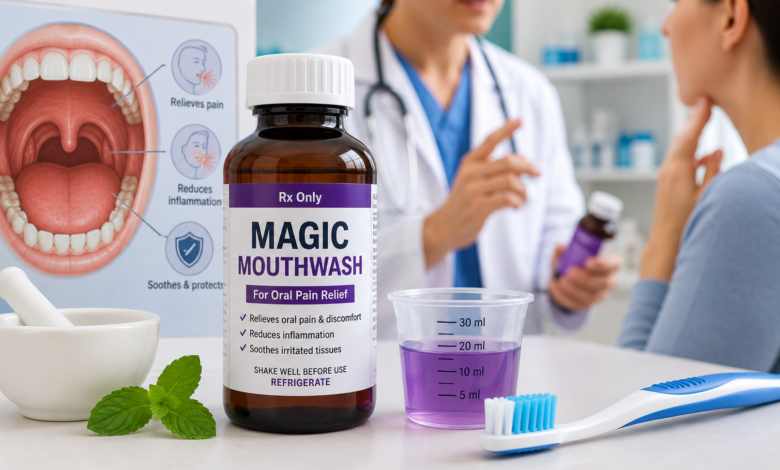
Mouth sores and oral irritation can make everyday activities like eating, drinking, swallowing, and speaking uncomfortable. These problems are especially common in people undergoing cancer treatment, recovering from oral surgery, or dealing with certain infections and inflammatory conditions. In many cases, healthcare providers recommend a compounded medication known as magic mouthwash to help relieve these symptoms.
Unlike regular mouthwash, Magic Mouthwash is a prescription mixture prepared by a pharmacist using a combination of medications. Depending on the reason for treatment, it may contain ingredients that numb pain, reduce inflammation, fight infection, or protect irritated tissues inside the mouth.
Because there is no single standard formula, different pharmacies may prepare Magic Mouthwash with different ingredients based on a healthcare provider’s prescription and the patient’s specific needs.
This guide explains what Magic Mouthwash is, how it works, its common uses, ingredients, potential benefits, and what you should know before using it.
What Is Magic Mouthwash?
Mouthwash is a prescription compounded oral rinse designed to relieve pain and irritation inside the mouth and throat. It is not a commercially manufactured product but rather a customized mixture prepared by a licensed compounding pharmacy.
Doctors often prescribe Magic Mouthwash to help manage painful mouth conditions, especially when standard mouth rinses do not provide enough relief.
It is commonly recommended for people experiencing:
- Mouth sores from chemotherapy
- Oral mucositis caused by radiation therapy
- Painful mouth ulcers
- Severe oral inflammation
- Certain infections affecting the mouth
Although Magic Mouthwash can ease symptoms, it does not always treat the underlying cause of the condition. Instead, it is mainly used to improve comfort and make eating, drinking, and speaking easier during recovery.
Why Is It Called “Magic Mouthwash”?
The name “Magic Mouthwash” is informal rather than medical. It became popular because many patients experience noticeable relief after using it.
The “magic” refers to its combination of medications that work together to address multiple symptoms at the same time, including:
- Pain
- Inflammation
- Infection
- Irritation
- Difficulty swallowing
Since every prescription may contain different ingredients, one person’s Magic Mouthwash may not be identical to another’s.
Common Ingredients in Magic Mouthwash
There is no universal recipe for Magic Mouthwash. Healthcare providers choose ingredients based on the patient’s symptoms and medical condition.
Some of the most common ingredients include:
1. Local Anesthetics
These medications temporarily numb painful areas inside the mouth.
Examples include:
- Lidocaine
Benefits:
- Reduces pain
- Makes swallowing easier
- Helps patients eat more comfortably
2. Antihistamines
Certain antihistamines help reduce irritation and provide additional pain relief.
One commonly used ingredient is:
- Diphenhydramine
This medication may also help reduce inflammation and discomfort.
3. Antacids
Liquid antacids are sometimes included to help coat the lining of the mouth.
Examples include:
- Aluminum hydroxide
- Magnesium hydroxide
These ingredients allow the medication to remain in contact with irritated tissues for a longer period.
4. Corticosteroids
Some prescriptions include corticosteroids to reduce inflammation.
Examples include:
- Hydrocortisone
- Dexamethasone
These medications may help decrease redness, swelling, and soreness.
5. Antifungal Medications
If a fungal infection such as oral thrush is present or likely, an antifungal medication may be added.
One common example is:
- Nystatin
This helps treat yeast infections inside the mouth while relieving discomfort.
6. Antibiotics
Occasionally, antibiotics are included if a bacterial infection is suspected.
Not every Magic Mouthwash prescription contains an antibiotic.
How Does Magic Mouthwash Work?
Magic Mouthwash works by combining several medications that target different symptoms simultaneously.
Depending on its ingredients, it may:
- Numb painful tissues
- Reduce inflammation
- Coat irritated areas
- Control fungal infections
- Fight bacteria
- Make swallowing less painful
Instead of relying on a single medication, the combination approach aims to provide broader symptom relief.
What Is Magic Mouthwash Used For?
Healthcare providers prescribe Magic Mouthwash for a variety of painful oral conditions.
1. Oral Mucositis
One of the most common reasons for prescribing Magic Mouthwash is oral mucositis.
Oral mucositis refers to inflammation and ulcer formation inside the mouth that often develops during:
- Chemotherapy
- Radiation therapy
- Bone marrow transplantation
Symptoms include:
- Painful ulcers
- Difficulty swallowing
- Redness
- Burning sensations
- Bleeding
Magic Mouthwash may help reduce discomfort and improve the ability to eat and drink.
2. Mouth Ulcers
Painful mouth ulcers may develop due to:
- Minor injuries
- Stress
- Certain medications
- Viral infections
- Autoimmune diseases
Magic Mouthwash may reduce irritation while the ulcers heal naturally.
3. Oral Thrush
Oral thrush is a fungal infection caused by an overgrowth of Candida yeast.
Symptoms include:
- White patches
- Mouth soreness
- Burning
- Difficulty swallowing
If the prescription includes an antifungal medication such as nystatin, Magic Mouthwash may help treat the infection while easing discomfort.
4. Mouth Pain After Dental Procedures
Some dentists prescribe Magic Mouthwash following:
- Tooth extractions
- Oral surgery
- Gum procedures
- Extensive dental work
The medication can temporarily reduce pain and make recovery more comfortable.
5. Severe Sore Throat
In certain cases, healthcare providers may prescribe Magic Mouthwash for painful throat conditions when swallowing becomes difficult.
This depends on the underlying cause and individual medical situation.
Benefits of Magic Mouthwash
Many patients experience significant symptom relief after using Magic Mouthwash.
Potential benefits include:
- Temporary pain relief
- Easier swallowing
- Improved ability to eat and drink
- Reduced mouth irritation
- Relief from burning sensations
- Better quality of life during treatment
- Protection of irritated tissues
The effectiveness varies depending on the cause of the mouth condition and the ingredients included in the prescription.
Who May Benefit Most?
Magic Mouthwash is often recommended for individuals who have significant oral discomfort that interferes with daily life.
People who may benefit include:
- Cancer patients receiving chemotherapy
- Individuals undergoing radiation therapy to the head or neck
- Patients with severe mouth ulcers
- People recovering from oral surgery
- Individuals with certain fungal or bacterial mouth infections
- Those experiencing painful inflammatory conditions affecting the mouth
A healthcare provider can determine whether Magic Mouthwash is appropriate based on the specific diagnosis and severity of symptoms.
How to Use Magic Mouthwash Correctly
Using Magic Mouthwash exactly as prescribed is important to get the best results. Because the ingredients vary, always follow the instructions provided by your healthcare provider or pharmacist.
In many cases, patients are instructed to:
- Measure the prescribed amount using a dosing cup or oral syringe.
- Swish the liquid around the mouth for 1 to 2 minutes so it reaches all affected areas.
- Gargle gently if instructed and if the throat is also affected.
- Spit out or swallow the medication only if directed by your healthcare provider. Some formulas are meant to be spit out, while others may be swallowed.
- Avoid eating or drinking for 30 minutes after use unless your healthcare provider advises otherwise. This allows the medication to remain in contact with the irritated tissues.
Do not use more frequently or for a longer period than prescribed.
Possible Side Effects of Magic Mouthwash
Like any medication, Mouthwash may cause side effects. Most are mild and temporary, but some people may experience more significant reactions depending on the ingredients.
Common side effects include:
- Temporary numbness in the mouth or throat
- Altered or metallic taste
- Mild burning or tingling
- Dry mouth
- Drowsiness (especially if diphenhydramine is included)
- Mild stomach upset if swallowed
These side effects often improve as the medication wears off.
Serious Side Effects
Although uncommon, seek medical attention if you experience:
- Difficulty breathing
- Swelling of the lips, tongue, or throat
- Severe rash or hives
- Persistent vomiting
- High fever
- Worsening mouth sores
- Signs of an allergic reaction
If symptoms become more severe instead of improving, contact your healthcare provider promptly.
Who Should Avoid Magic Mouthwash?
Mouthwash may not be suitable for everyone.
Talk with your healthcare provider before using it if you:
- Have allergies to any of the ingredients
- Are pregnant or planning to become pregnant
- Are breastfeeding
- Have severe liver disease
- Have certain heart conditions
- Take medications that may interact with its ingredients
Children should only use Mouthwash when prescribed and supervised by a healthcare professional.
Precautions While Using Magic Mouthwash
To use Mouthwash safely, keep these precautions in mind:
Avoid Hot Foods Immediately After Use
If the mouth is numb, you may accidentally burn yourself without realizing it.
Be Careful While Eating
Temporary numbness can make chewing and swallowing more difficult, increasing the risk of biting your tongue or cheeks.
Follow the Prescribed Dose
Using more than recommended will not necessarily improve your symptoms and may increase the risk of side effects.
Tell Your Healthcare Provider About Other Medications
Some ingredients in Mouthwash may interact with prescription medicines, over-the-counter drugs, or herbal supplements.
Drug Interactions
Because Mouthwash formulas differ, the potential for drug interactions depends on the ingredients used.
Possible interactions may involve:
- Sedatives
- Sleep medications
- Certain antihistamines
- Opioid pain relievers
- Some antidepressants
- Other medications that cause drowsiness
Always provide your healthcare provider with a complete list of your medications before starting treatment.
Storage Instructions
Proper storage helps maintain the effectiveness of the medication.
General recommendations include:
- Store according to the pharmacist’s instructions.
- Some compounded formulas require refrigeration, while others do not.
- Keep the bottle tightly closed.
- Protect it from excessive heat and direct sunlight.
- Keep out of reach of children and pets.
- Do not use the medication after its expiration date.
Because Mouthwash is compounded, it often has a shorter shelf life than commercially manufactured medications.
Frequently Asked Questions (FAQs)
What is Magic Mouthwash used for?
Magic Mouthwash is commonly prescribed to relieve pain, inflammation, and discomfort caused by mouth sores, oral mucositis, mouth ulcers, oral thrush, and certain dental or medical treatments.
Is Magic Mouthwash available over the counter?
No. Mouthwash is generally a prescription medication prepared by a licensed compounding pharmacy according to a healthcare provider’s instructions.
How quickly does Magic Mouthwash work?
Many people experience temporary pain relief within a few minutes after using it, although the duration of relief varies depending on the formula and the underlying condition.
Can you swallow Magic Mouthwash?
Some formulations are intended to be swallowed, while others should be spit out after rinsing. Always follow your healthcare provider’s instructions, as the directions depend on the specific ingredients in your prescription.
How often should Magic Mouthwash be used?
The recommended frequency varies depending on your condition and the prescribed formula. Use it only as directed by your healthcare provider.
Does Magic Mouthwash cure mouth sores?
Mouthwash is primarily designed to relieve symptoms such as pain and irritation. Whether it also treats the underlying condition depends on the ingredients included in the prescription.
Tips for Managing Mouth Sores Alongside Magic Mouthwash
In addition to using your prescribed medication, these self-care measures may support healing and improve comfort:
- Drink plenty of water to stay hydrated.
- Choose soft, easy-to-swallow foods.
- Avoid spicy, acidic, or very hot foods if they worsen discomfort.
- Practice good oral hygiene using a soft-bristled toothbrush.
- Avoid tobacco products and limit alcohol, as they can further irritate the mouth.
- Follow all instructions provided by your healthcare team.
These steps may help reduce irritation while your mouth heals.
Conclusion
Magic Mouthwash is a customized prescription oral rinse that can provide temporary relief from painful mouth conditions such as oral mucositis, mouth ulcers, oral thrush, and inflammation caused by cancer treatments or dental procedures. By combining medications that may numb pain, reduce inflammation, and help manage certain infections, it can make eating, drinking, and speaking more comfortable during recovery.
Because there is no single standard formula, every prescription may contain different ingredients and instructions. For this reason, it is important to use Mouthwash exactly as directed by your healthcare provider or pharmacist.
If your symptoms persist, worsen, or are accompanied by fever, severe swelling, or difficulty breathing, seek medical attention promptly. With proper use and professional guidance, Magic Mouthwash can be an important part of managing painful oral conditions and improving quality of life.