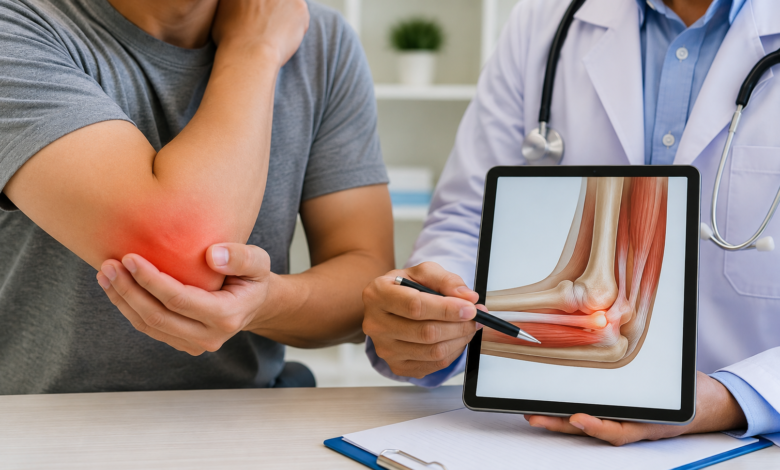
What causes elbow pain? Elbow pain is a common complaint that affects people of all ages. Whether you are an athlete, office worker, manual laborer, or someone who enjoys gardening or DIY projects, elbow discomfort can interfere with everyday activities. Simple tasks like lifting a grocery bag, typing on a keyboard, opening a jar, or even shaking hands may become painful when the elbow is affected.
The elbow is a complex joint that allows your arm to bend, straighten, and rotate. Because it is involved in so many daily movements, it is vulnerable to injuries, overuse, inflammation, and medical conditions that cause pain and stiffness.
The good news is that most cases of elbow pain improve with proper care, rest, and treatment. However, some conditions require medical attention to prevent long-term complications.
This article explains what causes elbow pain, the most common symptoms, how doctors diagnose the problem, and the treatment options available to help you recover.
What Is Elbow Pain?
Elbow pain refers to discomfort, tenderness, or soreness in or around the elbow joint. The pain may develop suddenly after an injury or gradually due to repetitive movements and overuse.
Depending on the underlying cause, elbow pain can be:
- Mild or severe
- Constant or occasional
- Sharp or dull
- Aching or burning
- Localized or radiating into the forearm or upper arm
Some people experience pain only when moving the arm, while others feel discomfort even when resting.
Understanding the Elbow Joint
The elbow is made up of three bones:
- The humerus (upper arm bone)
- The radius (forearm bone)
- The ulna (forearm bone)
These bones are connected by:
- Ligaments that stabilize the joint
- Tendons that attach muscles to bones
- Cartilage that cushions movement
- Muscles that control bending and rotation
- Nerves and blood vessels that support normal function
When any of these structures become injured, inflamed, or damaged, elbow pain can develop.
Common Causes of Elbow Pain
There are many possible causes of elbow pain, ranging from temporary muscle strain to chronic medical conditions.
1. Tennis Elbow (Lateral Epicondylitis)
Tennis elbow is one of the most common causes of pain on the outside of the elbow.
Despite its name, you do not have to play tennis to develop this condition. It often affects people whose jobs or hobbies involve repetitive wrist and arm movements.
Common causes include:
- Typing
- Painting
- Carpentry
- Gardening
- Plumbing
- Weightlifting
- Using hand tools
Symptoms include:
- Pain on the outer elbow
- Weak grip strength
- Pain when lifting objects
- Discomfort while shaking hands
- Difficulty turning a doorknob
2. Golfer’s Elbow (Medial Epicondylitis)
Golfer’s elbow affects the tendons on the inside of the elbow.
Like tennis elbow, repetitive movements usually cause this condition.
People at risk include:
- Golfers
- Baseball players
- Construction workers
- Mechanics
- Electricians
- Office workers who perform repetitive tasks
Symptoms may include:
- Inner elbow pain
- Tenderness
- Wrist weakness
- Pain when gripping or lifting objects
3. Elbow Bursitis
Small fluid-filled sacs called bursae reduce friction around joints.
When one of these sacs becomes inflamed, elbow bursitis develops.
Possible causes include:
- Leaning on the elbows for long periods
- Direct injury
- Infection
- Repetitive pressure
Symptoms include:
- Noticeable swelling behind the elbow
- Warmth
- Tenderness
- Pain during movement
If the bursa becomes infected, redness, fever, and severe pain may also occur.
4. Arthritis
Several types of arthritis can affect the elbow joint.
Osteoarthritis
This develops when cartilage gradually wears away over time.
Symptoms include:
- Joint stiffness
- Grinding sensation
- Pain during movement
- Reduced range of motion
Rheumatoid Arthritis
This autoimmune disease causes the immune system to attack healthy joint tissue.
Symptoms include:
- Swelling
- Warm joints
- Morning stiffness
- Pain in both elbows
- Fatigue
5. Tendinitis
Tendinitis occurs when tendons become irritated or inflamed.
It usually develops because of repetitive arm movements or sudden increases in physical activity.
Symptoms include:
- Pain during movement
- Mild swelling
- Tenderness
- Reduced strength
Ignoring early symptoms may allow the condition to worsen over time.
6. Muscle Strain
Overstretching or tearing the muscles around the elbow can cause pain.
Common causes include:
- Heavy lifting
- Sudden pulling movements
- Sports injuries
- Weight training
Symptoms include:
- Aching pain
- Muscle tenderness
- Mild swelling
- Weakness
Most mild strains improve within a few weeks with rest and conservative treatment.
7. Ligament Sprains
Ligaments hold the bones of the elbow together.
A sudden fall, sports injury, or twisting motion can stretch or tear these ligaments.
Symptoms may include:
- Sharp pain
- Swelling
- Bruising
- Joint instability
- Difficulty moving the elbow
Severe ligament injuries sometimes require surgical repair.
8. Fractures
Breaking one of the bones in the elbow causes immediate and severe pain.
Fractures usually result from:
- Falls
- Car accidents
- Sports injuries
- Direct blows
Symptoms include:
- Severe pain
- Swelling
- Bruising
- Visible deformity
- Inability to move the arm
A fracture requires immediate medical evaluation.
9. Dislocated Elbow
A dislocation occurs when the bones of the elbow move out of their normal position.
This injury commonly occurs after:
- Falling onto an outstretched hand
- Contact sports
- Bicycle accidents
Symptoms include:
- Severe pain
- Visible deformity
- Swelling
- Numbness
- Limited movement
This is considered a medical emergency.
10. Pinched Nerve
Sometimes elbow pain is caused by pressure on a nearby nerve rather than damage to the joint itself.
The ulnar nerve is particularly vulnerable around the elbow.
Symptoms may include:
- Tingling
- Numbness
- Burning pain
- Weak grip
- “Pins and needles” sensation in the ring and little fingers
People often describe this as hitting their “funny bone.”
Less Common Causes of Elbow Pain
Although less frequent, several medical conditions can also contribute to elbow discomfort.
These include:
- Gout
- Lupus
- Psoriatic arthritis
- Bone infections
- Bone tumors
- Lyme disease
- Septic arthritis
These conditions often require specialized medical treatment.
Symptoms That May Accompany Elbow Pain
The symptoms you experience often depend on the underlying cause.
Common symptoms include:
- Pain during movement
- Swelling
- Redness
- Warmth
- Stiffness
- Tenderness
- Weak grip strength
- Clicking or popping
- Limited range of motion
- Numbness or tingling
- Bruising
Some people experience only mild discomfort, while others may have significant pain that limits daily activities.
Risk Factors for Elbow Pain
Although elbow pain can affect anyone, certain factors increase the likelihood of developing it.
Common risk factors include:
- Repetitive arm and wrist movements
- Playing sports such as tennis, golf, baseball, or weightlifting
- Jobs involving lifting, hammering, painting, or typing
- Poor posture during work
- Aging
- Previous elbow injuries
- Arthritis or autoimmune diseases
- Lack of proper stretching before exercise
Understanding these risk factors can help you take steps to reduce your chances of developing elbow problems.
How Is Elbow Pain Diagnosed?
If elbow pain persists or becomes severe, a healthcare provider will perform a physical examination and ask about your symptoms, medical history, and daily activities.
During the examination, your doctor may:
- Check for swelling and tenderness
- Assess your range of motion
- Test grip strength
- Evaluate nerve function
- Ask you to perform specific arm movements
Depending on the suspected cause, additional tests may include:
X-rays
X-rays help identify:
- Broken bones
- Arthritis
- Bone spurs
- Joint damage
MRI Scan
Magnetic resonance imaging (MRI) provides detailed images of soft tissues, including tendons, ligaments, muscles, and cartilage.
Ultrasound
An ultrasound can detect tendon injuries, bursitis, or fluid around the joint.
CT Scan
A CT scan offers detailed images of complex fractures or joint abnormalities.
Blood Tests
If an inflammatory or autoimmune condition is suspected, blood tests may help diagnose:
- Rheumatoid arthritis
- Gout
- Infection
- Lupus
Treatment Options for Elbow Pain
Treatment depends on the underlying cause, the severity of symptoms, and how long the pain has been present.
Rest and Activity Modification
Many overuse injuries improve by allowing the elbow time to heal.
Avoid activities that trigger pain while gradually returning to normal movement as symptoms improve.
Ice Therapy
Applying an ice pack for 15–20 minutes several times a day can help reduce:
- Pain
- Swelling
- Inflammation
Always wrap the ice pack in a towel to protect your skin.
Compression
An elastic bandage or elbow brace may provide additional support and help reduce swelling in some conditions.
Elevation
If swelling is present after an injury, keeping your arm elevated above heart level may help reduce fluid buildup.
Pain Relief Medications
Over-the-counter medications may help manage pain and inflammation.
Common options include:
- Acetaminophen
- Ibuprofen
- Naproxen
Take medications only as directed and consult a healthcare provider if you have underlying medical conditions.
Physical Therapy
A physical therapist can develop a personalized exercise program to:
- Improve flexibility
- Strengthen muscles
- Restore range of motion
- Reduce the risk of future injuries
Stretching and strengthening exercises are particularly helpful for tennis elbow and golfer’s elbow.
Braces and Supports
An elbow brace or counterforce strap may reduce strain on injured tendons during recovery.
These devices are commonly recommended for repetitive strain injuries.
Corticosteroid Injections
For severe inflammation that does not improve with conservative treatment, a healthcare provider may recommend corticosteroid injections.
These injections can provide temporary pain relief but are generally used selectively due to potential side effects with repeated use.
Surgery
Surgery is rarely necessary but may be recommended when:
- A tendon has torn
- A fracture requires repair
- A ligament is severely damaged
- Conservative treatments have failed
- A nerve is compressed
Most people recover well with appropriate rehabilitation after surgery.
Home Remedies for Mild Elbow Pain
Many mild cases of elbow pain improve with simple self-care measures.
Helpful home remedies include:
- Resting the affected arm
- Applying ice during the first 48 hours
- Using a supportive elbow brace if recommended
- Performing gentle stretching exercises
- Avoiding repetitive movements until pain improves
- Maintaining good posture while working
- Taking regular breaks during repetitive tasks
Returning to strenuous activities too soon may delay healing, so gradual recovery is important.
How to Prevent Elbow Pain
While not every case can be prevented, healthy habits can significantly reduce your risk.
Warm Up Before Exercise
Stretching and light warm-up exercises prepare your muscles and tendons for activity.
Use Proper Technique
Whether playing sports or lifting heavy objects, correct form reduces stress on the elbow.
Strengthen Your Arms
Regular strength training improves muscle support around the elbow joint.
Take Frequent Breaks
If your work involves repetitive arm movements, pause every 30 to 60 minutes to stretch and rest.
Improve Your Workstation
An ergonomic desk setup can reduce unnecessary strain on your elbows, wrists, and shoulders.
Avoid Overuse
Gradually increase activity levels instead of making sudden changes to exercise intensity or workload.
When Should You See a Doctor?
Although many cases of elbow pain improve with rest and home care, some symptoms require prompt medical attention.
Contact your healthcare provider if you experience:
- Pain lasting more than a few weeks
- Increasing swelling
- Persistent stiffness
- Weakness in the arm or hand
- Tingling or numbness
- Difficulty gripping objects
Seek immediate medical care if you have:
- Severe pain after an injury
- A visible deformity
- Inability to move the elbow
- Heavy bleeding
- Signs of infection, such as redness, warmth, fever, or pus
- Loss of feeling in the hand or fingers
Early diagnosis can help prevent complications and improve recovery.
Frequently Asked Questions (FAQs)
What is the most common cause of elbow pain?
Tennis elbow is one of the most common causes of elbow pain, especially in adults who perform repetitive arm and wrist movements.
Can elbow pain go away on its own?
Yes. Mild elbow pain caused by overuse or minor muscle strain often improves within a few days or weeks with rest, ice, and activity modification.
Is elbow pain always caused by an injury?
No. Elbow pain may result from arthritis, nerve compression, bursitis, tendon problems, autoimmune diseases, or repetitive strain, even without a specific injury.
When should I worry about elbow pain?
You should seek medical evaluation if elbow pain is severe, follows a significant injury, lasts longer than a few weeks, or is accompanied by swelling, numbness, weakness, or fever.
Can poor posture cause elbow pain?
Yes. Poor posture and improper workstation setup can place extra stress on the muscles and tendons of the arm, contributing to elbow pain over time.
How long does elbow pain usually last?
Recovery depends on the cause. Mild strains may improve within a few weeks, while tendon injuries or arthritis may require longer treatment and rehabilitation.
Conclusion
Elbow pain is a common condition that can result from overuse, sports injuries, arthritis, tendon problems, nerve compression, or trauma. While many cases improve with rest, ice, physical therapy, and simple lifestyle changes, persistent or severe pain should never be ignored.
Understanding the cause of your elbow pain is the first step toward effective treatment. Early diagnosis and proper care can relieve symptoms, restore movement, and reduce the risk of long-term complications.
If your elbow pain interferes with daily activities or continues despite home treatment, consult a healthcare professional for a thorough evaluation and a personalized treatment plan.