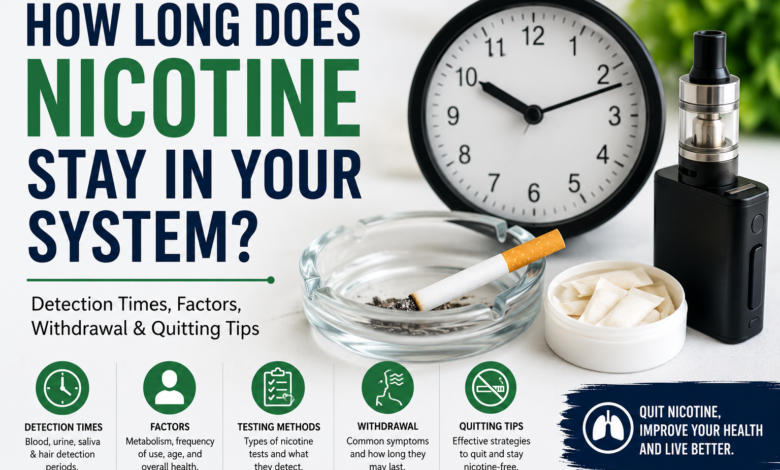
Nicotine is a naturally occurring chemical found in tobacco plants and is the primary substance responsible for tobacco addiction. It is present in cigarettes, cigars, smokeless tobacco, e-cigarettes, nicotine pouches, nicotine gum, patches, and other nicotine replacement products. Once nicotine enters the body, it quickly reaches the brain, producing temporary feelings of pleasure, relaxation, and improved concentration. Because these effects fade rapidly, many people continue using nicotine throughout the day, leading to dependence.
A common question among smokers, vapers, and people trying to quit is “How long does nicotine stay in your system?” The answer varies depending on factors such as how often nicotine is used, the type of product consumed, age, metabolism, liver function, kidney health, and the type of laboratory test being performed.
Understanding how nicotine is processed can help if you’re preparing for a medical examination, employment screening, insurance evaluation, or planning to quit tobacco. While nicotine itself leaves the bloodstream fairly quickly, its primary metabolite—cotinine—remains in the body much longer and is commonly measured during nicotine testing.
In this guide, you’ll learn how nicotine is metabolized, how long it remains detectable in blood, urine, saliva, and hair, the factors that influence detection times, and the early signs of nicotine withdrawal.
What Is Nicotine?
Nicotine is a fast-acting stimulant that affects the central nervous system. It occurs naturally in tobacco plants and is the ingredient responsible for making tobacco products addictive.
Today, nicotine is found in many products, including:
- Cigarettes
- Cigars
- Pipe tobacco
- Chewing tobacco
- Snuff
- Electronic cigarettes (vapes)
- Nicotine gum
- Nicotine patches
- Nicotine lozenges
- Nicotine pouches
Although nicotine replacement therapies contain nicotine, they are designed to help people gradually reduce dependence under medical guidance.
How Does Nicotine Affect the Body?
After inhalation or absorption, nicotine enters the bloodstream within seconds and quickly reaches the brain. It stimulates the release of neurotransmitters such as dopamine, creating feelings of satisfaction and temporary stress relief.
At the same time, nicotine can:
- Increase heart rate
- Raise blood pressure
- Improve alertness for a short period
- Reduce appetite temporarily
- Create physical dependence with repeated use
Because the effects wear off quickly, many users experience cravings that encourage repeated nicotine use throughout the day.
How Does the Body Break Down Nicotine?
The liver is responsible for metabolizing most of the nicotine that enters the body. During this process, nicotine is converted into several byproducts, the most important of which is cotinine.
Cotinine stays in the body much longer than nicotine itself, making it a more reliable indicator of recent nicotine exposure. For this reason, most laboratory tests measure cotinine rather than nicotine.
Eventually, both nicotine and cotinine are filtered by the kidneys and leave the body through urine.
How Long Does Nicotine Stay in Your System?
There is no single answer because detection times vary depending on the type of test and individual health factors.
Blood
Nicotine generally disappears from the bloodstream relatively quickly, while cotinine remains detectable for several days after the last use.
Urine
Urine testing is one of the most commonly used methods. Cotinine may remain detectable for several days and sometimes longer in people who use nicotine heavily.
Saliva
Saliva tests can identify cotinine for several days after nicotine exposure and are commonly used because they are quick and non-invasive.
Hair
Hair testing can reveal nicotine exposure for several months because nicotine metabolites become trapped within growing hair strands. Although highly sensitive, hair testing is less commonly performed than urine or saliva testing.
Factors That Affect Detection Time
Several factors determine how long nicotine and cotinine remain in the body.
These include:
- How often you use nicotine
- The amount of nicotine consumed
- Whether you smoke, vape, or use smokeless tobacco
- Your metabolism
- Age
- Liver health
- Kidney function
- Hydration level
- Overall health status
People who use nicotine daily usually retain detectable cotinine longer than occasional users.
Why Is Nicotine Testing Performed?
Healthcare providers and organizations may perform nicotine testing for several reasons, including:
- Employment screening
- Insurance assessments
- Smoking cessation programs
- Medical evaluations
- Clinical research
- Monitoring nicotine replacement therapy
Because cotinine remains in the body longer, it is the preferred substance measured in most nicotine tests.
Early Signs of Nicotine Withdrawal
As nicotine levels begin to decrease, withdrawal symptoms can appear within the first day after quitting.
Common symptoms include:
- Strong cravings
- Irritability
- Anxiety
- Difficulty concentrating
- Mood changes
- Restlessness
- Trouble sleeping
- Increased appetite
- Headaches
These symptoms are temporary and usually improve over time as the body adjusts to functioning without nicotine.
Conclusion
Understanding how long nicotine stays in your system is helpful for anyone preparing for nicotine testing or planning to quit smoking or vaping. While nicotine leaves the body fairly quickly, cotinine remains detectable for a longer period and provides a more accurate indication of recent nicotine exposure. Detection times vary from person to person, depending on lifestyle, health, and nicotine use patterns.
Can You Get Nicotine Out of Your System Faster?
One of the most common questions people ask after quitting smoking or vaping is whether there is a way to remove nicotine from the body more quickly. Unfortunately, there is no scientifically proven method that can instantly eliminate nicotine or its primary metabolite, cotinine.
Your body naturally removes nicotine through the liver and kidneys. While some products claim to “detox” nicotine in a short period, there is little scientific evidence to support these claims. The safest approach is to allow your body to process nicotine naturally while maintaining healthy lifestyle habits.
Healthy Ways to Support Your Body
Although you cannot dramatically speed up nicotine elimination, healthy habits can support your body’s natural recovery process.
Drink Plenty of Water
Staying hydrated helps your kidneys function properly and supports the body’s natural waste removal processes.
Eat a Nutritious Diet
A balanced diet rich in fruits, vegetables, lean protein, and whole grains provides essential nutrients that support overall health during nicotine withdrawal.
Foods rich in antioxidants may also help your body recover from the effects of smoking.
Exercise Regularly
Physical activity offers several benefits for people quitting nicotine.
Exercise can:
- Reduce stress
- Improve mood
- Increase energy levels
- Help control weight gain
- Reduce nicotine cravings for some people
Even moderate activities like walking, cycling, or swimming can be helpful.
Get Enough Sleep
Quality sleep supports healing, improves concentration, and may make withdrawal symptoms easier to manage.
Effective Strategies for Quitting Nicotine
Quitting nicotine is often challenging because addiction involves both physical dependence and daily habits. Creating a realistic quit plan can improve your chances of long-term success.
Helpful strategies include:
- Set a specific quit date.
- Remove cigarettes, vapes, and tobacco products from your home and workplace.
- Identify situations that trigger cravings.
- Replace smoking with healthier habits such as walking, deep breathing, or chewing sugar-free gum.
- Seek encouragement from family and friends.
- Join a smoking cessation support program.
- Speak with a healthcare provider about approved quitting aids if needed.
Remember that many people make several attempts before quitting successfully, and each attempt can teach valuable lessons.
Common Myths About Nicotine
Myth 1: Drinking lots of water removes nicotine overnight.
Fact: Drinking water supports normal body function, but it does not instantly eliminate nicotine or cotinine.
Myth 2: Exercise immediately clears nicotine from your body.
Fact: Exercise improves overall health and may reduce cravings, but it does not significantly shorten nicotine detection times.
Myth 3: Detox products guarantee a negative nicotine test.
Fact: There is no reliable evidence that detox products can guarantee negative nicotine test results.
Myth 4: Vaping is always nicotine-free.
Fact: Many e-cigarettes contain nicotine, although nicotine-free products also exist. Always read product labels carefully.
Health Benefits of Quitting Nicotine
Stopping nicotine use has immediate and long-term health benefits.
Some improvements include:
- Better lung function
- Improved circulation
- Lower risk of heart disease
- Reduced risk of stroke
- Healthier blood vessels
- Improved sense of taste and smell
- Better oral health
- Increased energy
- Reduced risk of smoking-related diseases
The longer you remain nicotine-free, the greater these health benefits become.
When Should You See a Healthcare Provider?
Consider seeking medical advice if:
- Withdrawal symptoms become difficult to manage.
- You continue experiencing strong cravings despite repeated quit attempts.
- You want guidance on nicotine replacement therapy or other approved treatments.
- You have questions about nicotine testing or test results.
- You develop new or concerning health symptoms after quitting.
Healthcare professionals can recommend evidence-based strategies tailored to your needs.
Frequently Asked Questions
How long does nicotine stay in your system?
Nicotine leaves the body relatively quickly, but cotinine—the main breakdown product—may remain detectable for several days or longer depending on the type of test and individual factors.
Can secondhand smoke cause a positive nicotine test?
Heavy exposure to secondhand smoke may introduce small amounts of nicotine into the body, but casual exposure generally produces much lower levels than active smoking or vaping.
Does vaping affect nicotine tests?
Yes. If a vape product contains nicotine, it can produce positive nicotine or cotinine test results.
Can drinking water help remove nicotine?
Drinking water supports healthy kidney function but does not rapidly eliminate nicotine or cotinine from the body.
Is nicotine addictive?
Yes. Nicotine is highly addictive and can lead to physical dependence, making it difficult to quit without support.
Conclusion
Understanding how long does nicotine stay in your system can help you prepare for nicotine testing, understand withdrawal, and make informed decisions about quitting tobacco or vaping products. Although nicotine itself leaves the body fairly quickly, cotinine remains detectable for a longer period and is commonly measured in laboratory tests.
There is no instant way to remove nicotine from your body, but healthy habits such as staying hydrated, eating a balanced diet, exercising regularly, and getting enough sleep can support your recovery. If you’re ready to quit nicotine, remember that every smoke-free or vape-free day is a meaningful step toward better health.