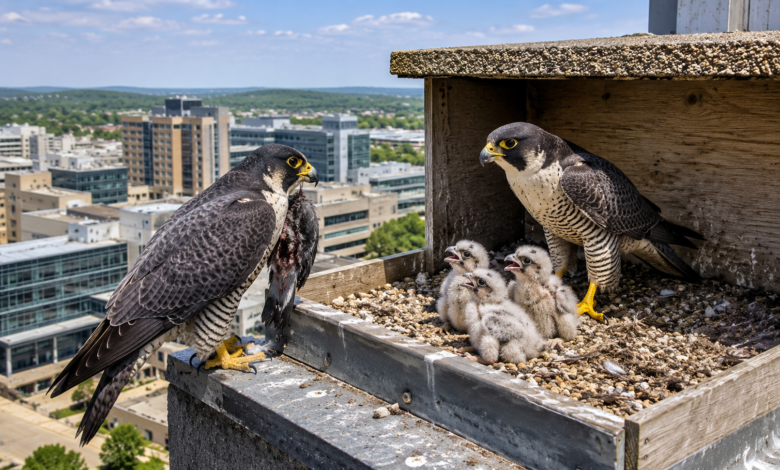
The Peregrine Falcon Live Mayo Clinic camera has become a favorite destination for bird lovers, wildlife enthusiasts, educators, and families around the world. Through a live-streaming webcam, viewers can watch peregrine falcons as they nest, incubate eggs, care for their chicks, and prepare young birds for their first flights. The live feed offers a rare opportunity to observe one of nature’s fastest and most remarkable birds without disturbing its natural behavior.
Located on the rooftop of the Mayo Clinic in Rochester, Minnesota, the nest box has hosted generations of peregrine falcons. Every spring, thousands of people tune in to witness the breeding season, eagerly following the progress from egg laying to fledging. The camera has also become a valuable educational resource, helping people learn about bird behavior, wildlife conservation, and the importance of protecting endangered species.
Beyond its entertainment value, the Mayo Clinic falcon project demonstrates how modern buildings can provide safe nesting sites for birds of prey while encouraging public awareness about conservation. In this guide, you’ll learn about the famous live falcon camera, the history of the nest, the life cycle of peregrine falcons, and why these incredible birds continue to capture the attention of viewers worldwide.
What Is the Peregrine Falcon Live Mayo Clinic?
The Peregrine Falcon Live Mayo Clinic is a live webcam that broadcasts the daily activities of peregrine falcons nesting on a specially designed nest box installed on a Mayo Clinic building.
The camera allows viewers to watch the birds in real time as they:
- Build and maintain their nest
- Lay and incubate eggs
- Feed newly hatched chicks
- Protect the nest from potential threats
- Teach young falcons how to fly
- Prepare fledglings for life in the wild
Because the camera operates remotely, it allows people to observe the birds without disturbing their natural behaviors.
Why Is the Mayo Clinic Falcon Camera So Popular?
The live camera attracts thousands of viewers each year because it offers a unique look into the daily lives of wild peregrine falcons.
People enjoy watching:
- Eggs hatch
- Parents care for their chicks
- Feeding routines
- Chick development
- First wing exercises
- First flights from the nest
- Family interactions
Unlike documentaries, the live camera shows real events as they happen, making every nesting season unique.
Many classrooms also use the livestream to teach students about wildlife biology, ecosystems, and bird conservation.
The History of the Mayo Clinic Falcon Nest
Peregrine falcons have adapted surprisingly well to urban environments. Tall buildings closely resemble the high cliffs where these birds naturally nest.
Recognizing this, conservation organizations and the Mayo Clinic installed a nest box high above the city to provide a safe place for falcons to raise their young.
Over the years, multiple generations of peregrine falcons have successfully nested at the site.
The project has helped researchers monitor nesting success while giving the public an opportunity to appreciate these remarkable birds up close.
Where Is the Nest Located?
The nest box is located high on a Mayo Clinic building in Rochester, Minnesota.
Its elevated location offers several advantages.
The birds have:
- Excellent visibility
- Protection from many predators
- Easy access to flying routes
- Nearby food sources
- A secure place to raise their chicks
Urban skyscrapers provide nesting conditions similar to natural cliff faces, making them attractive to peregrine falcons.
What Is a Peregrine Falcon?
The peregrine falcon (Falco peregrinus) is one of the world’s most impressive birds of prey.
It is famous for:
- Exceptional flying ability
- Incredible speed
- Sharp eyesight
- Powerful hunting skills
- Worldwide distribution
Peregrine falcons are found on every continent except Antarctica and can live in mountains, coastlines, cities, and open landscapes.
Why Are Peregrine Falcons Famous?
Peregrine falcons hold the title of the fastest animal on Earth.
During a hunting dive, known as a stoop, they can exceed speeds of 200 miles per hour (320 km/h).
They achieve these remarkable speeds by:
- Folding their wings close to their bodies
- Diving from great heights
- Using gravity to accelerate
- Striking prey with tremendous force
This hunting strategy makes them one of nature’s most efficient aerial predators.
The Life Cycle of a Peregrine Falcon
Watching the Mayo Clinic live camera gives viewers an excellent opportunity to observe each stage of a peregrine falcon’s life cycle.
Courtship
Each breeding season begins with courtship displays.
Male and female falcons perform spectacular aerial flights that include:
- High-speed dives
- Circling flights
- Calling to each other
- Food exchanges
These behaviors strengthen the pair bond before nesting begins.
Nest Selection
Unlike many birds, peregrine falcons do not build elaborate nests.
Instead, they create a shallow depression called a scrape.
The female arranges small stones and gravel before laying eggs.
The Mayo Clinic nest box is specially designed to resemble this natural nesting environment.
Egg Laying
The female typically lays three to four eggs, although clutch sizes can vary.
The eggs are:
- Cream-colored
- Speckled with reddish-brown markings
- Laid over several days
Both parents participate in caring for the eggs.
Incubation
Incubation usually lasts about one month.
During this period:
- The female spends most of her time warming the eggs.
- The male frequently brings food.
- Both parents protect the nest from intruders.
The live camera often captures these parenting responsibilities throughout the day.
Hatching
When the chicks hatch, they are covered with soft white down and rely completely on their parents.
Newly hatched chicks:
- Cannot regulate their body temperature well.
- Require frequent feeding.
- Grow rapidly during the first few weeks.
Watching the parents carefully feed each chick is one of the highlights of the livestream.
Rapid Growth
Young falcons develop quickly.
Within a few weeks they begin:
- Growing flight feathers
- Standing independently
- Flapping their wings
- Exploring different areas of the nest box
Viewers can often notice changes almost every day.
Learning to Fly
Before leaving the nest, young falcons spend several days exercising their wings.
They:
- Jump
- Stretch
- Flap vigorously
- Balance near the edge of the nest
Eventually, each chick takes its first flight, a milestone eagerly anticipated by livestream viewers.
What Do Peregrine Falcons Eat?
Peregrine falcons primarily hunt other birds.
Their diet commonly includes:
- Pigeons
- Doves
- Starlings
- Ducks
- Shorebirds
- Songbirds
Occasionally they may capture small mammals or bats, but birds remain their preferred prey.
The parents bring food back to the nest, where it is carefully divided among the growing chicks.
How Do Peregrine Falcons Hunt?
Peregrine falcons rely on remarkable eyesight and speed.
Their hunting process typically involves:
- Spotting prey from high above.
- Climbing to a greater altitude.
- Diving at extraordinary speed.
- Striking the prey during flight.
- Catching or retrieving it before returning to the nest.
Their precision and agility make them one of the world’s most successful bird hunters.
Conservation Efforts That Saved the Peregrine Falcon
Today, peregrine falcons are considered one of conservation’s greatest success stories. However, there was a time when their population declined dramatically in many parts of North America.
The primary reason was the widespread use of the pesticide DDT, which caused eggshells to become thin and fragile. Many eggs broke before the chicks could hatch, leading to a sharp decline in falcon populations.
Conservation organizations, wildlife agencies, researchers, and volunteers worked together to reverse the decline through:
- Banning harmful pesticides
- Captive breeding programs
- Releasing young falcons into the wild
- Installing nest boxes on tall buildings and bridges
- Monitoring breeding success
- Educating the public about bird conservation
These efforts helped peregrine falcons recover, allowing them to return to many areas where they had previously disappeared.
The Role of the Mayo Clinic Falcon Project
The Mayo Clinic peregrine falcon project is more than just a live webcam. It also supports education, wildlife awareness, and conservation.
The project helps by:
- Providing a safe nesting site
- Monitoring breeding success
- Educating students and the public
- Raising awareness about birds of prey
- Encouraging appreciation for urban wildlife
The live camera allows thousands of people to observe wildlife in real time without disturbing the birds, making it an excellent example of responsible wildlife viewing.
Why Peregrine Falcons Thrive in Cities
Although peregrine falcons traditionally nested on cliffs, many have successfully adapted to urban environments.
Cities offer several advantages:
- Tall buildings that resemble natural cliffs
- Plenty of nesting opportunities
- Abundant bird populations for food
- Fewer natural predators
- Warm structures that provide shelter
As a result, many peregrine falcons now nest on skyscrapers, bridges, churches, and office buildings across the world.
Interesting Facts About Peregrine Falcons
Peregrine falcons are fascinating birds with many unique characteristics.
Some interesting facts include:
- They are the fastest animals on Earth during a hunting dive.
- Their eyesight is estimated to be several times sharper than that of humans.
- They can spot prey from great distances while flying high overhead.
- Peregrine falcons are found on every continent except Antarctica.
- They usually mate for several breeding seasons and often return to the same nesting site year after year.
- Both parents help raise and protect their chicks.
- Young falcons continue learning to hunt from their parents after leaving the nest.
These remarkable adaptations make peregrine falcons one of the world’s most successful birds of prey.
Why People Love Watching the Live Camera
The Mayo Clinic live falcon camera has attracted a worldwide audience because every nesting season tells a different story.
Viewers enjoy watching:
- Eggs being laid
- Parents taking turns incubating eggs
- Chicks hatching
- Daily feeding routines
- Sibling interactions
- Feather development
- First flights
- Family behavior
Many people check the livestream every day to follow the progress of the growing falcon family.
Teachers also use the camera in classrooms to introduce students to biology, ecology, animal behavior, and conservation.
How to Watch Wildlife Responsibly
Although the live camera makes observing falcons easy, it is important to respect wildlife.
Good practices include:
- Watching from a distance if visiting the nesting area
- Avoiding loud noises near nesting birds
- Never attempting to feed wild falcons
- Respecting barriers around nesting sites
- Supporting wildlife conservation efforts
Observing wildlife without disturbing natural behavior helps ensure that future generations can enjoy these incredible birds.
Frequently Asked Questions (FAQs)
Where is the Peregrine Falcon Live Mayo Clinic nest located?
The nest is located on a Mayo Clinic building in Rochester, Minnesota, where a specially designed nest box provides a safe place for peregrine falcons to breed and raise their young.
Why do peregrine falcons nest on tall buildings?
Tall buildings resemble the cliffs where peregrine falcons naturally nest. Urban environments also provide plenty of food and relatively few predators.
How fast can peregrine falcons fly?
During a hunting dive, peregrine falcons can exceed 200 miles per hour (320 km/h), making them the fastest animals on Earth.
What do peregrine falcons eat?
Their diet mainly consists of other birds, including pigeons, doves, starlings, ducks, and shorebirds. They occasionally catch small mammals or bats.
How long do baby peregrine falcons stay in the nest?
Young falcons usually remain in the nest for about five to six weeks before taking their first flight. Even after fledging, they continue learning essential hunting skills from their parents.
Why is the Mayo Clinic falcon camera important?
The camera provides educational opportunities, supports wildlife awareness, and allows people around the world to observe peregrine falcons without disturbing their natural behavior.
Conclusion
The Peregrine Falcon Live Mayo Clinic offers a unique window into the lives of one of the world’s most remarkable birds of prey. From courtship and egg laying to chick development and first flights, the livestream allows viewers to witness the complete nesting season in real time while learning about the behavior and biology of peregrine falcons.
The project also highlights the success of wildlife conservation. Once threatened by environmental challenges, peregrine falcons have made a remarkable recovery thanks to dedicated conservation efforts and the creation of safe nesting sites in urban areas.
Whether you are a bird enthusiast, a student, an educator, or simply curious about nature, following the Mayo Clinic falcon nest is an engaging way to appreciate wildlife and better understand the importance of protecting species and their habitats.