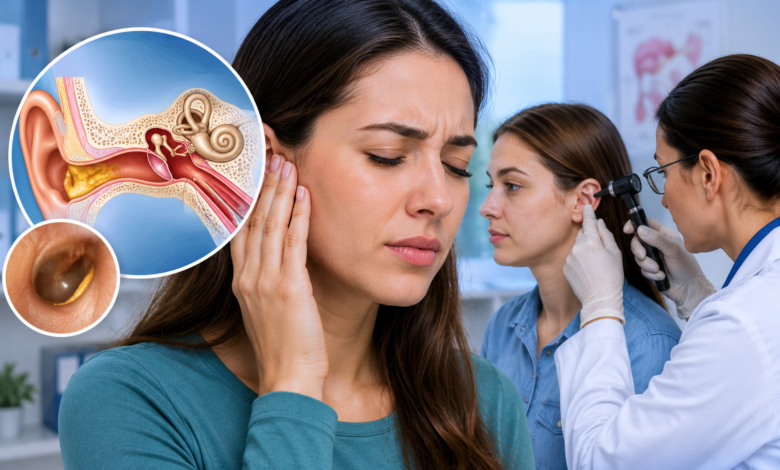
A clogged ear is a common problem that many people experience at some point in their lives. It can make sounds seem muffled, create a feeling of pressure inside the ear, and sometimes affect your balance. Although a clogged ear is often temporary and harmless, it can occasionally signal an underlying medical condition that requires treatment.
There are many reasons why your ear feels clogged, including earwax buildup, allergies, sinus infections, changes in air pressure, fluid in the middle ear, or an ear infection. In most cases, identifying the cause is the first step toward finding the right treatment.
While some cases improve on their own or with simple home remedies, persistent symptoms should not be ignored. Ongoing ear blockage, severe pain, hearing loss, or dizziness may indicate a more serious condition that needs medical evaluation.
This guide explains the most common causes of a clogged ear, the symptoms that may accompany it, and the treatment options available to help restore normal hearing and comfort.
What Does It Mean When Your Ear Feels Clogged?
When your ear feels clogged, you may experience a sensation of fullness or pressure, as though something is blocking the ear canal. This feeling can affect one ear or both ears and may come on suddenly or develop gradually.
People often describe it as:
- A plugged or blocked ear
- Muffled hearing
- Pressure inside the ear
- Feeling like water is trapped in the ear
- Reduced hearing ability
- A popping sensation
The clogged feeling may last only a few minutes or continue for several days, depending on the underlying cause.
Common Causes of a Clogged Ear
Several conditions can cause an ear to feel blocked.
1. Earwax Buildup
One of the most common causes is excessive earwax.
Earwax protects the ear by trapping dust, bacteria, and other debris. However, too much wax can build up and block the ear canal.
Symptoms may include:
- Muffled hearing
- Ear fullness
- Ringing in the ear (tinnitus)
- Mild discomfort
- Itching
Using cotton swabs can push wax deeper into the ear and make the blockage worse.
2. Eustachian Tube Dysfunction
The Eustachian tubes connect the middle ear to the back of the nose and help equalize pressure.
When these tubes become blocked, you may notice:
- Ear pressure
- Popping sounds
- Muffled hearing
- A clogged sensation
This commonly occurs during:
- Colds
- Allergies
- Sinus infections
- Changes in altitude
3. Middle Ear Infection
A middle ear infection occurs when fluid builds up behind the eardrum and becomes infected.
Common symptoms include:
- Ear pain
- Fever
- Hearing loss
- Ear pressure
- Feeling of fullness
Children are especially prone to middle ear infections, but adults can develop them as well.
4. Fluid in the Middle Ear
Fluid may remain trapped behind the eardrum even after a cold or ear infection has resolved.
This can cause:
- Muffled hearing
- Ear pressure
- Clicking or popping sounds
- Mild balance problems
The fluid often clears naturally, although persistent cases may require medical treatment.
5. Allergies
Seasonal allergies can cause swelling inside the nose and Eustachian tubes.
This swelling may result in:
- Ear fullness
- Pressure
- Popping
- Temporary hearing changes
Managing allergy symptoms often improves ear blockage.
6. Sinus Infection
Inflamed sinuses can interfere with normal drainage and affect the Eustachian tubes.
People with sinus infections may experience:
- Nasal congestion
- Facial pressure
- Headache
- Ear fullness
- Reduced hearing
Treating the sinus infection usually helps relieve the clogged ear sensation.
7. Air Pressure Changes (Airplane Ear)
Rapid changes in air pressure can affect the middle ear.
Common situations include:
- Air travel
- Scuba diving
- Driving through mountains
- Elevators in tall buildings
Symptoms may include:
- Ear popping
- Temporary hearing loss
- Pressure
- Mild discomfort
Most cases improve shortly after pressure equalizes.
8. Water Trapped in the Ear
Swimming or bathing may leave water trapped inside the ear canal.
Symptoms often include:
- Feeling of fullness
- Muffled hearing
- Sloshing sensation
- Mild irritation
The water usually drains naturally, but prolonged moisture can increase the risk of swimmer’s ear.
9. Swimmer’s Ear
Swimmer’s ear is an infection of the outer ear canal.
Common symptoms include:
- Ear pain
- Redness
- Swelling
- Itching
- Fluid drainage
- Ear blockage
Medical treatment is often needed to clear the infection.
10. Temporomandibular Joint (TMJ) Disorders
Problems affecting the jaw joint can sometimes create pressure around the ear.
Symptoms may include:
- Jaw pain
- Clicking while chewing
- Ear fullness
- Facial discomfort
- Headaches
Because the jaw joint is located close to the ear, TMJ disorders may mimic ear problems.
Symptoms That May Occur Alongside a Clogged Ear
The symptoms you experience often depend on the underlying cause.
Common symptoms include:
- Muffled hearing
- Ear pressure
- Popping or clicking sounds
- Ear pain
- Ringing in the ears (tinnitus)
- Dizziness
- Balance problems
- Fluid drainage
- Itching
- Reduced hearing
- Headache
- Nasal congestion
The combination of symptoms can help healthcare providers determine the cause of the blockage.
Risk Factors
Certain factors make clogged ears more likely.
These include:
- Frequent colds
- Seasonal allergies
- Sinus infections
- Excessive earwax production
- Regular use of cotton swabs
- Swimming
- Air travel
- Smoking
- Exposure to secondhand smoke
- Chronic nasal congestion
Understanding these risk factors may help reduce future episodes.
Can a Clogged Ear Affect Hearing?
Yes. Many causes of ear blockage temporarily reduce hearing because sound cannot travel normally through the ear.
In most cases, hearing returns once the underlying problem is treated.
However, sudden or significant hearing loss should always be treated as a medical emergency and evaluated immediately.
When Is a Clogged Ear an Emergency?
Although most clogged ears are not emergencies, seek immediate medical attention if you experience:
- Sudden hearing loss
- Severe ear pain
- Bloody or pus-like drainage
- High fever
- Severe dizziness
- Facial weakness
- Head injury followed by ear symptoms
These signs may indicate a serious condition requiring prompt treatment.
How Is a Clogged Ear Diagnosed?
If the feeling of a clogged ear lasts for several days, keeps returning, or is accompanied by severe pain or hearing loss, a healthcare provider can help determine the cause.
Diagnosis usually begins with questions about:
- Your symptoms
- When the blockage started
- Recent colds or allergies
- Air travel or swimming
- Current medications
- Previous ear problems
A physical examination is then performed to look for signs of infection, earwax buildup, or other abnormalities.
Ear Examination (Otoscopy)
A healthcare provider may use an otoscope, a lighted instrument designed to examine the ear canal and eardrum.
This examination can help identify:
- Earwax blockage
- Ear infections
- Fluid behind the eardrum
- Swelling
- Damage to the eardrum
Hearing Tests
If hearing loss is present, a hearing evaluation may be recommended.
These tests measure how well you hear different sounds and help determine whether the hearing loss involves the outer, middle, or inner ear.
Tympanometry
Tympanometry measures how well the eardrum moves.
It helps detect:
- Fluid in the middle ear
- Eustachian tube dysfunction
- Problems with pressure inside the ear
Imaging Tests
If symptoms are severe, persistent, or unusual, imaging studies such as a CT scan or MRI may be recommended to rule out structural problems or rare conditions affecting the ear.
Treatment Options for a Clogged Ear
Treatment depends on the underlying cause of the blockage.
Earwax Removal
If excessive earwax is causing the problem, a healthcare provider may recommend:
- Prescription or over-the-counter earwax-softening drops
- Ear irrigation performed safely
- Professional removal using specialized instruments
Avoid inserting cotton swabs or other objects into the ear, as they can push wax deeper and increase the risk of injury.
Treating Eustachian Tube Dysfunction
If the blockage is related to Eustachian tube dysfunction, treatment may include:
- Nasal saline sprays
- Allergy management
- Nasal steroid sprays (when recommended by a healthcare provider)
- Treating underlying colds or sinus infections
Many cases improve as the inflammation settles.
Treating Ear Infections
Bacterial ear infections may require prescription medication, while viral infections often improve with supportive care.
Your healthcare provider may recommend pain relief and monitoring if the infection is expected to resolve on its own.
Managing Allergies
When allergies contribute to ear blockage, reducing allergy symptoms may relieve pressure.
Treatment may include:
- Avoiding known allergens
- Using allergy medications as advised
- Keeping indoor air clean during allergy season
Removing Trapped Water
If water is trapped after swimming or bathing:
- Tilt your head toward the affected ear.
- Gently pull on the earlobe to encourage drainage.
- Dry the outer ear with a clean towel.
Avoid inserting objects into the ear canal.
Home Remedies for Mild Ear Fullness
Some simple measures may help if the cause is not serious.
Swallow or Yawn
Swallowing, yawning, or chewing gum may help open the Eustachian tubes and equalize pressure.
Stay Hydrated
Drinking enough water helps keep mucus thin and supports normal Eustachian tube function.
Use Steam
Breathing in warm steam from a shower or bowl of hot water may help relieve nasal congestion that contributes to ear pressure.
Be careful to avoid burns from hot water or steam.
Treat Nasal Congestion
Using saline nasal spray can help reduce congestion associated with colds or allergies.
Get Adequate Rest
Rest allows your body to recover more effectively from infections that may be contributing to ear blockage.
Can a Clogged Ear Be Prevented?
Although not every cause can be prevented, these healthy habits may lower your risk.
Helpful prevention tips include:
- Avoid inserting cotton swabs into your ears.
- Manage seasonal allergies.
- Treat colds and sinus infections promptly.
- Wear ear protection while swimming if recommended.
- Chew gum or swallow during airplane takeoff and landing.
- Stay well hydrated.
- Practice good hand hygiene to reduce infections.
- Avoid smoking and exposure to secondhand smoke.
These steps support healthy ear function and may reduce future episodes of ear blockage.
When Should You See a Doctor?
While many clogged ears improve on their own, seek medical advice if:
- Symptoms last longer than a few days.
- Hearing becomes significantly worse.
- You develop severe ear pain.
- Fluid or pus drains from the ear.
- You have a high fever.
- Dizziness affects your balance.
- The clogged sensation keeps returning.
Prompt evaluation can help identify the underlying cause and prevent complications.
Frequently Asked Questions (FAQs)
Why does my ear feel clogged but not hurt?
A clogged ear without pain is often caused by earwax buildup, allergies, Eustachian tube dysfunction, or changes in air pressure. A healthcare provider can help identify the exact cause if symptoms persist.
Will a clogged ear clear up on its own?
Yes. Many cases caused by colds, allergies, or temporary pressure changes improve without treatment within a few days. Persistent symptoms should be evaluated.
Is it safe to use cotton swabs to remove earwax?
No. Cotton swabs often push earwax deeper into the ear canal and may injure the eardrum. If earwax buildup is suspected, discuss safe removal options with a healthcare provider.
Can allergies make my ears feel blocked?
Yes. Allergies can cause swelling around the Eustachian tubes, leading to pressure, muffled hearing, and a clogged sensation.
When should I worry about a clogged ear?
Seek immediate medical care if you experience sudden hearing loss, severe pain, high fever, bloody or pus-like drainage, facial weakness, or severe dizziness.
Can stress cause clogged ears?
Stress does not usually block the ear directly, but it may contribute to jaw clenching or temporomandibular joint (TMJ) problems, which can create a feeling of ear pressure or fullness.
Conclusion
A clogged ear is a common symptom that can result from a variety of conditions, including earwax buildup, allergies, Eustachian tube dysfunction, infections, trapped water, or changes in air pressure. In many cases, the problem is temporary and improves with simple self-care or appropriate treatment.
However, persistent ear blockage, severe pain, significant hearing loss, or dizziness should not be ignored. Early medical evaluation can help identify the cause, prevent complications, and restore normal hearing.
By practicing healthy ear care, avoiding cotton swabs, managing allergies, and seeking medical advice when symptoms persist, you can reduce the likelihood of future episodes and maintain good ear health.