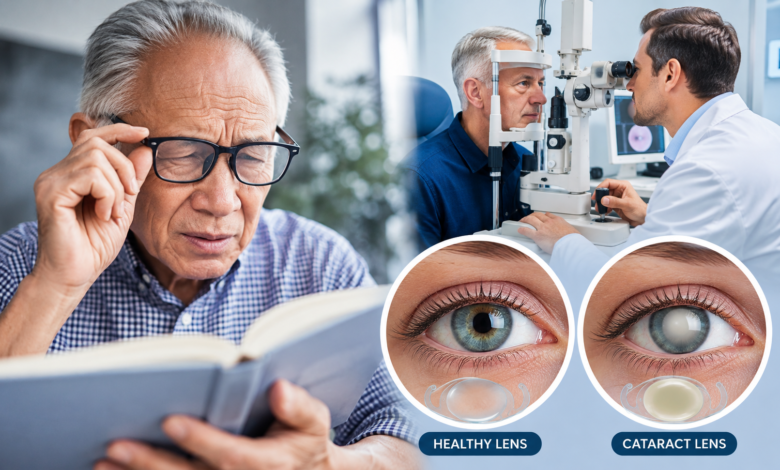
Cataracts are one of the most common causes of vision problems, especially in older adults. They develop when the normally clear lens of the eye becomes cloudy, making it harder for light to pass through properly. As a result, vision gradually becomes blurry, dull, or distorted. Cataracts usually develop slowly, so many people do not notice the changes until everyday activities like reading, driving, or recognizing faces become more difficult.
Understanding the signs and symptoms of cataracts is important because early detection allows for regular monitoring and timely treatment. Although cataracts are often associated with aging, they can also develop due to diabetes, eye injuries, certain medications, prolonged exposure to ultraviolet (UV) light, or other health conditions.
In the early stages, symptoms may be mild and easy to overlook. However, as the cataract progresses, vision problems typically become more noticeable and can affect quality of life. This guide explains the common symptoms of cataracts, why they occur, who is at risk, and when to seek professional eye care.
What Are Cataracts?
A cataract is a clouding of the eye’s natural lens. The lens sits behind the colored part of the eye (the iris) and focuses light onto the retina, allowing you to see clearly.
When proteins in the lens begin to break down and clump together, the lens gradually loses its transparency. Instead of passing through a clear lens, light becomes scattered, leading to blurred or cloudy vision.
Cataracts may affect one eye or both eyes, although they do not always develop at the same rate.
Early Signs and Symptoms of Cataracts
Cataracts often develop slowly, and symptoms may worsen over months or years. Recognizing these early warning signs can help you seek an eye examination before vision becomes severely affected.
1. Blurry or Cloudy Vision
One of the earliest and most common symptoms is blurred or cloudy vision.
People often describe it as:
- Looking through a foggy window
- Hazy vision
- Difficulty seeing fine details
- Reduced sharpness
At first, only a small area of the lens may be affected, so changes can be subtle.
2. Difficulty Seeing at Night
Night vision often becomes worse as cataracts progress.
You may notice:
- Trouble driving after dark
- Difficulty recognizing objects in dim lighting
- Increased dependence on brighter lights
- Feeling less confident during nighttime activities
Poor night vision is often one of the first symptoms that prompts people to seek medical advice.
3. Increased Sensitivity to Light
Many people with cataracts become more sensitive to bright light.
Common situations include:
- Bright sunlight
- Headlights from oncoming traffic
- Indoor lighting
- Camera flashes
The light may seem unusually intense or uncomfortable.
4. Glare and Halos Around Lights
Another common symptom is seeing halos or glare around light sources.
People may notice:
- Rings around headlights
- Glare from streetlights
- Difficulty driving at night
- Light scattering in bright environments
This symptom occurs because the cloudy lens no longer focuses light properly.
5. Frequent Changes in Eyeglass Prescription
If your glasses seem to stop working well within a short period, cataracts may be responsible.
You may find yourself needing:
- Stronger prescription glasses
- Frequent vision checks
- New reading glasses more often
However, changing prescriptions alone does not confirm a cataract.
6. Colors Appear Faded
Cataracts can make colors appear:
- Less vibrant
- Yellowish
- Brownish
- Dull
People sometimes notice that clothing, flowers, or artwork no longer appear as bright as they once did.
7. Double Vision in One Eye
Some individuals experience double vision even when only one eye is open.
This symptom, called monocular double vision, may improve after cataract treatment.
8. Poor Contrast Sensitivity
Contrast sensitivity refers to the ability to distinguish objects from their background.
People with cataracts may have trouble seeing:
- Curbs
- Steps
- Road markings
- Objects in dim lighting
This increases the risk of trips and falls, particularly in older adults.
9. Difficulty Reading
As cataracts worsen, reading may become more challenging.
You may notice:
- Needing brighter light
- Holding reading material closer
- Eye strain
- Difficulty focusing on small print
Many people initially assume they simply need stronger reading glasses.
10. Vision That Gradually Gets Worse
Unlike sudden vision loss caused by certain eye emergencies, cataracts usually cause a slow decline in vision.
The gradual progression often makes it difficult to recognize changes from one day to the next.
Types of Cataracts
Different types of cataracts affect different parts of the lens and may cause slightly different symptoms.
Nuclear Cataracts
These develop in the center of the lens and are most commonly associated with aging.
They often cause:
- Blurred distance vision
- Yellowing of vision
- Increased nearsightedness
Cortical Cataracts
These begin around the outer edges of the lens and gradually extend toward the center.
Symptoms may include:
- Glare
- Halos
- Difficulty with contrast
- Reduced night vision
Posterior Subcapsular Cataracts
These form near the back of the lens.
They tend to progress more quickly and often cause:
- Glare
- Difficulty reading
- Poor vision in bright light
- Night vision problems
Congenital Cataracts
Some babies are born with cataracts or develop them during childhood.
These cataracts may result from:
- Genetic conditions
- Infections during pregnancy
- Metabolic disorders
- Eye development abnormalities
Early diagnosis is important because untreated congenital cataracts can affect normal visual development.
What Causes Cataracts?
Several factors contribute to cataract formation.
Common causes include:
Aging
Natural aging is the leading cause of cataracts.
Over time, proteins inside the lens gradually change, causing cloudiness.
Diabetes
High blood sugar levels may accelerate changes in the lens, increasing the risk of cataracts at an earlier age.
Eye Injury
Trauma to the eye can damage the lens and lead to cataract formation, sometimes years after the injury.
Long-Term Steroid Use
Extended use of corticosteroid medications may increase the risk of developing cataracts.
Excessive UV Exposure
Long-term exposure to ultraviolet (UV) rays from sunlight may contribute to cataract development.
Wearing sunglasses with UV protection can help reduce this risk.
Risk Factors
Several factors increase the likelihood of developing cataracts.
These include:
- Age over 60 years
- Diabetes
- Smoking
- Heavy alcohol use
- Long-term steroid use
- Previous eye injury
- Family history of cataracts
- Excessive sunlight exposure
- Obesity
- High blood pressure
- Previous eye surgery
Having one or more risk factors does not guarantee that you will develop cataracts, but it does increase your likelihood.
How Are Cataracts Diagnosed?
If you notice changes in your vision, an eye care professional can perform a comprehensive eye examination to determine whether cataracts are the cause.
Early diagnosis is important because it helps monitor the condition and determine the right time for treatment.
Comprehensive Eye Exam
A routine eye examination may include:
- Reviewing your medical history
- Discussing your symptoms
- Checking your vision in each eye
- Evaluating how cataracts affect daily activities
Regular eye exams become increasingly important as people age, especially after the age of 60.
Visual Acuity Test
This common test measures how clearly you can see at different distances.
You’ll be asked to read letters on an eye chart while covering one eye at a time. Reduced vision that is not fully corrected with glasses may suggest cataracts or another eye condition.
Slit-Lamp Examination
A slit lamp is a special microscope that allows an eye specialist to examine the front structures of the eye in detail.
This test helps identify:
- Clouding of the lens
- Corneal problems
- Changes in the iris
- Other eye abnormalities
Retinal Examination
Eye drops are used to widen (dilate) the pupils so the retina and optic nerve can be examined.
This helps rule out other eye diseases that may also affect vision.
Treatment Options for Cataracts
Treatment depends on how much the cataract affects your daily life.
In the early stages, simple changes may improve vision without surgery.
Updated Eyeglass Prescription
If symptoms are mild, stronger prescription glasses or contact lenses may temporarily improve vision.
However, glasses cannot remove or reverse cataracts.
Better Lighting
Improving lighting at home or work can make everyday tasks easier.
Helpful tips include:
- Using brighter reading lamps
- Reducing glare with adjustable lighting
- Using larger print materials when reading
Anti-Glare Sunglasses
Wearing sunglasses that block ultraviolet (UV) rays may reduce glare and protect your eyes from excessive sunlight.
They can also make driving and outdoor activities more comfortable.
Cataract Surgery
When cataracts begin interfering with daily activities such as reading, driving, or recognizing faces, surgery is usually the most effective treatment.
Cataract surgery is one of the most commonly performed and successful surgical procedures worldwide.
During surgery:
- The cloudy natural lens is removed.
- It is replaced with a clear artificial lens called an intraocular lens (IOL).
- The procedure is typically performed on one eye at a time.
- Most surgeries are completed in less than an hour.
Many people notice improved vision within a few days, although complete healing may take several weeks.
Recovery After Cataract Surgery
Recovery is generally smooth when post-operative instructions are followed.
Your eye specialist may recommend:
- Using prescribed eye drops
- Wearing a protective eye shield while sleeping
- Avoiding heavy lifting for a short period
- Keeping water and soap out of the eye during healing
- Attending follow-up appointments
Most people can gradually return to their normal activities within a few days, depending on their doctor’s advice.
Can Cataracts Be Prevented?
Although cataracts cannot always be prevented, healthy habits may help reduce your risk or delay their development.
Protect Your Eyes from UV Rays
Wear sunglasses that block 100% of UVA and UVB rays whenever you spend time outdoors.
A wide-brimmed hat can provide additional protection from sunlight.
Manage Diabetes
Keeping blood sugar levels within your target range may reduce the risk of cataracts and other eye complications.
Follow your healthcare provider’s recommendations for managing diabetes.
Quit Smoking
Smoking increases oxidative stress, which may contribute to cataract formation.
Quitting smoking benefits not only your eyes but also your overall health.
Eat a Balanced Diet
A diet rich in fruits, vegetables, whole grains, and lean proteins supports overall eye health.
Foods containing vitamins C and E, lutein, and zeaxanthin may help protect the eyes from oxidative damage.
Schedule Regular Eye Exams
Routine eye examinations allow cataracts and other eye conditions to be detected before they significantly affect vision.
Adults over the age of 60 should have regular comprehensive eye exams as recommended by their eye care professional.
When Should You See an Eye Doctor?
Arrange an eye examination if you notice:
- Blurry or cloudy vision
- Difficulty seeing at night
- Increased sensitivity to light
- Halos around lights
- Frequent changes in your eyeglass prescription
- Difficulty reading
- Colors appearing faded
- Vision problems affecting daily activities
Seek immediate medical attention if you experience sudden vision loss, severe eye pain, flashes of light, or a significant eye injury, as these symptoms may indicate conditions other than cataracts that require urgent treatment.
Frequently Asked Questions (FAQs)
What are the first signs of cataracts?
Early symptoms often include blurry vision, difficulty seeing at night, glare from lights, faded colors, and frequent changes in eyeglass prescription.
Do cataracts always require surgery?
No. In the early stages, stronger glasses and improved lighting may help manage symptoms. Surgery is generally recommended when cataracts begin interfering with everyday activities.
Can cataracts cause blindness?
If left untreated, cataracts can lead to severe vision loss. However, cataract surgery is highly effective and can restore vision for most people.
Are cataracts painful?
Cataracts usually develop without causing pain. If you experience severe eye pain, seek prompt medical evaluation because another eye condition may be responsible.
How long does cataract surgery take?
The procedure usually takes about 15 to 45 minutes, although the total visit may take longer due to preparation and recovery.
Can cataracts come back after surgery?
The cataract itself cannot return because the cloudy natural lens has been removed. However, some people develop clouding of the membrane behind the artificial lens, which can usually be treated quickly with a laser procedure.
Conclusion
Recognizing the signs and symptoms of cataracts can help you seek timely eye care before vision problems become more severe. Common warning signs include blurry vision, difficulty seeing at night, increased sensitivity to light, halos around lights, faded colors, and frequent changes in eyeglass prescriptions.
Although cataracts are most often associated with aging, they can also develop due to diabetes, eye injuries, certain medications, or prolonged UV exposure. Regular eye examinations are the best way to detect cataracts early and monitor their progression.
For many people, simple adjustments such as updated glasses or better lighting provide temporary relief in the early stages. When cataracts begin affecting daily life, modern cataract surgery offers a safe and highly effective solution that restores clearer vision for most patients.