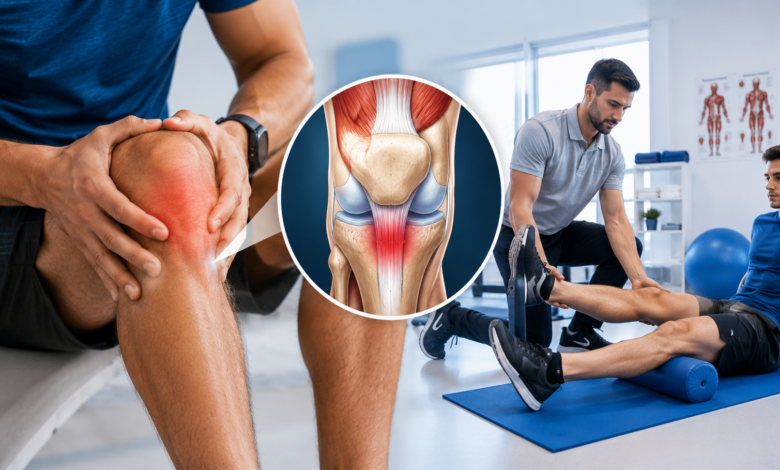
Tendonitis in the knee cap, often called patellar tendonitis or jumper’s knee, is a common overuse injury that affects the tendon connecting the kneecap (patella) to the shinbone (tibia). This tendon plays a vital role in straightening the knee and supporting movements such as walking, running, jumping, climbing stairs, and standing up from a seated position.
Repeated stress on the patellar tendon can lead to tiny tears and inflammation, causing pain and stiffness around the front of the knee. While the condition is especially common among athletes who participate in sports involving frequent jumping, it can also affect runners, cyclists, active adults, and even people whose jobs require repeated kneeling or squatting.
Recognizing the early signs of tendonitis in the knee cap is important because prompt treatment can help prevent the injury from becoming chronic. In many cases, simple measures such as rest, activity modification, and physical therapy allow the tendon to heal without surgery.
This guide explains the symptoms, causes, risk factors, and early treatment options for tendonitis in the knee cap, helping you understand when to seek medical care and how to support a full recovery.
What Is Tendonitis in the Knee Cap?
The patellar tendon is a strong band of tissue that connects the bottom of the kneecap to the top of the shinbone. It works together with the muscles at the front of the thigh (quadriceps) to straighten the knee.
When this tendon is repeatedly overloaded, tiny injuries develop within the tendon fibers. In the early stages, the tendon may become irritated and inflamed. If the condition continues without proper treatment, the tendon may undergo degenerative changes, making recovery more difficult.
Although the term tendonitis suggests inflammation, many long-standing cases involve tendon degeneration rather than ongoing inflammation. However, the term is still commonly used to describe pain affecting the patellar tendon.
Signs and Symptoms of Tendonitis in the Knee Cap
Symptoms usually develop gradually rather than appearing suddenly. Pain often begins during or after physical activity and may worsen over time if the tendon continues to be stressed.
1. Pain Below the Kneecap
The most common symptom is pain just below the kneecap where the patellar tendon attaches.
The pain may:
- Start as mild discomfort
- Become sharper during activity
- Improve with rest in the early stages
- Become more persistent if untreated
2. Tenderness Around the Tendon
Pressing on the tendon below the kneecap may cause soreness or tenderness.
This tenderness is often localized and becomes more noticeable after exercise.
3. Pain During Physical Activity
Activities that increase stress on the tendon commonly trigger pain, including:
- Running
- Jumping
- Squatting
- Climbing stairs
- Lunges
- Kicking
- Rising from a chair
As the condition progresses, even everyday activities may become uncomfortable.
4. Stiffness
Many people notice stiffness around the knee after:
- Waking up in the morning
- Sitting for long periods
- Resting after exercise
The stiffness often improves slightly with gentle movement.
5. Swelling
Mild swelling may develop around the lower portion of the kneecap.
Although swelling is usually not severe, the area may appear slightly enlarged compared to the opposite knee.
6. Weakness
Pain may make it difficult to generate full strength when using the affected leg.
Some people notice:
- Reduced jumping ability
- Difficulty climbing stairs
- Trouble standing from a squat
- Decreased athletic performance
7. Pain After Exercise
During the early stages, pain may only appear after activity rather than during it.
Over time, discomfort may begin:
- Before exercise
- During exercise
- After exercise
- Even at rest in severe cases
Stages of Patellar Tendonitis
Healthcare professionals often describe the condition in stages based on symptom severity.
- Pain only after exercise
- Performance is usually unaffected
- Symptoms improve with rest
- Pain during and after activity
- Sports participation remains possible
- Recovery takes longer
- Pain during daily activities
- Difficulty participating in sports
- Reduced strength and function
- Severe tendon damage or rupture
- Sudden intense pain
- Inability to straighten the knee
- Requires urgent medical evaluation
What Causes Tendonitis in the Knee Cap?
The condition develops when repeated stress exceeds the tendon’s ability to repair itself.
Common causes include:
Repetitive Jumping
Sports involving frequent jumping place significant stress on the patellar tendon.
Examples include:
- Basketball
- Volleyball
- High jump
- Long jump
Running
Long-distance running and hill running repeatedly load the tendon, particularly when training intensity increases too quickly.
Sudden Increase in Activity
Rapidly increasing:
- Training volume
- Workout intensity
- Running distance
- Jump frequency
can overload the tendon before it has time to adapt.
Tight Muscles
Tight quadriceps, hamstrings, or calf muscles increase tension on the patellar tendon during movement.
Poor Exercise Technique
Incorrect landing mechanics or poor movement patterns during sports may place excessive strain on the knee.
Weak Leg Muscles
Weakness in the quadriceps, gluteal muscles, or core can alter knee mechanics and increase tendon stress.
Risk Factors
Several factors increase the likelihood of developing tendonitis in the knee cap.
These include:
- Participation in jumping sports
- Frequent running
- Poor flexibility
- Muscle imbalance
- Weak hip muscles
- Inadequate warm-up
- Improper footwear
- Hard playing surfaces
- Previous knee injury
- Obesity
- Sudden increases in physical activity
Having one or more risk factors does not guarantee you will develop tendonitis, but it does increase the risk.
Who Is Most Commonly Affected?
Patellar tendonitis is especially common among:
- Basketball players
- Volleyball players
- Soccer players
- Runners
- Tennis players
- Dancers
- Gymnasts
- Military personnel
- Active teenagers
- Adults involved in repetitive physical work
However, anyone who repeatedly stresses the knee tendon can develop the condition.
Can Tendonitis Become Chronic?
Yes. If early symptoms are ignored and the tendon continues to be overloaded, tendonitis can progress into a long-term condition known as patellar tendinopathy.
Chronic tendon problems may lead to:
- Persistent pain
- Reduced athletic performance
- Tendon degeneration
- Increased risk of tendon rupture
- Longer recovery times
Early treatment offers the best chance for a full recovery.
How Is Tendonitis in the Knee Cap Diagnosed?
If knee pain persists for more than a few days or interferes with your daily activities, it’s important to see a healthcare provider. Early diagnosis can help prevent further damage to the tendon and speed up recovery.
Diagnosis usually begins with a review of your symptoms, activity level, and medical history.
Your healthcare provider may ask:
- When did the pain begin?
- Does the pain worsen during exercise?
- Have you recently increased your training?
- Have you had previous knee injuries?
- Which activities make the pain worse?
Physical Examination
During the examination, your healthcare provider may:
- Press on the patellar tendon to check for tenderness
- Assess the knee’s range of motion
- Evaluate muscle strength
- Observe your walking pattern
- Check for swelling or instability
- Assess flexibility in the hips, thighs, and calves
These findings help identify the source of the pain and rule out other knee conditions.
Imaging Tests
Imaging may be recommended if symptoms are severe, persistent, or if another injury is suspected.
Ultrasound
An ultrasound can show:
- Thickening of the tendon
- Small tears
- Areas of degeneration
- Increased blood flow associated with tendon injury
MRI (Magnetic Resonance Imaging)
An MRI provides detailed images of the tendon and surrounding tissues.
It may help identify:
- Partial tendon tears
- Chronic tendon degeneration
- Inflammation
- Other knee injuries
X-rays are not usually used to diagnose tendonitis directly but may help rule out bone-related conditions.
Treatment for Tendonitis in the Knee Cap
Treatment depends on the severity of the injury. Most people improve with non-surgical treatment when therapy begins early.
1. Rest and Activity Modification
Reducing activities that trigger pain gives the tendon time to heal.
This may include temporarily avoiding:
- Jumping
- Running
- Deep squats
- High-impact sports
Complete bed rest is usually unnecessary. Instead, low-impact activities may be recommended while the tendon recovers.
2. Ice Therapy
Applying an ice pack to the painful area for 15 to 20 minutes several times a day may help reduce pain after activity.
Always wrap the ice pack in a cloth to protect your skin.
3. Physical Therapy
Physical therapy is one of the most effective treatments for patellar tendonitis.
A therapist may recommend exercises to:
- Strengthen the quadriceps
- Improve hip and core stability
- Stretch tight muscles
- Improve balance
- Correct movement patterns
A gradual rehabilitation program helps restore strength while reducing the risk of re-injury.
4. Pain Relief Medications
Your healthcare provider may recommend over-the-counter pain relievers if appropriate.
These medications may help reduce discomfort in the short term but should not replace rehabilitation exercises or activity modification.
5. Patellar Tendon Strap or Knee Brace
Some individuals benefit from wearing a patellar tendon strap during activity.
These supports may:
- Reduce stress on the tendon
- Improve comfort
- Allow safer movement during recovery
They should be used alongside rehabilitation rather than as the only treatment.
Home Care Tips
You can support recovery by following these self-care measures:
- Rest when pain increases.
- Apply ice after exercise.
- Perform stretching exercises regularly.
- Strengthen your leg muscles gradually.
- Wear supportive footwear.
- Warm up before physical activity.
- Avoid suddenly increasing workout intensity.
- Follow your physical therapist’s exercise program consistently.
Patience is important, as tendon healing often takes several weeks or months.
Recovery Time
Recovery varies depending on the severity of the condition and how early treatment begins.
General recovery estimates include:
- Mild cases: 2–6 weeks
- Moderate cases: 6–12 weeks
- Chronic tendon problems: Several months or longer
Returning to sports too soon may delay healing and increase the risk of recurrence.
Can Tendonitis in the Knee Cap Be Prevented?
Although not every case can be prevented, healthy training habits can significantly lower your risk.
Helpful prevention strategies include:
- Increase training gradually.
- Warm up before exercise.
- Stretch the quadriceps, hamstrings, and calves.
- Strengthen your hip and core muscles.
- Wear shoes with good support.
- Use proper jumping and landing techniques.
- Allow enough time for recovery between workouts.
- Stop exercising if pain becomes severe.
Listening to your body is one of the best ways to prevent overuse injuries.
When Should You See a Doctor?
Seek medical advice if:
- Knee pain lasts longer than one to two weeks.
- Pain interferes with walking or climbing stairs.
- Swelling becomes severe.
- The knee feels unstable.
- You hear a popping sound followed by sudden pain.
- You cannot straighten your knee.
- Home treatment does not improve symptoms.
Prompt evaluation can help prevent long-term tendon damage.
Frequently Asked Questions (FAQs)
Is tendonitis in the knee cap the same as jumper’s knee?
Yes. Patellar tendonitis is commonly called jumper’s knee because it frequently affects athletes who participate in sports involving repeated jumping.
Can I still exercise with patellar tendonitis?
Low-impact activities may be possible, but exercises that worsen your pain should be reduced or temporarily avoided. Your healthcare provider or physical therapist can recommend a safe exercise plan.
How long does tendonitis in the knee cap take to heal?
Recovery depends on the severity of the injury. Mild cases may improve within a few weeks, while chronic tendon problems may require several months of rehabilitation.
Is surgery necessary?
Most people recover without surgery. Surgical treatment is usually considered only when symptoms persist despite several months of appropriate non-surgical care or if the tendon ruptures.
Can walking make patellar tendonitis worse?
Short walks are often tolerated, but prolonged walking or walking uphill may increase symptoms in some individuals. Reduce activity if pain becomes worse.
What’s the difference between tendonitis and tendinopathy?
Tendonitis refers to inflammation of the tendon, while tendinopathy is a broader term that often describes chronic tendon degeneration resulting from long-term overuse.
Conclusion
Tendonitis in the knee cap is a common overuse injury that affects the patellar tendon, causing pain below the kneecap, stiffness, tenderness, and discomfort during activities such as running, jumping, or climbing stairs. Although athletes are at higher risk, the condition can affect anyone who repeatedly places stress on the knee.
Early recognition and treatment are key to preventing long-term tendon damage. Rest, activity modification, physical therapy, and a gradual return to exercise are often highly effective in relieving symptoms and restoring normal knee function.
If knee pain persists, worsens, or limits your daily activities, seek evaluation from a healthcare provider. With proper care and a well-planned rehabilitation program, most people recover successfully and return to their normal routines.